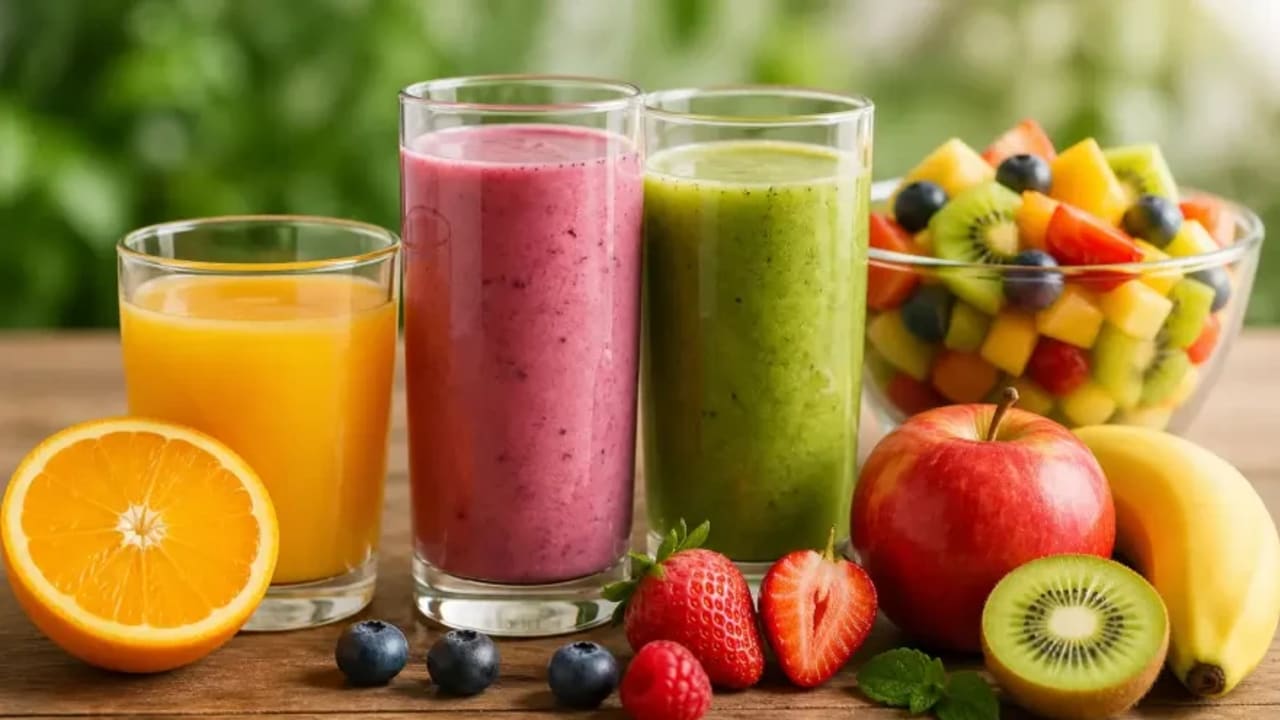
Fruits are considered an important part of any healthy diet, but it turns out that not only is their consumption important – but also the way in which they are consumed. Against the backdrop of the global rise in obesity rates and non-communicable chronic diseases, such as heart disease, diabetes, and hypertension, interest is growing in basic lifestyle habits, including nutrition and physical activity.
According to the World Health Organization, those aged 10 and older should aim for a daily intake of at least 400 grams of fruits and vegetables. However, a new study published in the journal Frontiers in Nutrition indicates that not every form of fruit consumption affects health in the same way.
Juice, smoothie, or whole fruit: The health differences
The study examined more than 400 participants and their daily fruit consumption habits. The participants were divided into four groups: Those who consume few fruits, those who prefer fruit juices, those who regularly drink smoothies, and those who eat mainly whole fruits. The data showed that the group that consumed few fruits presented the poorest health results in general. The juice-drinking group ranked after them. Among those who consumed few fruits, the highest prevalence of hypertension and cardiovascular diseases was found, while among fruit juice drinkers, the highest prevalence of high cholesterol and diabetes was found.
Body mass index was also higher among juice drinkers and among those who consumed few fruits, compared to those who ate whole fruits or preferred smoothies. The researchers also found a link between the method of fruit consumption and measures of mental health: Those who consumed few fruits, as well as those who preferred juices, reported a higher frequency of mental difficulties in the year preceding the study, compared to those who ate whole fruits or drank smoothies.

According to the study, the juice-drinking group also reported the lowest energy levels and the poorest sleep quality. The researchers noted that this aligns with the fact that fruit juices provide less of a sense of satiety and less sustained energy compared to other forms of fruit consumption.
The central difference between juice and a smoothie lies in the dietary fiber. Fruits are an important source of essential nutritional components, fiber, and antioxidants, which aid digestion, immune system function, and the reduction of chronic disease risk. When fruit is squeezed into juice, some of the beneficial components – and primarily the fiber – are lost. In contrast, in a smoothie where the fruit is ground in its entirety, the fiber is preserved to a greater extent, and sometimes the availability of components such as vitamin C and folic acid is even improved.
In the UK it was recommended to limit the consumption of fruit and vegetable juices
Nevertheless, even when it comes to fruits, researchers and experts emphasize that quantity matters. The National Health Service in the UK recommends limiting the consumption of fruit and vegetable juices to a total of 150 ml per day. The nutritional composition naturally changes according to the type of fruit: Citrus fruits are rich in vitamin C, blueberries are known for their antioxidant content alongside vitamins C and K, fiber, and manganese, and cranberries contain components that have been researched for years in the context of preventing recurrent urinary tract infections.
The bottom line is that the study reinforces a familiar but important nutritional message: fruits are a significant part of a healthy diet, but the preferred way to consume them is usually in their whole form. A smoothie may be a better alternative than juice, as long as it is not loaded with added sugar, but fruit juice – even when perceived as healthy – is not equivalent to eating a whole fruit.