Israel Antiquities Authority
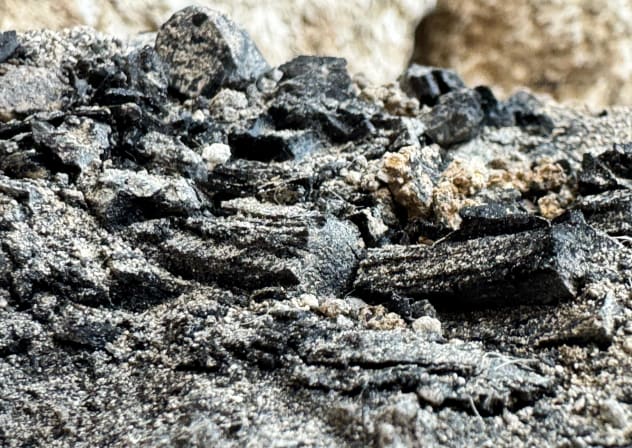
Days before Tisha B'Av: Charred wooden beams from First Temple’s destruction unearthed in Jerusalem
The First Temple, built by the biblical King Solomon, was destroyed in 586 BCE at the hands of Nebuchadnezzar II, the second king of the Neo-Babylonian Empire.

Secrets of Huqoq: New Galilee exhibit premieres mosaics, coins found at ancient Jewish settlement

New AI-powered research project aims to uncover the origins of the Dead Sea Scrolls

WATCH: Two Roman-era statues unearthed during infrastructure dig for Israel Railways near Haifa
Caesarea’s Roman-era aqueduct to undergo multi-million shekel preservation, restoration project
Preservation efforts have already begun, Israel Antiquities Authority noted, adding that the project is expected to take about 40 months (nearly three and a half years).

Ancient Pilgrimage Road leading to Temple Mount opens to public after 13 years of excavations
Archaeologists say the stepped street served as Jerusalem’s main thoroughfare for pilgrims during the Second Temple period.
New archaeology exhibit marks 60 years of Knesset building with rare finds from Jerusalem, Galilee
The event hosted more than 2,000 visitors, including soldiers, police officers, Holocaust survivors, and students from schools and kindergartens across the country.
Police seize hundreds of ancient, counterfeit coins in east Jerusalem antiquities raid
The collection, hidden in a flowerpot on the suspect's balcony, included coins from the Hasmonean, Herodian, and Roman periods, the IAA said.

Israel uncovers Second Temple-period mikveh beneath Western Wall
The ritual bath was found sealed beneath a layer of destruction dated to 70 CE, in which researchers found burned ash and numerous artifacts that offer a snapshot of life just before the city fell.

Israeli AI, drone imagery revolutionizing mapping of archaeological sites
“Sites that appear on the surface as scattered stones suddenly become coherent, organized spaces, and it saves a lot of research time,” Dr. Yitzchak Jaffe said.

Ancient lead menorah pendant sheds light on Jewish presence in Byzantine Jerusalem
Cast almost entirely of lead, the pendant is decorated on both sides with an identical image of a menorah framed within a circular border.

Hasmonean era 'first wall' section revealed at Tower of David museum excavation - interview
Israel’s Heritage Minister, Rabbi Amichai Eliyahu, called the discovery: “tangible and moving evidence of Jerusalem’s might and stature during the Hasmonean period.”

Unearthing Israel’s past: Archaeological discoveries change our understanding of history
As all these discoveries show, the land’s buried secrets have the power to transform our understanding of history, faith, and the human experience.

Israel Antiquities Authority uncovers 5,500-year-old ‘Canaanite blade factory’ at Nahal Qomem
Dr. Jacob Vardi says the early bronze age site shows 'only exceptional individuals knew how to produce the Canaanite blades,' revealing a complex, specialized society.
