Archaeology
First Temple-era figurine mold unearthed in Jerusalem's 'most significant excavation' in decades
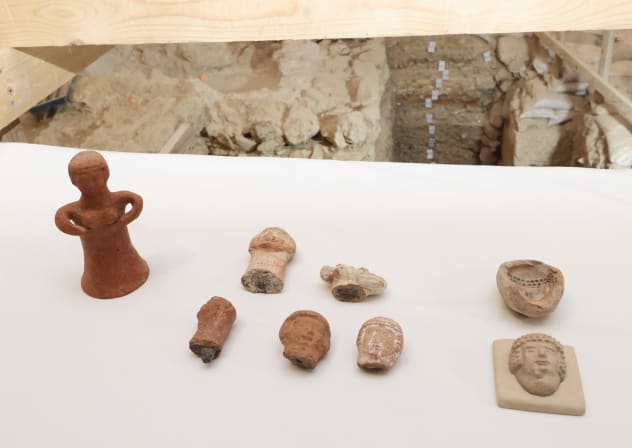
Tower of David Museum Chief Curator Eilat Lieber said that "the discovery of the first mold for producing figurines dating to the First Temple period has generated tremendous excitement."

Ancient Cypriot silver coin found on Ashdod's shore offers new insight into 2,500-year-old trade

Previously undiscovered ancient Egyptian tomb found at Theban necropolis on Nile's west bank

France returns 23 artifacts to Syria after 15 year-long loan amid Macron’s historic Damascus visit
New AI-powered research project aims to uncover the origins of the Dead Sea Scrolls
Research methods will include state-of-the-art chemical, artificial intelligence, paleographical, and codicological analysis of approximately 250 samples of the scrolls from the IAA's collection.

Bread dead redemption: Scientists bake sourdough with yeast grown in 5,300-year-old mummy
Sarhan also told AFP the team would consider using the yeast to brew beer, but the published study focused on more serious uses for their discovery.

Turkey places site of Alexander the Great’s first battle with Persians under historic protection
Under the Çanakkale Regional Board for the Protection of Cultural Heritage’s decision, both the battlefield and its surrounding areas have gained the protected status.

Israel damaged heritage sites during ops. against Hezbollah, Lebanese culture minister says
Israel's security zone in southern Lebanon includes the medieval Beaufort Castle as well as centuries-old villages that were home to Christians, Shi'ite Muslims, and Sunni Muslims.

Previously unknown Iron Age grave of high-ranking individual, two-wheel chariot found in Germany
The grave was discovered during preliminary investigations ahead of construction of a solar park scheduled to be built near Bad Camberg.

Hidden in Jerusalem's Old City, collector stumbles upon rare Jewish treasure from Morocco
Isn’t it remarkable to find a unique object that made the journey from Marrakesh to Jerusalem a few hundred years ago?

Ancient stone at Tel Eton may provide new proof of King Hezekiah’s religious reform, study suggests
The stone, known also as a massebah, was discovered during excavations of the First Temple era site, inside a large residence named by archaeologists as "Building 101," or the Governor's Residency.

AI helps recover complete text of Herculaneum scroll burnt by Mount Vesuvius
The blackened, fragile scrolls cannot be physically opened without severe damage. Researchers have instead used high-resolution scans and computational techniques to "virtually unwrap" them.

USS Herring’s final resting place confirmed 82 years after being lost in WWII
Herring and her 83 crew were presumed lost after failing to report to Midway on July 13, 1944. She was stricken from the Navy Register four months later.

New identification technique pushes back timeline of fire use to over a million years ago - study
Researchers explained that when bones exposed to high levels of heat are illuminated with specific light wavelengths, they light up with a distinctive glow.
