Science
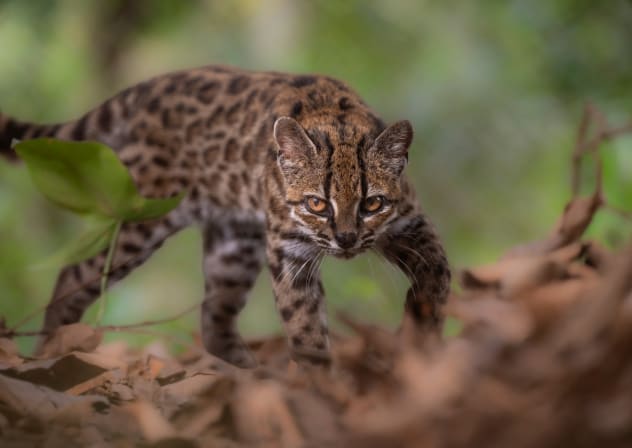
Mysterious Bolivian 'weird cat' recognized as new species, marking first discovered in over century
Its path to scientific recognition began in 2016, when Bolivian biologist Paola Nogales-Ascarrunz received a call from the Senda Verde wildlife sanctuary about what staff described as an unusual cat.

How does breathing alter the brain? Inside the science of sighs with a world-leading neuroscientist

New robot helps Israeli surgeons crush kidney stones without the splash

Is AI clairvoyant? ChatGPT can make personality tests and predict responses, Israeli study finds
Subtle face movements can indicate your decisions, scientists say
A study challenges the long-held view that facial mimicry functions primarily as a social tool for politeness or empathy, showing instead that it is an integral component of preference formation.

Rapid pandemic response: Israeli bio-chip instantly maps antibody defense
The technology is designed to rapidly map antibody responses and may become a key tool in preparing for future pandemics.

How sex hormones make our internal clocks 'tick'
Weizmann Institute molecular geneticist discovers what makes humans ‘tick’ and causes disruptions during menstruation, pregnancy, and menopause.

The psychology of knowing and how we decide when to ignore information
Sometimes we avoid information, and sometimes we deliberately seek painful information. Both avoiding useful and seeking painful information help manage emotional readiness and needs.

Schrödinger’s Jew: How antisemitism is more absurd than quantum mechanics - opinion
Schrödinger’s cat is a famous thought experiment used to describe the complex nature of quantum mechanics, but it can also be used to explain the incoherent nature of antisemites.

Grapevine: Six Hebrew University scholarships
Movers and shakers in Israeli society.

Archaeologists find 2,000-year-old labyrinth that reveals India’s role in ancient global trade
The structure is composed of 15 concentric stone circuits - the highest number ever documented in an Indian circular labyrinth.

Israeli scientist makes ‘Nature’ journal’s top ten list of shapers of science in 2025
‘Peptide detective’ Weizmann immunologist Prof. Yifat Merbl was recognized for a new hidden immune mechanism.

Israeli medical team removes 'largest-ever' facial tumor found on fetus
Checkups following the surgery showed “normal healing” and the baby will continue to have follow-ups until her teeth come in, the hospital said.

Israeli AI, drone imagery revolutionizing mapping of archaeological sites
“Sites that appear on the surface as scattered stones suddenly become coherent, organized spaces, and it saves a lot of research time,” Dr. Yitzchak Jaffe said.
