Science
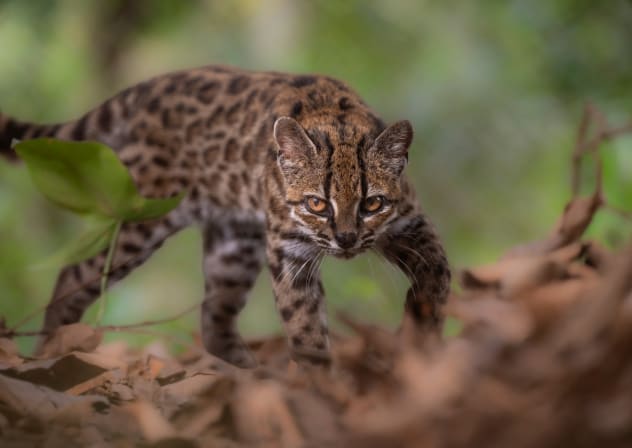
Mysterious Bolivian 'weird cat' recognized as new species, marking first discovered in over century
Its path to scientific recognition began in 2016, when Bolivian biologist Paola Nogales-Ascarrunz received a call from the Senda Verde wildlife sanctuary about what staff described as an unusual cat.

How does breathing alter the brain? Inside the science of sighs with a world-leading neuroscientist

New robot helps Israeli surgeons crush kidney stones without the splash

Is AI clairvoyant? ChatGPT can make personality tests and predict responses, Israeli study finds
Artificial nighttime lighting may be more dangerous than previously thought, study warns
Study warns artificial night lighting could harm ecosystems by weakening biological clocks.

Taking too many medications may harm older adults, study warns
Sometimes doctors aren’t aware of what others have prescribed or have not reassessed the patient’s condition to determine if he or she still needs to take them.

Israel must reverse the loss of its top scientists and doctors - opinion
The loss of Israeli scientists abroad carries a high strategic cost; reversing brain drain is key to preserving national excellence.

Eduard Shyfrin introduces a first-ever systematic theory of Kabbalah for the modern era
In ‘The Relativity of Death,’ Shyfrin transforms centuries of mystical thought into a structured framework – connecting information, consciousness, and reality’s deeper architecture.

Asteroid the size of 60 sloths to fly past the Earth tomorrow
Sloths are the slowest mammals of all, but asteroid 2026 HX3 is anything but that – both in terms of being slow and in terms of being mammals.

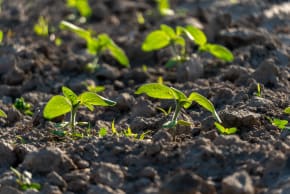
Israeli study finds plants absorb nutrients from airborne dust, challenging root-only theory
The study shows that leaves can take in minerals, including iron and phosphorus, from airborne dust, challenging the long-held understanding that plants depend solely on soil for nutrients.
Tel Aviv University, Weizmann scholars among 2026 Landau Prize winners
The total value of the prizes is NIS 1.35 million. Each winner will receive NIS 150,000, including the recipient of a special Avigdor Yitzhaki Prize for nonprofit civil society organizations.

Galilee Eco Center: regenerative agriculture, healing in the Galilee
The Galilee Eco Center aims to restore land, combining sustainable farming and science.
Bold vs cautious: Raven personalities shape survival in a changing desert - study
Ravens willing to take risks get easy access to food near humans but still face higher mortality rates.

New Israeli-led AI model to predict chemotherapy benefit in breast cancer
Technion researchers part of international study that validates fast, accessible alternative to genomic tests using routine pathology samples.
