Romans
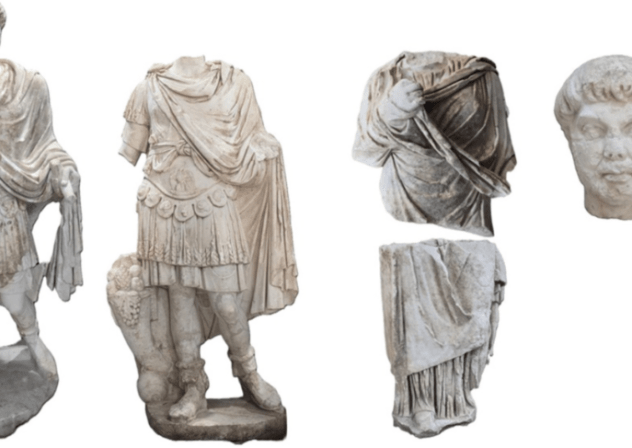
Turkey unearths rare statues of Roman Emperor Hadrian, Empress Sabina in ancient Mediterranean city
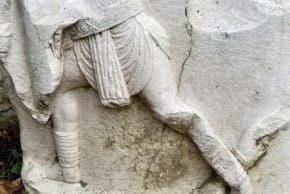
Hadrian’s statue is depicted wearing military garb, with the features of a lion and eagle carved into the emperor’s armor.
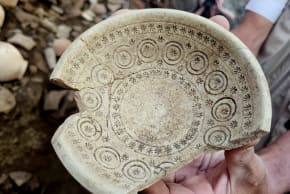
Roadworks in Tbilisi uncover oldest medieval pottery cache ever found in Georgian capital

At least 120 Roman-era inscriptions, worship to unknown goddess identified inside Spanish cave
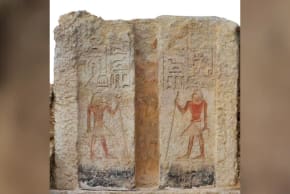
Egypt discovers remains of tomb, false door of ancient royal chamberlain at Saqqara necropolis
Lost mosaic shows first visual depiction of women fighting beasts in Roman arenas - study
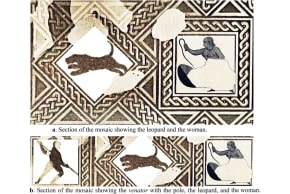
The mosaic, recovered in 1860s Reims, France and dated to the third century CE, shows about 35 different gladiatorial and hunting scenes, each surrounded by diamond or square-shaped decorations.
Roman fort found north of Hadrian’s Wall may have been used to defend against unconquered Scotland
According to GUARD, the fort was constructed on high ground along the Antonine Wall, granting it an unobstructed view of the surrounding area, and intervisible with a much larger fort to the west.

Children buried in 'adult warrior' bronze belts discovered in 2,500-year-old tomb in Italy
A total of 34 burials dating between the 4th and 3rd centuries BCE were discovered, the Superintendency shared, half of which belonged to children between the ages of two and 10.

Archaeologists find evidence of postmortem 'crucifixion' in Roman burials
Archaeologists report nails driven into remains and deliberately scattered in tombs, indicating non-accidental postmortem 'crucifixion' as part of a dark funerary ceremony.

Mariners’ bane: Ancient ship graveyard identified off Libya’s coast
Seafloor surveys near the 2,300-year-old ancient Greek city mapped a harbor basin and cataloged multiple hulls.

Gladiator fight scenes found in monumental 2,000-year-old tomb
The mausoleum stands along the Appian Way between ancient Caudium and Montesarchio.
Experts use AI to crack mystery of 2,000-year-old Roman board game found in Netherlands - study
“This is the first time that AI-driven simulated play has been used in concert with archaeological methods to identify a board game,” Crist concluded.

Frescos of a peacock, fruit discovered in Roman villa near Pomepii belonging to Emperor Nero's wife
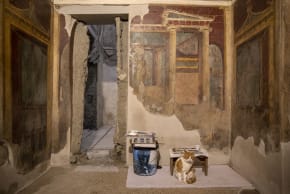
The discovery's announcement follow the site’s partial opening to the public for the first time.
'Nothing quite like it': UK Treasure Act names Roman carriage ornament Essex's first 'treasure'
According to the Act, archaeological finds can be given the status of Treasure if they are deemed to be of historical, archaeological, or cultural importance.

Archaeologists discover Anglo-Saxon child buried with shield, spear in medieval cemetery in Kent
Four medieval swords were also discovered during excavation.