Joint List
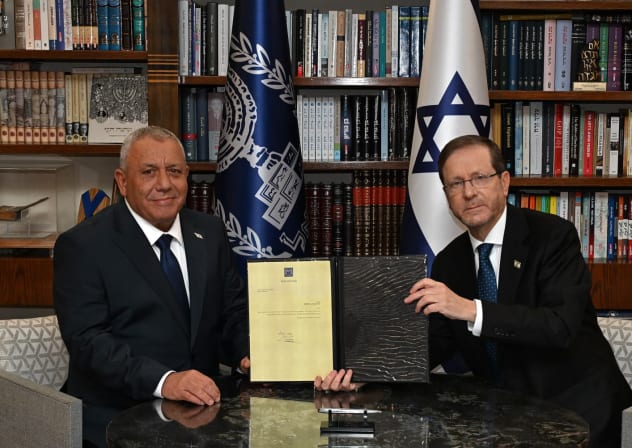
Eisenkot warns Israel 'approaching point of no return' while receiving mandate to form government
Mossad hands Shin Bet findings on suspected foreign election interference • Tibi declines to rule out joining Eisenkot • Eisenkot, Liberman expected to meet on Monday as part of coalition talks
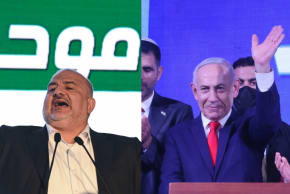
Israel or Judea, democracy or religion: What the 2026 election was really about - opinion
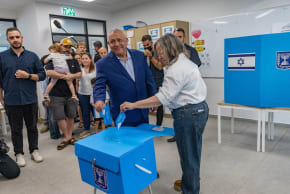
Eisenkot to receive mandate as Netanyahu calls for unity government

Border Police remove pro-Palestinian graffiti as Arab parties demand action on crime, governance
Israel election results signal political deadlock, raising three possible post-election scenarios
With neither Netanyahu nor Eisenkot securing a parliamentary majority, Israel faces three possible outcomes: an opposition coalition, a unity government, or another election.
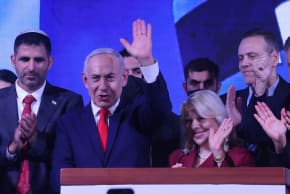
Israel's opposition must form 65-seat majority coalition with Arab parties, Democrats' Golan says
Democrats chief: 'We have a majority, and opportunity to form a partnership with Israeli Arabs' • Joint List chair says Arab parties ready to 'pave way for Netanyahu's ousting'

Netanyahu's Likud maintains lead with 90.4% of votes in as counting of double envelopes begins
Golan calls on opposition to form government with Arab parties • Nearly 80% of IDF troops voted in the 2026 Knesset elections • Trump claims endorsement shifted momentum for Netanyahu
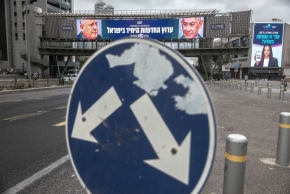
After elections, Israeli Arabs now have political power - will their leaders use it? - analysis
Arab political power reveals a country more complicated than its slogans, with consequential choices for the parties on both sides of the coalition table.
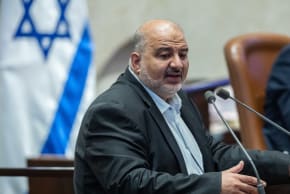
Arab parties Ra'am, Joint List rise to 19 seats amid high turnout, election polling data shows
The projections would give the two parties combined either 18 or 19 seats in the 120-member Knesset, compared with their five seats each in the outgoing parliament.

Election Night: Netanyahu's bloc overtakes opposition, but both fall short of majority
Eisenkot declares victory as opposition bloc leads Netanyahu's, but neither have clear path to majority • Arab parties skyrocket as Netanyahu's right-wing partners fall

Election Day: A complete guide to Israel’s political parties and what they stand for
The Jerusalem Post has prepared a series of explainers breaking down the platforms, leaders, and main positions of the main parties running in the election.

Eisenkot leads Netanyahu but deadlock looms, election polls show two days before Israelis vote
The average gap between the two major blocs stands at 4.5 seats, with neither reaching the 61-seat majority needed to form a government.

Beyond the polls: What are Israelis really thinking as they head to the ballot box?
Each new poll produces a headline that often disagrees with other outlets. Israelis follow polls like a tennis match, their heads swiveling from side to side, following the ball in play.

Ahmad Tibi outlines plan to oust Netanyahu after elections if neither bloc forms majority
In a statement to the media, Tibi outlined what he described as practical steps to prevent the prime minister from continuing in office as head of a caretaker government.
