Israeli science
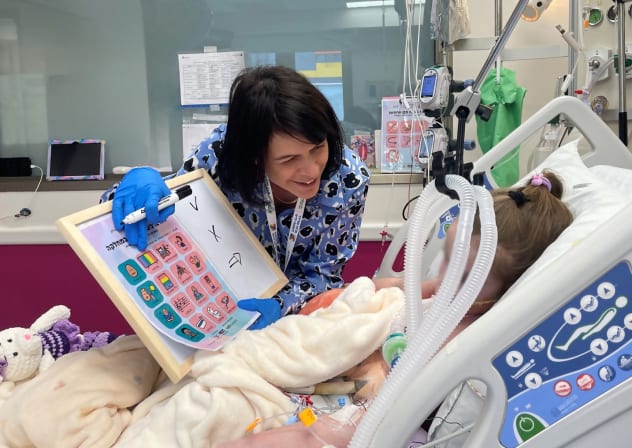
Israeli hospital launches AI system to enable hospitalized children to communicate without speaking
The system uses AI to create personalized printable communication boards in under five minutes, tailored to each child's needs as well as their age, language, gender, and background.

Using babies, Israeli study reveals why AI fails to truly understand animal calls

Amid Iran war, 53 of Israel's future scientists showcase projects in Jerusalem contest

War trauma can hinder development of children's teeth, study finds
A small whiskered world: Facial hair across the animal kingdom
Which animals have facial hair, like whiskers or a mustache, and what do they do with it?

Hebrew U researchers find new way to explore white matter in brain
A neurological study developed a new method to analyze samples of the brain’s white matter, which was previously difficult to study and map out neurologically.

Learning about the squill plant
One of the signs we can use to spot the end of summer is the squill plant.

Israeli scientists discover how to reverse cell aging
A team of scientists has found why elderly people are more susceptible to COVID-19 and are working to reverse the aging process of the body’s immune system

Israeli scientists develop 'e-skin' that knows what movements you make
Researchers at the Technion have developed a highly stretchable electronic material and a wearable sensor capable of identifying precise bending and twisting motions.

Shmuel Yitzhaki appointed Dir.-Gen of Institute of Biological Research
Yitzhaki has been serving as acting director-general since Shmuel Shapira stepped down in March.

Israeli team aims to treat neurological disorders with psychedelics
Israeli company Nextage Therapeutics has developed a technology that it believes could refine the use of psychedelic molecules to treat those suffering from depression and other neurological disorder

Israeli team aims to restore sense of touch to those with nerve damage
The device is made out of biocompatible materials that are safe for the human body and should be able to be implanted anywhere once clinical trials are complete.

New nanotechnology allows the human body to generate electric currents
The research into new nanotechnology could pave the way for external energy sources in medical devices to be replaced by green renewable energy, generated by the human body.

Medical cannabis may be effective for young epilepsy patients
Hebrew University team completed the first-ever meta-analysis of pediatric patients treated with medical cannabis
