Iraqi jews
Iraq opens first Jewish museum as country's ancient community nears extinction
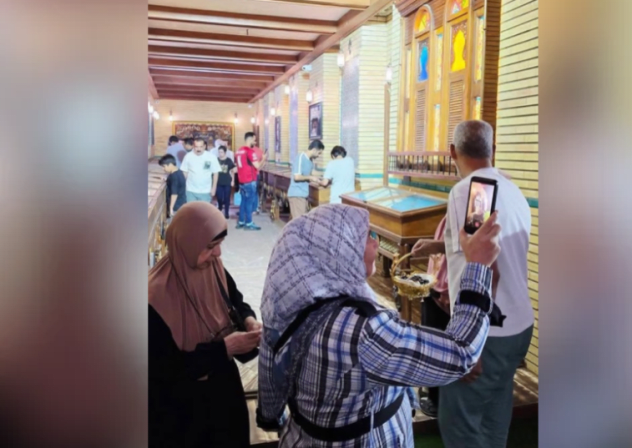
Iraq’s Jewish community, which dates back 2,500 years and once made up nearly a quarter of Baghdad’s population, now has its own museum in the city it largely left behind.

'Memory is a form of resistance': President Herzog commemorates the Farhud

Paris court dismisses Jewish family's compensation claim against government for not paying rent

Thousands of Middle East Jewish refugees lost est. $263 billion in assets, researchers show UNHRC
The quagmire that once was the fertile crescent
The Jewish minority became one of the most important bulwarks of the national economy, commerce and administration , and left an indelible imprint on Iraqi life.

When Baghdad burned
Against the backdrop of the Holocaust, the June 1941 Farhud Massacre was perpetrated upon the unprepared Iraqi Jews – as the British stood by and did nothing.
How an Iraqi Jew blazed the trail to freedom

Saving the Jews of Iraq
Just 26 years old, Shlomo Hillel played a major role in bringing 125,000 Iraqi immigrants to Israel.

The Jewish master of Arabic
Most revered for his Arabic to English translation of the Koran, Nessim Joseph Dawood was a revolutionary in introducing the West to Arab literature and culture – but his life story is so much more.

Bridging civilizations
Normally the elites of Iraqi Jewry in London are associated with the great merchant families, but Nessim Dawood represented an aristocracy of knowledge instead.

The Yehuda family Torah scroll
The Torah scroll was written on the finest deerskin available in Bahdad and completed in 1912; It now resides at the Ohel Ari Synagogue in Ra'anana.

The Jewish master of Arabic
Most revered for his Arabic to English translation of the Koran, Nessim Joseph Dawood was a revolutionary in introducing the West to Arab literature and culture – but his life story is so much more.
Sunni Islamist rebels surge towards Baghdad as Iraqi army loses control of north
Kurds seize Kirkuk, a city with huge oil reserves just outside their autonomous region, which they regard as their historical capital.

A black day in January for Iraq's Jews