Evolution
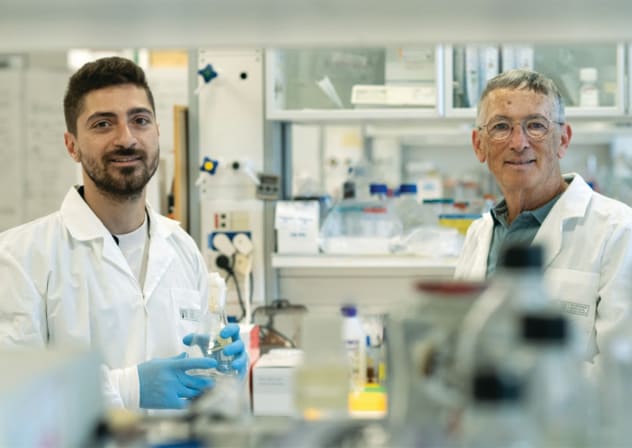
Israeli, Czech scientists recreate COVID-19’s evolutionary journey in a test tube
Scientists and doctors keep closely monitoring viruses that could jump from animals to humans, such as emerging strains of avian flu and bat coronaviruses.
Scientists reconstruct the face of “Little Foot,” a 4-million-year-old human ancestor

160 million years later: This rare fossil is overturning everything we knew about how birds evolved

Want a personal trash panda? Raccoons may be evolving for domestication
How did the first stages of evolution start? - study
The researchers found primitive cell-like membranes in hydrothermal vents, which may reveal how life began on unhospitable Earth.

Skull found in China points to an unknown human species
This 300,000-year-old skull found in China has traits of both humans and other more distantly-related hominids, implying a new branch on the human evolutionary tree could have lived there.

Why males have lower-pitched voices - study
A new study finds that large group size and mating systems in which males have multiple mates drove the evolution of lower-pitched voices in primates.

Humans' ancestors, dogs, bats may have coexisted with dinosaurs – study
Primates, whom humans evolved from, rabbits and hares, dogs and cats were shown to have evolved just before the mass extinction, so they coexisted with dinosaurs.

Ohio researchers use CAT scan to test felines’ sense of smell
The authors said that their findings deepen their understanding of how the evolution of more convoluted channels enabled mammals’ - especially cats’ - enhanced sense of smell.
