Archaeological study
New LED technology helps archaeologists uncover details invisible to the naked eye
Instead of using standard white light to illuminate the soil, the Danish prototype uses LEDs set to 16 different wavelengths, ranging from near-ultraviolet to near-infrared.

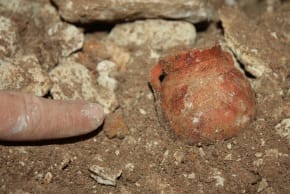
Ancient wildfires in the Levant may have inspired Neolithic pottery-making, Israeli study suggests

Israeli researchers use ancient stone tools to trace hunter-gatherer migrations

Prehistoric hunter-gatherers stayed connected across 200 kilometers, Israeli study finds
Different human ancestors walked together, footprints suggest
Study provides first evidence of different bipedalism styles on same footprint surface, attributed to both species.

Recent research into dinosaur diets shows why they ruled the Earth - study
The study used hundreds of fossils of well-fed dinosaurs to compare and contrast nutrition dynamics across five vertebrate assemblages of these beasts from the Triassic and Jurassic periods.

Ancient Jewish quarter of Phanagoria discovered in Black Sea area of Russia
Phanagoria's 1st century BCE synagogue was discovered last year, following excavations on the ancient Greek city.

How many sides does The Great Pyramid have? New study says it’s not four
The answer can only be seen from the air.

Spanish smiths used meteorite metals 3,000 years ago, study suggests
The Treasure of Villena, discovered in the Valencia region of Spain in, is considered one of the most important collections of prehistoric treasure in Europe, consisting of 66 mostly golden artifacts

New study reveals ancient Nile tributary helped transport stone blocks for Egypt's pyramids
The research, identified a tunnel that connected the pyramids of Giza. The tunnel has been identified as an ancient Nile branch, known as the Ahramat.

Peru's congress conducts hearing on alleged extraterrestrial 'Nazca mummies'
However, the authenticity of the so-called tridactyl mummies has been widely disputed by the scientific community.

King Arthur's Hall in Cornwall found to be 4,000 years older than previously thought
The monument was first documented in 1583 by the English cartographer John Norden, who wrote, "It is called Arthur's Hall".

Newly discovered DNA changes previous speculation of Pompeii victims' final moments of life
A recent study has undermined prior assumptions about several victims of the Pompeii tragedy.

Ancient net fishing scenes discovered on 15,800-year-old stones in Germany
A plaquette previously showing a fish was found to include net-like lines. Seven others showed similar net-and-fish scenes.
