
Most of us eat onions from time to time, but not always in the same form: In a salad it is raw, in soup it cooks for a long time, and in many cooked dishes it begins its journey in the frying pan.
And beyond its health value, it changes in taste and sweetness depending on the method of cooking, requires suitable storage conditions, and there are even a few myths about it.
As a scientific advisor to the Plant Board, here are a few interesting facts about the vegetable whose strong taste and dominant odor are not always loved, but its nutritional value certainly deserves attention.
Antioxidants and health effects of onion
Allicin – like in garlic: In a study published in Planta Medica, researchers examined the antimicrobial effect of sulfur compounds found in onions – like in garlic: Allicin.
The researchers examined the antibacterial and antifungal activity of allicin in onions, and found that it inhibits the growth of bacteria and fungi.
Quercetin – this is an antioxidant known for its anti-inflammatory and antiviral properties.
In a study from the Journal of Agricultural and Food Chemistry, researchers checked the quercetin content in various onion varieties and found that red onion is particularly rich in quercetin.
Reducing the risk of colon cancer: An epidemiological study published in the Journal of Oncology examined the connection between the consumption of vegetables from the onion and garlic family and the risk of colon cancer. The study found that increased consumption of these vegetables is linked to a reduction in the risk of colon cancer.
Preventing diabetes: In a study presented at the 97th annual conference of The Endocrine Society, researchers claimed that onion extract, administered alongside an anti-diabetic medication containing metformin, significantly lowered blood sugar and cholesterol levels and increased the drug's effectiveness.
Fresh, fried, or cooked?
There is no simple answer of "fresh is always healthier." Heating indeed harms some of the active compounds, mainly certain sulfur compounds and the biological activity associated with them, but regarding quercetin and polyphenols the picture is very complex. The type of heating matters no less than the duration of heating.
For example, in a study examining different cooking methods, it was found that cooking in water caused a loss of about 30% of quercetin glycosides, but a significant portion of them simply transferred to the cooking water. That is, in a soup where the liquid is also eaten, the actual loss may be smaller than in an onion that is cooked and then its water is poured out.
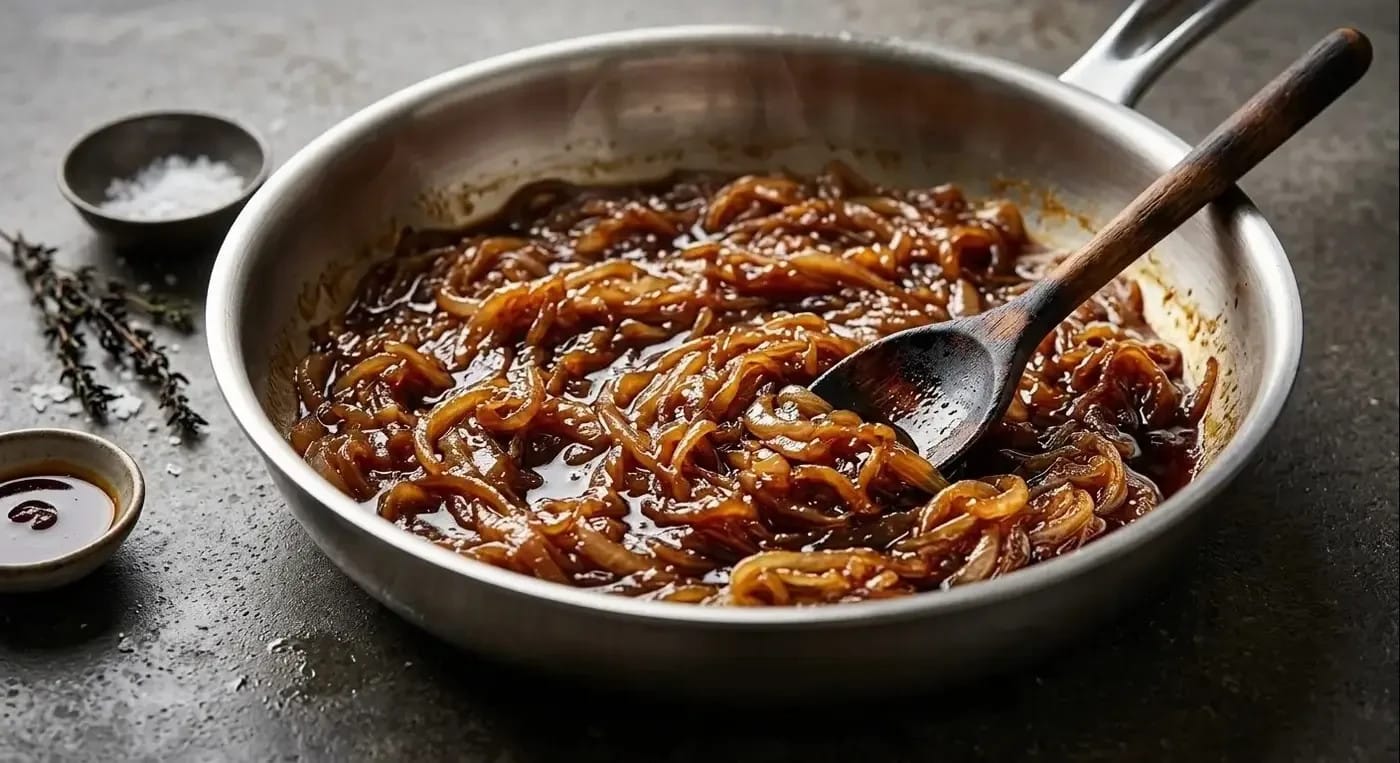
In contrast, another study found that baking, roasting, and especially frying actually increased the measured amount of some phenolic compounds and quercetin derivatives.
That is, heating changes the tissue structure and the forms of the compounds, which is why higher availability is sometimes obtained in measurement, rather than necessarily the "creation" of new antioxidants.
The amount of sugar in an onion
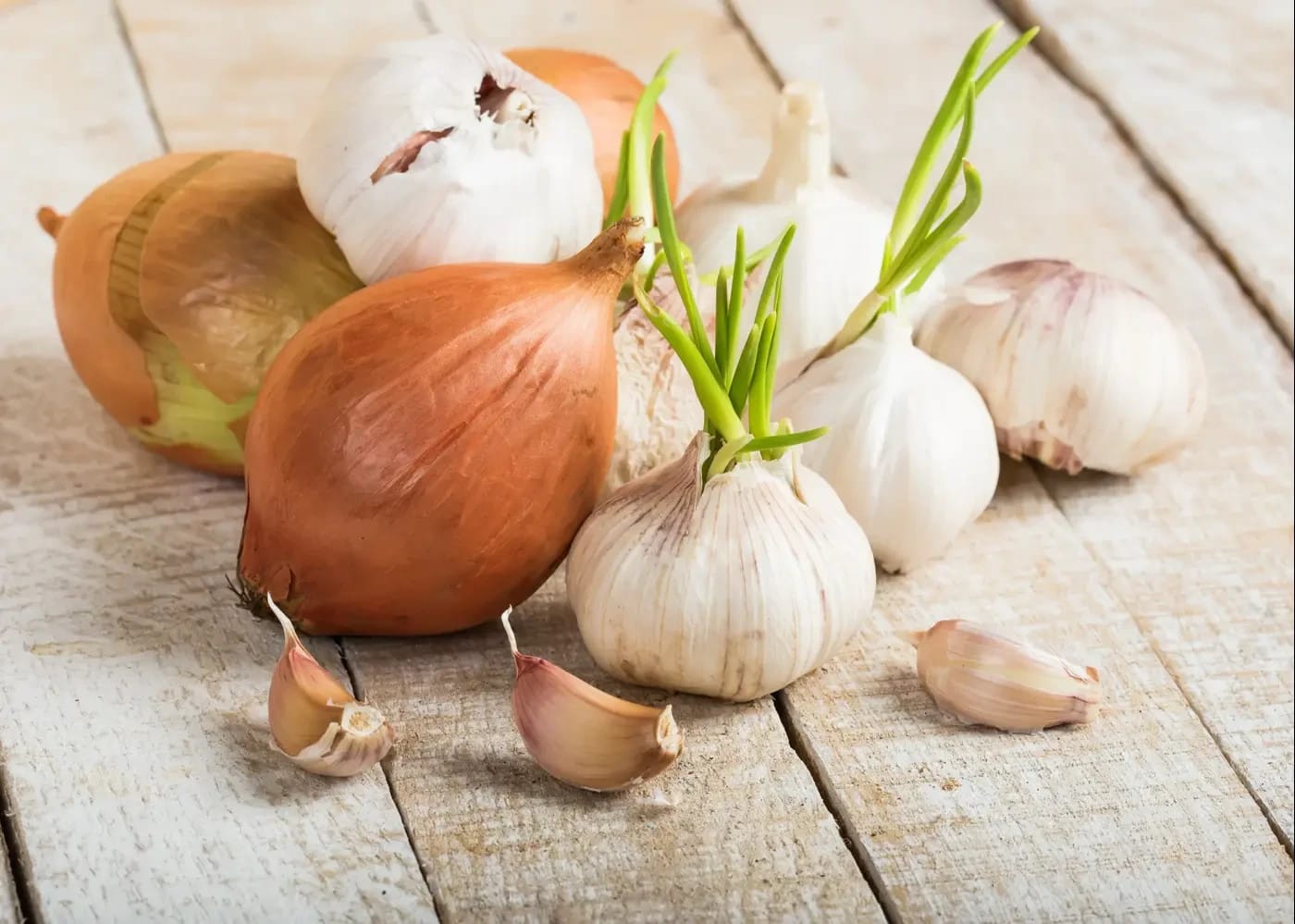
Onions contain 4-7 grams of sugar per 100 grams, depending on the variety – white onion contains less, while red and purple onions contain slightly more sugar, mainly fructose.
This is the reason purple onion is more suitable for salads, while white onion is more suitable for cooked dishes and soups.
But why does an onion become sweet only after frying?
During frying, a process called caramelization occurs, in which heat breaks down the starches and complex sugars in the onion into simple sugars such as glucose and fructose.
This process begins at a temperature of about 120° and causes the onion to acquire a sweetish taste and a golden-brown color.
By the way, this is merely proof that there is not always a direct connection between the sweetness of a vegetable or fruit and the amount of sugar present in it.
An onion has sugar like a carrot or strawberries, and one does not feel its sweetness until the pungent substances break down.
Dispelling myths
Myth: Onion in the refrigerator – does it become toxic?
The myth regarding a cut onion in the refrigerator becoming toxic is not scientifically based! Here are a few points to clarify the matter:
Can a cut onion cause poisoning? Absolutely not! There is no chemical mechanism that could cause this to happen! The substances in an onion do not decompose into toxins; they simply dry out or oxidize.
Does a cut onion absorb bacteria and become toxic?
No. There is no scientific evidence that an onion absorbs bacteria from the air and becomes toxic, especially if stored correctly (in the refrigerator, in an airtight container, or well wrapped), there is no danger.
What does happen to a cut onion in the refrigerator? It may dry out and lose its freshness or absorb odors from other foods in the refrigerator. And only if we do not store it correctly – it may grow mold or develop bacteria, like any other food.
How to reduce tears when cutting an onion?
1. Cool the onion – placing it in the refrigerator for 30 minutes before cutting reduces the volatility of the irritating substances.
2. a sharp knife – a sharp knife cuts the cells smoothly and reduces the process of creating tear-inducing substances.
3. Soak the onion in water – cutting the onion under running water or soaking it in water before cutting reduces the release of the chemicals that cause tears.