Yonah Jeremy Bob

Yonah Jeremy Bob is The Jerusalem Post 's senior military correspondent and intelligence analyst and was previously Literary Editor for 4.5 years. He covers the Israeli military, the Mossad, the Shin Bet, defense technologies, Iran's weapons of mass destruction, cyberwarfare, and war crimes allegations. Yonah is also well-connected to all of the top Israeli ministries from his former posts in the IDF, the Foreign Ministry, and the Justice Ministry. Yonah is the author of the award winning book Target Tehran , about the Mossad's secret war against Iran's nuclear program and its role in the Abraham Accords, published in hardcover by Simon & Schuster in September 2023, and translated and published in Hebrew by Yediot Books in April 2024, with an English paperback version due in September 2024. The Wall Street Journal listed the book in its Top 5 for Politics for 2023 and it won the Jewish Book Council/Natan Award for 2024. Yonah is the editor and translator of the intelligence and terrorism thriller A Raid on the Red Sea published by Potomac/Nebraska in March 2021. His first book on aspects of the Israeli-Palestinian conflict was published by Gefen in August 2019. Yonah has been interviewed by CNN, BBC, Skynews, Al Jazeera, Voice of America, Reuters, and a range of other television and radio programs in English and has also been interviewed by a wide variety of print and radio Hebrew media. Yonah also delivers foreign affairs lectures and Zoom lectures throughout the US, Canada, Australia and Israel, including at the International Spy Museum in Washington DC, to World Affairs Councils, and to a wide variety of Jewish groups. Hailing from Baltimore in the US, Yonah graduated with honors from Columbia University and Boston University Law School. He is married with three children.

A general view of a heavy water plant in Arak, 320 kms south of Tehran, 26 August 2006.

Israel strikes Iranian nuclear development facilities, Tehran vows retaliation

Israel Navy soldiers; illustrative.

Israeli naval intelligence reduces Iranian threat to Strait of Hormuz

IDF Chief of Staff Eyal Zamir attends the funeral of Israeli soldier Hadar Goldin, who's body had been held captive by Hamas in Gaza since 2014 and released a few days ago, at the Kfar Saba military cemetery.

Chief of Staff Zamir warns IDF will collapse due to lack of manpower, raises 'ten red flags'


IDF Sgt. Aviad Elchanan Volansky killed in southern Lebanon by Hezbollah anti-tank missile

Earlier on Thursday, an anti-tank missile was fired towards a group of Golani Brigade soldiers operating near the Litani River in southern Lebanon, injuring four and killing one.

 Sgt. Aviad Elchanan Wolansky, 21

'Toppling a regime is an art, not a science,' security sources say on Iran - exclusive

Security sources reveal how David Barnea's 2021 AI revolution at the Mossad could eventually 'open the gates' - helping Iranian people take to the streets.

Fires are lit as protesters rally on January 8, 2026 in Tehran, Iran.

Hezbollah unleashes over 600 attacks on Israel in past 24 hours, doubling prior peak

Hezbollah's spike in attacks on Israel and IDF soldiers is likely not sustainable, but could be part of an effort to coerce Israel and the US into a ceasefire on all fronts.

An Israeli soldier sits on a military vehicle near the Israeli side of the border with Lebanon, amid escalating hostilities between Israel and Hezbollah, as the US-Israeli conflict with Iran continues, in northern Israel, March 24, 2026.

Israel kills Alireza Tangsiri, IRGC Navy chief 'behind blocking of Strait of Hormuz'

Israeli sources have confirmed that the IDF was behind the strike, adding that some of Tangsiri's top naval aides were killed in the same attack.

An IDF biographical infographic on Iranian Islamic Revolutionary Guard Corps Navy chief Alireza Tangsiri, killed on March 26, 2026.

What is IDF's view on pontential long-term occupation of southern Lebanon? - analysis

Is Israel prepared to occupy southern Lebanon up to the Litani River on a long-term basis, or is its readiness to hold onto the area a temporary tactic to apply short-term pressure on Hezbollah?

IDF vehicles patrol near the border between Israel and Lebanon as seen from Misgav Am in northern Israel, August 27, 2019.

Why did David’s Sling fail to protect Israel's South from Iranian missiles? - analysis

Part of the scrutiny on David’s Sling stems from the fact that there have been multiple major failures, leaving large numbers of Israelis wounded, not just a single event.

The scene where a missile fired from  Iran toward Israel caused damage to residential buildings in the southern Israeli city of Dimona, March 22, 2026.

IDF to send two more divisions into Lebanon to conduct Hezbollah counterterrorism operations

The IDF's 162nd Division and 98th Division are set to join the 91st and 36th Divisions in conducting sweeps for concealed Hezbollah weapons in southern Lebanon.

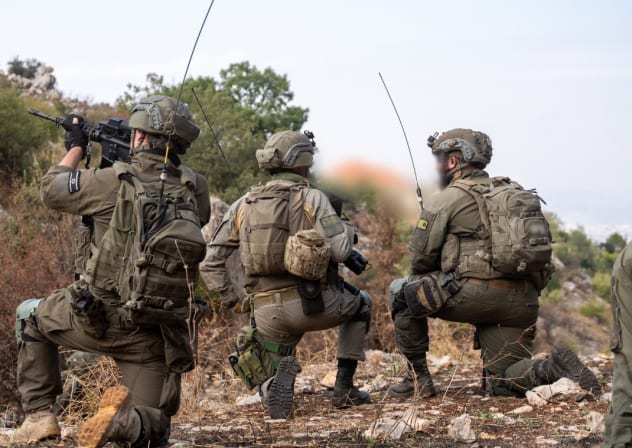
IDF soldiers operate in southern Lebanon on March 21, 2026.

Defense Minister Katz, IDF Chief of Staff Zamir confirm IDF dropped 15,000 bombs on Iran

The overall pace of IDF, US attacks is still cooling off overall, the release noted.

IDF Chief-of-Staff Eyal Zamir visits Battalion 947 during a war with Iran, March 3, 2026

Iran war has been winding down since mid-March after decline in bombing - analysis

The pace of the Iran war has slowed since mid-March, challenging official claims that US and Israeli strikes are maintaining maximum strike intensity.

Anti-missile batteries fire interception missiles toward incoming ballistic missiles launched from Iran, as seen over Tel Aviv, during the war with Iran and ongoing missile fire toward Israel, March 16, 2026.

Israel cyber chief: Iran war has delayed cyber law, bill could be passed in 2027 post-elections

In February, before the Iran war began, the INCD chief said that the latest version of the cyber law, which he proposed on January 25, would be a priority for him in terms of securing passage.

ON THE front line of the cyber war, Israel has become one of the world’s most targeted countries for cyberattacks, with state-backed hackers increasingly using AI to probe government networks, companies, and critical infrastructure.