
The criticisms of Prime Minister Benjamin Netanyahu’s handling of war and peace by his challengers in the October 27 election are well-known: whatever tactical wins he achieved militarily, he has either failed or not yet succeeded, after losing an unprecedented amount of the country’s global legitimacy, to lock in long-term diplomatic gains.
While there are nuances to every front, this would be the broad critique on all fronts by former prime minister Naftali Bennett, who is competing with Netanyahu and Gadi Eisenkot over who will run the country’s war and peace decisions from the premier’s chair going forward.
When Bennett puts his own personal stamp on this broadly accepted critique among the opposition, he would say that a gorilla must construct the jungle.
He would add that the gorilla must embody humility, but must also be active, and active here means on the diplomatic plane as much as the military one.
On the military one, Bennett agrees with Netanyahu about maintaining some kind of significant security zone in Gaza, Lebanon, and Syria,
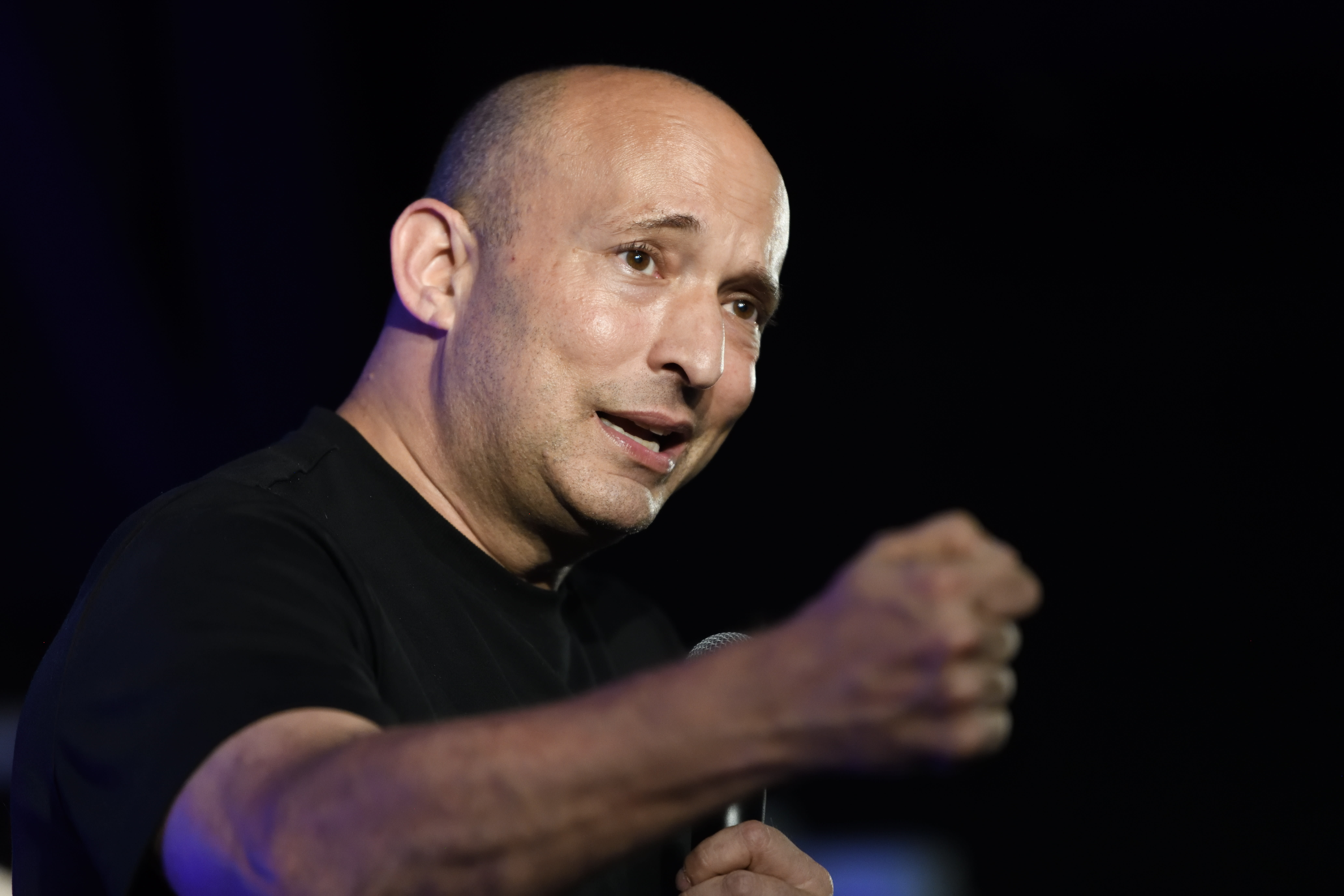
But in Bennett’s view, Israel under Netanyahu since October 7 has been mind-bogglingly passive on the diplomatic plane, with the US, Qatar, Turkey, and sometimes even more overtly hostile adversaries running circles around or over the head of the Jewish state.
Bennett's views on the future of the Gaza Strip
According to Bennett, Netanyahu has zero Gaza diplomatic policy.
Rather, he argues that Netanyahu’s only Gaza policy to date has been to bomb or invade.
Although Bennett wants to dismantle and disarm Hamas as much as Netanyahu, he believes this can only be accomplished by a mix of military and diplomatic tools.
Bennett believes that the Trump administration’s Gaza vision on its own is unworkable, but that it has been imposed on Netanyahu and Israel because they failed to suggest anything else.
In Bennett’s view, Egypt is the key, which Netanyahu has ignored or which his coalition partners have so angered that Cairo has not been a workable part of its Gaza strategy, when it should be at its center.
He accuses Bezalel Smotrich and Itamar Ben-Gvir of destroying any credit that Israel as a country might have with Egypt and other countries like Jordan, if Jerusalem were working with these countries and their leaders as the close allies they have been in recent decades.
Moreover, he would say that the constant drumbeat of new incidents of Jewish extremist violence in the West Bank, such as with the recent Kusra incident, reduces Israel’s legitimacy in the world with allies in the US and the region even more.
Bennett would say that whoever is prime minister should be meeting with Egyptian President Abdel Fattah al-Sisi at least twice a year and should be in regular touch on the side.
In contrast, Sisi has refused to meet with Netanyahu for years because of the provocative actions of Smotrich and Ben-Gvir even before October 7, and since the war started, because Netanyahu ignored any of Sisi’s needs and did not give him a serious consultative capacity.
In contrast, if Bennett were prime minister, he believes that he would restore traditional positive relations with Sisi, and with that restored trust and including the Egyptian president in key consultations, Cairo would be ready to invest more in a joint vision for reducing Hamas’s power in Gaza.
Unlike outsiders from the proposed International Stabilization Force (ISF) who are afraid of Hamas and have to play by restrictive Western rules, Sisi would be willing to provide Egyptian soldiers to assist, who would follow local Middle Eastern rules and scare Hamas.
If Bennett were prime minister, he would say that stability and order would be restored in the West Bank so that Israel only needs to take hits to its legitimacy in the US and the region for vital national interest, not unnecessary errors.
With stronger buy-in from Egypt, Jordan, Abraham Accords countries, potential Abraham Accords countries, the US, and even the EU, Bennett’s view is that Hamas can truly be hedged in, in a way that will lead it to be disarmed.
Part of what is interesting about Bennett’s plan on these issues is that he is not endorsing the Trump plan of fully bringing in the Palestinian Authority to Gaza.
Bennett has not changed his long-held opposition to a Palestinian state and he is willing to give the PA some role in Gaza and to strengthen it in the West Bank, especially to build goodwill with the US, Egypt, and others.
But he strongly believes that Egypt, as a local powerhouse, is the only country besides Israel capable of handling and intimidating Hamas.
Part of what is fascinating about his theory is that we have no real way of evaluating it.
Nothing Egypt has said since October 7 has suggested it is any more ready than other countries to put its soldiers into harm’s way against Hamas, and all indications have been that it wants to keep Gaza away and at a distance.
Effectively, Bennett is asking the public to think about pre-2023 cooperation with Egypt and to have faith that this can be returned to and even heavily built upon to new levels of joint operational action to rein in Hamas.
Bennett's views on the future of Israel's policy towards Iran
What happens if Bennett is elected prime minister, US President Donald Trump is still prohibiting Israel from directly and overtly striking the regime from the air, and Tehran starts producing new ballistic missiles more rapidly?
According to Trump’s public statements, he is almost exclusively focused on the Strait of Hormuz and nuclear issues, and has essentially dismissed Iran’s ballistic missile arsenal as a normative non-issue (he compared it to the Saudis having ballistic missiles).
It appears that Bennett would turn back to the Mossad to prevent the Islamic Republic from crossing a problematic ballistic missiles volume threshold.
This means turning back the clock somewhat in terms of returning primary responsibility for combating Iran from the IDF to the Mossad.
Presumably, the IDF would still be ready to strike should Iran dare to try to near the nuclear threshold again, as that might still get a green light from Trump.
However, when Bennett was prime minister in 2021-2022, the ballistic missile problem had not yet become an existential issue, so he would also likely dive into the latest intelligence on the issue, the way he did learning about Iran’s nuclear problem and proxy power projection in his earlier term.
Rewinding to the 2015-2021 period, both Bennett and IDF officials have said that Israel’s ability to strike Iran went down some notches because the Islamic Republic had been keeping aspects of the 2015 nuclear deal it had signed.
However, starting in late 2018, following Trump pulling out of the 2015 deal, and increasingly in the second half of 2019 and almost full-on in 2020 and 2021, the regime started crossing a new redline by moving its uranium enrichment forward.
Bennett has been on record many times that Netanyahu and the IDF did not adjust fast enough to this Iranian shift during the 2018-2021 era.
Recently, it was disclosed to The Jerusalem Post and a small number of other media outlets that part of what was set back or delayed during this time period was, according to foreign sources, the Blue Sparrow ballistic missile weapons, which could be fired by Israeli F-15s against Iran from such a long range that the aircraft themselves would not be within range of Iranian air defenses.
In 2021-2022, Bennett then moved the IDF, Israel Aerospace Industries, and Rafael along to be more ready with the appropriate weapons for striking Iran, should the need arise.
This was not simple since various officials said it would take three years to develop the weapons and plans needed to carry out such operations.
Sources have said that then-Mossad director David Barnea stepped up and said that his agency could transfer resources from other projects to develop plans to strike Iran within only one year.
At the point at which Barnea was ready to make this move, the Post understands that the rest of the defense establishment then said that it could achieve the goals Bennett was requesting on a faster basis than originally claimed.
One of the big mysteries when Bennett took office was how much Iran had advanced in the weapons group aspects of the nuclear program, as opposed to only in uranium enrichment.
The Post and others learned recently that for a period of months, Israel was unsure about this issue, but by mid-fall 2021 sources had established that Iran’s weapons-group aspects of its nuclear program had not yet advanced.
This would later shift sometime in late 2024, which was part of the reason that Israel struck Iran in June 2025.
But all of this narrative shows that while much has changed since Bennett was prime minister in 2022, he has a strong argument that he has been as on top of Iran at an operational level as much as anyone and has the skills to push the defense establishment to perform at its highest levels.
Bennett has fewer critiques of Netanyahu's policies in the Lebanon sphere of operations
Regarding Lebanon, Bennett has fewer specific critiques of Netanyahu’s policy, being that he does not believe Hezbollah can be disarmed or dismantled the same way he believes Hamas can be.
Once again, he also supports maintaining a security zone for the foreseeable future, pending reducing the Hezbollah threat.
However, even with Lebanon, he believes there might be diplomatic openings which are being missed that an Israel which is more appreciated worldwide under his leadership could take advantage of.
Syria remains the most unclear of all of Israel's fronts with regard to security policy
Syria is the most unclear of all of the fronts.
Bennett would say that it is still unclear what new Syrian leader Ahmed al-Sharaa’s ultimate intentions are and whether he is a reformed jihadist or a wolf in sheep’s clothing.
In the meantime, his view would be that the buffer zone in Syria needs to be held onto until the issue is further clarified.
It appears that he would want to get a better sense of Sharaa before deciding how aggressive to be in Syria and how much to delay Trump’s plans to help the country normalize with Israeli withdrawals from the current security zone.
Ultimately, Bennett believes he can radically improve the situation in Gaza compared to Netanyahu, can do as well or better versus Iran, and might even be able to improve the situation in Lebanon and Syria.
He would accomplish this partially by shifting certain specific strategies and partially by engaging in basic diplomacy, which he would argue Netanyahu has ignored since October 7.