Archaeologists unearth medieval convent’s heating system during renovations in Switzerland
Gnadental convent was built outside Basel's city wall for Franciscans around 1231, later becoming a temporary home for several orders.
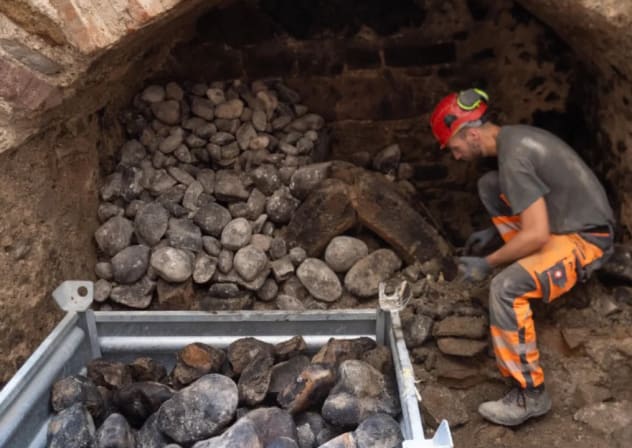
Gnadental convent was built outside Basel's city wall for Franciscans around 1231, later becoming a temporary home for several orders.


“This is a once-in-a-lifetime discovery,” added Oren and Reiss. “It was very unexpected, but somehow, the really big discoveries always turn up on the excavation’s very last day.”

Archaeologists have also uncovered the foundations of houses and rooms belonging to a Roman villa used between the 3rd century BCE and the 4th century CE.
Several painted plaster and barrel-shaped pottery coffin, among those most common coffin types in the Ptolemaic period, were also found at the site.

In the Tanach, Shiloh served as one of the ancient Israelites’ central locations of worship and housed the biblical Tabernacle.

The cave dates back to 400,000 and 250,000 years ago, to the time of the Acheulo-Yabrudian culture – a collection of archaeological cultures in the Levant from the end of the Lower Paleolithic era.

Archaeological surveys of the site also revealed the foundations of residential buildings, watchtowers, and service facilities located nearby.

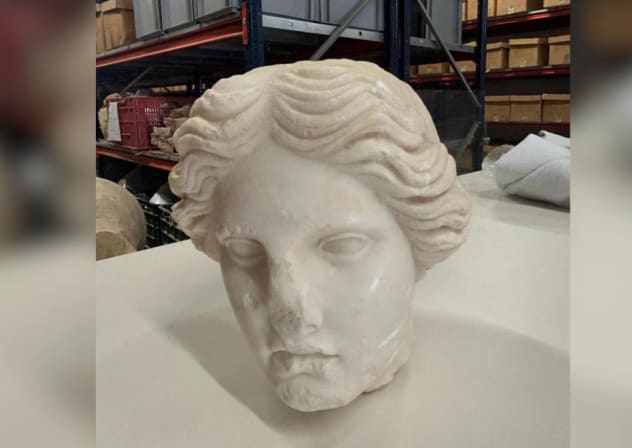
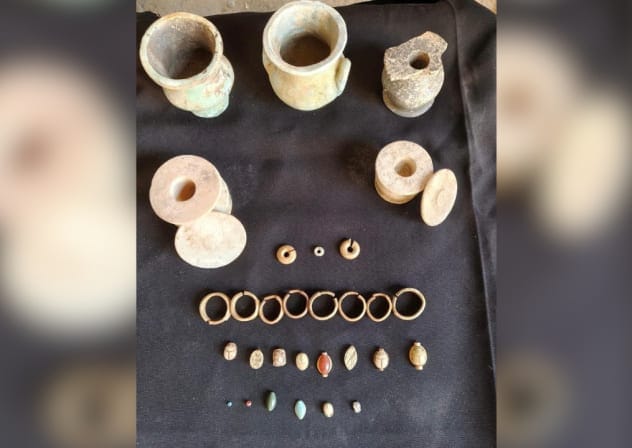
The finds include the ruins of a Roman basilica and Doric temple, the head of a marble statue of the Greek goddess Aphrodite, several cartouches, and molds used to mint coins in the Roman period.

In antiquity, Heliopolis served as a primary religious center for the worship of Ra - indicated by the Al-Masalla obelisk of the Temple of Ra-Atum.
The ship, coined "The Porcelain Wreck," is believed to have sunk around the mid-1700s, and was found at a depth of some 600 meters, the museum said.

Dental microwear analysis, which allows for the microscopic study of surface textures, confirmed that the marks were made after the animals' deaths, ruling out chewing or dietary wear and tear.
