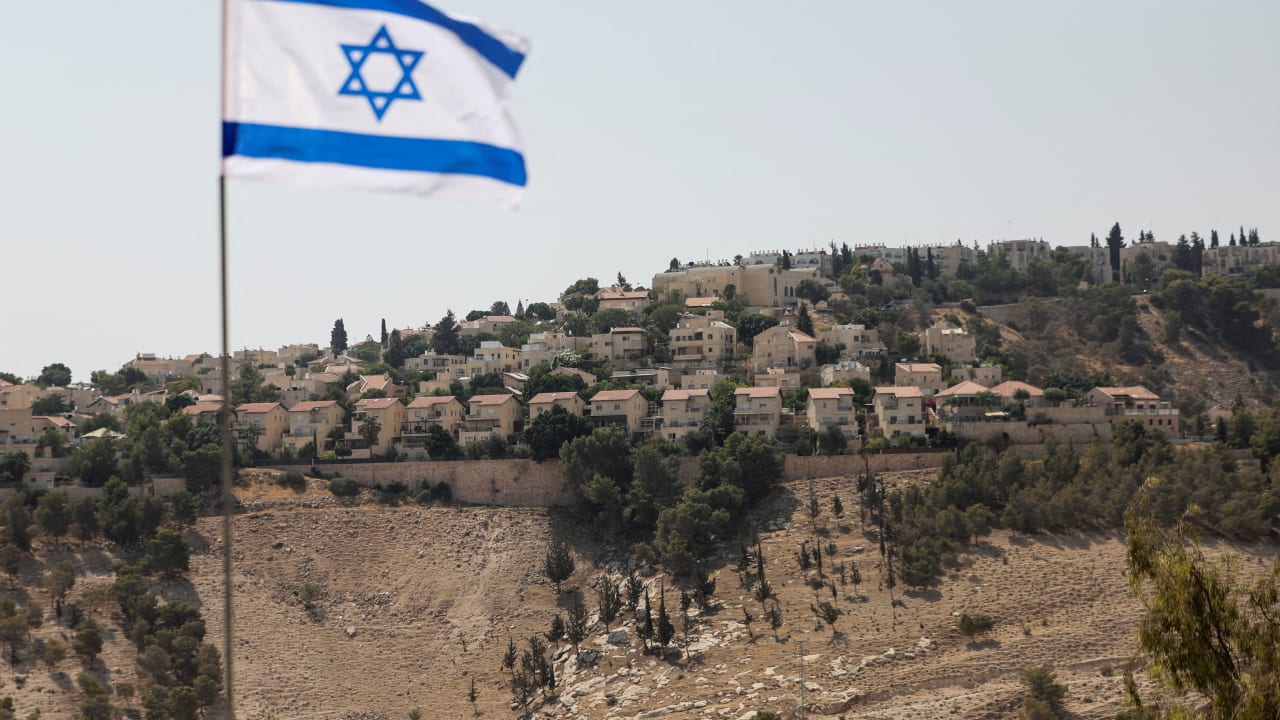
The violence perpetrated by residents of some settler communities, coupled with the fact that some Jewish settlements are located on land that formerly housed Palestinian villages, has sullied the reputations of settlers in general, including those who condemn violence and have no part in it.
On Thursday, there will be an evening conference in the auditorium of the Rav Amital Center in Alon Shvut, titled “Across the fence – yes to settlement – no to violence.”
Participants will include well-known settlement personalities such as the educator and co-head of Har Etzion Yeshiva, Rabbi Yaakov Medan.
One of the founding fathers of the settlement movement, Pinchas Wallerstein, who said he was horrified by escalating Jewish terrorism against Palestinians, will also be in attendance.
The head of the Yeshiva of the Jewish Idea, educator Rabbi Aviya Hacohen, and the president and founding head of Otniel yeshiva, Rabbi Benny Kalmanzon, are expected to participate in the conference as well.

Peace activist Hadassah Froman, who is carrying on the work of her late husband, Rabbi Menachem Froman, will also be there.
Menachem Froman was the chief rabbi of Tekoa, who had close ties with Palestinian religious leaders and advocated for interfaith negotiations between Jews, Christians, and Muslims.
His contacts amongst Muslims included members of the PLO and Hamas. Also among the speakers will be Maj.-Gen. Avi Bluth, who is the chief of the IDF Central Command. Bluth will present a review of the current security situation.
Members of the Hilltop Youth group, some of whom became known for their violent actions, including arson and murder, in the 1990s, are now considered to be extremist youngsters. The members of this group come from a national religious background.
Conference will feature a panel of young settlers
To counter their attitudes, the conference will feature a panel of young settlers who will discuss the challenges and achievements of their generation, as well as the red lines they believe should not be crossed.
The support Alex Sinclair received online, through phone calls and group demonstrations, indicates that there are still many liberal thinkers in Israel.
Sinclair became a hot international news item when he was arrested for wearing a kippah that had both the Israeli and Palestinian flags crocheted into it.
A kippah is a religious artifact. Many believe that in a democratic society, it should not be confiscated from the head of its wearer.
Aside from the violation of a Jewish person’s freedom of religious expression in the Jewish homeland and the removal of the kippah and its subsequent ruin by police cutting out the Palestinian flag, what is puzzling is that if it is permissible to have organizations that promote a two-state solution to the Israeli-Palestinian conflict, why is it “illegal” to wear a kippah with the flags of both?
After all, the message conveyed on the kippah was one of peace, and the owner of the controversial yarmulka happens to be religiously observant and seemingly committed to justice and living in harmony with others.
Hot on the heels of presenting the Woman of Valor Awards, the Ambassadors Club of Israel (ACI) will present on Thursday a special award to Alex Gabriel Kalua, the ambassador of the United Republic of Tanzania and dean of the African Group of Ambassadors living in Israel.
The award is in recognition of his distinguished and outstanding contribution to strengthening Israel-Tanzania relations, unwavering friendship toward the people of Israel, and warm ties with the ACI.
Australian immigrants and visitors to Israel, last week, in addition to marking Remembrance Day for the Fallen of Israel’s Wars, also marked Anzac Day, which fell on April 25.
However, this year, there was no traditional Anzac Day ceremony due to the security situation, even though a ceasefire had been declared.
Anzac Day initially commemorated members of the Australian and New Zealand armed forces who died in the ill-fated Gallipoli campaign during World War I. It now commemorates all Australian and New Zealand soldiers who died in wars in which Anzacs served.
The Anzac Day service is traditionally held at the Commonwealth War Graves Cemetery in Jerusalem, where several Anzacs, including Jewish service members, are buried.
When Australia’s Foreign Affairs Minister Penny Wong announced in February that Australia’s new ambassador designate to Israel was Neil Hawkins, a career diplomat who most recently was the Australian high commissioner in Pakistan, she also mentioned that Australia was proud to have been the first country to vote in favor of the partition plan for Palestine at the UN General Assembly on November 29, 1947.
Over the past three months, Australia has instructed nonessential officials and the families of all its representatives in the Middle East to return home. It has also facilitated the return of Australian tourists visiting the region.
As recently as a week ago, the country was still issuing advisories against travel to the Middle East, stating that the region was volatile and that the conflict could resume at any time.
Ongoing reports of violent attacks against Jews
Ongoing reports of violent attacks against Jews, which appear all too frequently in the international media, create the impression that Jews are reviled everywhere and by everyone. But that’s not true.
From May 4 to May 6, some 300 rabbis and pastors from close to 40 states will join forces in Washington for Israel Advocacy Day and to declare their “shared priorities of security, solidarity, and truth.”
The event will be co-hosted by the International Christian Embassy (ICEJ) – Jerusalem-USA – Eagles’ Wings and by the Israel Allies Foundation. Evangelicals will be prominent amongst Christian participants.
During the gathering, participants will meet with members of Congress to emphasize the need for stronger US-Israel relations, to confront and combat antisemitism, and to support protection for Jewish and all other faith-based communities.
Leading figures at the event include ICEJ USA president Dr. Susan Michael, Eagles’ Wings founder and president Bishop Robert Stearns, and Jordanna McMillan, the director at the Israel Allies Foundation.
Many evangelicals have been at the forefront of pro-Israel activities, another example of which was the Israel Independence Day reception hosted by Dr. Mike Evans, the founder of the Friends of Zion Heritage Center (FOZ).
The reception held at the FOZ Museum in Jerusalem was attended by a large representation of the foreign diplomatic corps, as well as numerous Israelis, including Knesset Speaker Amir Ohana.
During the evening, Evans presented the Hineni Award to Nathaniel Buzolic, Yoseph Haddad, and Hillel Fuld in recognition of their significant international advocacy for Israel.
Evans, who in previous years has launched huge billboard campaigns on behalf of Israel, has done so again.
Among the diplomats in attendance were Ambassadors María Cristina Cevallos Calero of Ecuador, Ava Atzum Arévalo de Moscoso, Ines Demiri of Kosovo, and Ezra Cohen of Panama. Also present was David Brownstein, the deputy chief of mission at the US Embassy.
Evans, an adviser to and great admirer of US President Donald Trump, dedicated the Independence Day reception to him.
Israel has a special fondness for Israel Prize laureate and retired basketball champion Tal Brody, who gave up his NBA career to come and play for Maccabi Tel Aviv.
Brody famously led the FIBA European Cup championship games in 1977 and defeated CSKA Moscow, which was the powerful flagship team of the Red Army.
Speaking Hebrew with a strongly pronounced American accent, Brody said after the victory, “We are on the map, and we are staying on the map – not only in sports, but in everything.”
Now, almost half a century later, those words are still being broadcast when Israel wins an important basketball game or makes remarkable headway in some other area of endeavor.
Brody remains a celebrity despite being 82. He maintains contact with the NBA and brings top-ranking players to Israel.
He did so even before he was appointed Israel’s goodwill ambassador. Now that he comes within the category of a citizen of the third age, he is also invited to special events at retirement homes.
Most recently, Brody was invited to the Till 120 facility in Tel Aviv for the inauguration of its Energym branch.
Energym operates within the framework of the facility’s longevity program, in which all the equipment under the Milon brand name is based on AI and geared to the needs and challenges of people of the third age.
Brody, who attended the ribbon-cutting ceremony for the new gym by Tomer Rosenberg, the CEO of the Till 120 network of sheltered living facilities, and Tel Aviv CEO Yaron Ben David, gave residents tips on how to best use the equipment to improve the quality and longevity of their lives.
At the unveiling at the President’s Residence of an exhibition featuring chief rabbis of Israel who had met with US presidents in the White House, President Isaac Herzog was very pleased to view photographs of his grandfather, who was the first chief rabbi of Israel and the second chief rabbi of Jerusalem to visit the White House to meet with the president of the United States.
Herzog family - a history with the White House
Actually, the Herzog family has quite a history with the White House. The president’s father, Chaim Herzog, who was Israel’s sixth president, was the first president of Israel to visit the White House, where US president Ronald Reagan hosted him.
Isaac Herzog’s uncle, Abba Eban, visited the White House both as ambassador and as foreign minister.
Chaim Herzog’s younger brother, Yaakov Herzog, accompanied prime minister Levi Eshkol to the White House for his meeting with US President Lyndon Johnson in May, 1964, and the current president’s older brother, Mike Herzog, a former ambassador to the US, presented his letters of credence at the White House.
Isaac Herzog visited the White House when Joe Biden was the incumbent POTUS.
American philanthropist and lawyer Jay Ruderman has an Israeli wife, Shira, who shares his passion for Israel and disability rights and serves as executive director of the Ruderman Family Foundation.
Jay Ruderman serves as president. He left the comfort of his Boston home to serve as a lone soldier in Israel.
Twelve years ago, the Rudermans expanded the activities of their foundation by going to Hollywood to work on behalf of talented people with disabilities, who had problems finding work in the entertainment industry.
They mounted vigorous campaigns to give people with disabilities access to roles in television and movies. Jay Ruderman also hosts a regular podcast, All About Change, in which he and his guests discuss and advocate for social justice and inclusion.
A recent guest was fellow Jewish philanthropist and iconic fashion designer Kenneth Cole, who was particularly interested in promoting mental health.
Cole won the 2025 Morton Games. The Morton E. Ruderman Award in Inclusion, named for Ruderman’s late father, is presented by the Ruderman Family Foundation to an individual who has made an extraordinary contribution to the inclusion of people with disabilities.
The award presented to Cole recognized his “transformative leadership in confronting mental health stigma and building a national movement for inclusion through storytelling, awareness, and action as the founder of the Mental Health Coalition.”
On the podcast, the two discussed the Mental Health Coalition’s origin, the state of mental health in America, how to work in mental health when you are not a doctor or mental health expert, and much more.
DURING HIS frequent visits to Israel, Canadian lawyer, politician, and human rights activist Irwin Cotler met his Jerusalem-born wife, Ariela, at a Knesset luncheon in 1977.
Following their marriage in 1979, he took her to his native Montreal, where he eventually became a member of Parliament, justice minister, and attorney-general.
Ariela Cotler, a social and political activist, became a powerhouse in both Jewish and non-Jewish circles. The Cotlers frequently visit Jerusalem, where they have an apartment.
Their daughter, Michal Cotler-Wunsh, the eldest of their four children, is a former Knesset member.
Ariela became a dual national when she became a Canadian citizen, but it was only recently that Irwin became an Israeli citizen.
The couple still commutes between Jerusalem and Montreal, but these days they spend more time in Jerusalem, where Irwin will celebrate his 86th birthday on May 8.
Following the widespread opposition to would-be candidates – most recently Yair Netanyahu – being appointed as chair of the United Israel Appeal, it looks as if the post will go to Ofir Akunis, who will soon wind up his role as the Israel consul-general in New York, after serving there since May, 2024.
Before heading to the Big Apple, Akunis served as Innovation, Science, and Technology minister, among other top political roles.
In 2006, Akunis was appointed media adviser to Prime Minister Benjamin Netanyahu during the latter’s first term in office, and later became the Likud spokesperson.
He was subsequently the spokesman for the Justice Ministry and Netanyahu’s media adviser during the period in which Netanyahu served as finance minister.
Since his election to the Knesset in 2009, Akunis has served on various committees and launched several important initiatives in science, social welfare, and communications. Akunis has had a close relationship with Netanyahu for over 30 years.
Voice of the People, the global Jewish alliance founded by Herzog, works not only in Jewish and Israeli advocacy and issues, but also builds interfaith and intercultural relationships with non-Jewish organizations and movements.
An example is the Jewish Indian Alliance, inaugurated in Los Angeles less than two weeks ago.
Strong bonds between Israel and India already exist and could be further strengthened through alliances with their respective diaspora communities.
The two-day inaugural event held at Sinai Temple and BAPS Hindu Temple provided a platform for cooperation at multiple levels.
Attendees included public figures, faith leaders, media personalities, and civic leaders. Their common goals and ideologies were said to include religious freedom, pluralism, mutual respect, democratic ideals, and in-depth education.
Another mutual factor is that both Indians and Jews have long histories, extraordinary resilience, and the ability to rise and flourish, regardless of the circumstances.
“This alliance is not just about dialogue, it is about building a framework for enduring partnership between our communities,” said Rabbi Erez Sherman, co-founder of the Jewish Indian Alliance and the rabbi of Sinai Temple.
“At a time of growing division globally, bringing Jewish and Indian voices together around shared values of faith, education, and service is both timely and necessary,” he continued.
Mehul Patel, a volunteer at the BAPS Shri Swaminarayan Mandir in Chino Hills, California, added: “This exchange reflects the deep respect and warm bond between our communities. By opening our doors to one another, we are creating space for learning, dialogue, and a shared commitment to strengthening our communities for future generations.”
Urban renewal is changing the face and character of cities, towns, and villages all over the country.
Soon, according to some, all that will be left of yesteryear will be the buildings recognized by the Society for the Preservation of Israel Heritage Sites. Even then, there is no guarantee that all the buildings will remain intact or restored to their former glory.
Many such buildings are gutted from the inside, leaving only the external walls.
But even the most progressive of Israeli architects likely feels that tomorrow’s designs stand on the foundations of architectural history.
With that in mind, the Association of Architects in Israel has established the Architectural Salon, the opening of which will take place on Friday at the historic Rishon Lezion Winery complex with an exhibition by Kimmel Eshkolot Architects under the title, “40 years – 40 projects.”
The Architectural Salon, which will serve as the permanent home for Israel’s architectural community, will host exhibitions that give the general public a comprehensive understanding of architectural design, as well as knowledge about the buildings that have shaped Israel’s academic, cultural, public, and residential landscapes.
Rishon Lezion was founded in 1882 by Jews who arrived in the Holy Land as part of the First Aliyah wave. Three years later, in 1885, the Carmel Winery was opened, and a year after that, the first Hebrew kindergarten and elementary school of the state in the making were established.
The original winery fell into disrepair, and Kimmel Eshkolot was responsible for its restoration, giving it the deserved privilege of being the first architectural firm to exhibit in the restored premises, which are still undergoing extensive preservation work.
“The establishment of the Architectural Salon is a significant moment for Israel’s architectural community,” architect Orna Angel, the chair of the Association of Architects in Israel, said.
“For the first time, a physical place has been created that is dedicated entirely to architectural discourse, the presentation of professional work, and engagement with the general public,” she continued.
“Architecture shapes and determines the quality of life for all of us, and it’s time for it to have a home, too. The choice of Rishon Lezion is not accidental. Not everything needs to happen in Tel Aviv,” Angel said.
“Culture, creativity, and architectural discourse belong to the entire country, and Rishon Lezion is a leading, developing, and central city that proves this,” she added.
Other than the winery, projects designed by Kimmel Eshkolot include the Memorial Hall at Mount Herzl, the Davidson Center in Jerusalem, academic buildings, including the Aerospace Engineering Faculty at the Technion, residential projects, and other public buildings.
“Over the years, we have engaged not only in designing buildings, but in creating a life experience within space for the people who live, work, and act within it,” Kimmel Eshkolot said.
In May, there will be several events, including panel discussions at the salon, in addition to the exhibition. The opening on Friday is at 10 a.m., and throughout May, from Tuesday to Saturday, 10 a.m. to 1 p.m., and also during evening hours on Thursdays.
The address is 25 Carmel Street, the Historic Winery Complex, Rishon Lezion.
Regardless of how long they’ve been in Israel and how well they speak Hebrew, most immigrants feel most comfortable speaking the language they spoke in the countries in which they were born.
Whether this applies particularly to English speakers is debatable. But frequent public transport passengers can attest that, among all the foreign languages they hear, English has, so far, topped them all.
That may explain why there are more organized English-language theater groups in Israel than in other languages. The oldest is the Light Opera Group of the Negev, founded in 1981; it’s a perfect acronym for the times we live in: LOGON.
The actors and singers are highly talented amateurs from Beersheba, Omer, and kibbutzim and moshavim near the Gaza border. The group’s current production is the perennial favorite The Pajama Game, which made its Broadway debut in 1954, with the cast giving more than a thousand performances before the curtain came down.
For those who have not seen it in previous productions in Israel or abroad, the plot centers on a workers’ strike at the Sleep Tite Pajama Factory and a romance between the factory superintendent and the strike leader.
The current production, directed by Yaacov Amsellem, is in English with Hebrew subtitles. Performances will take place in Ra’anana – Yad Lebanim, Tuesday, May 5, 7:30 p.m.; Jerusalem – Sherover Theatre, Sunday, May 10, 7:30 p.m.; Beersheba – Tammuz Hall, Sunday, May 17, 8:00 p.m.; and Modi’in – Modi’in Cultural Center, Sunday, May 24, 7:30 p.m.
Tickets can be purchased at www.negevlightopera.com.
The conference season is on. In addition to local and international conferences organized for special interest groups, media outlets are making an important contribution to Jewish solidarity with conferences mainly in Israel and the US, with leading Israeli and Diaspora personalities from various spheres being among the speakers.
Yediot Aharonot and Ynet this week hosted an all-women’s online summit under the heading, “Women of the state vote for equality,” something they are certainly not receiving from the Chief Rabbinate, many say.
On May 5, Israel Hayom will host a conference on sport, business, and technology at Bloomfield Stadium in Tel Aviv, to form partnerships between sports clubs and Israel’s business community.
On May 11, The Marker, the economic supplement of Haaretz, will bring together senior executives from retail, commerce, electronics, and consumer industries at the Avenue Conference Center at the Sharon Street Airport City, to discuss new developments in their fields.
On May 31, Beersheba and ILTV News will host their Jerusalem Conference at the Park East Synagogue in New York, featuring messages of solidarity and mutual responsibility.
On June 1, The Jerusalem Post will host its annual New York Conference against the backdrop of Middle East tensions, challenges, and opportunities, with experts on economy, politics, innovation, and more among panelists and individual speakers.
The conference will be chaired by Ronald S. Lauder, the president of the World Jewish Congress.
Last on this short list is JNS, which will host a Shabbaton at the end of its three-day International Policy Summit, June 21-23, at the Waldorf Astoria hotel in Jerusalem.
The list of speakers includes some of the best and brightest in the Jewish world, most of whom have previously participated in Post conferences and who almost always draw large crowds.
What all this indicates is that reading, viewing on screen, and listening to broadcasts are not enough. Community and communication are important human characteristics, and media outlets provide platforms for Israelis whose freedom of movement and collectivity have been limited by war to come together and feel they are not alone, but part of an historic evolution.
The views expressed in this article are those of the author and do not necessarily reflect the views of The Jerusalem Post or its affiliates.
greerfc@gmail.com