An-Nahar, Lebanon, July 23
For more stories from The Media Line go to themedialine.org
The rapid developments in the Strait of Hormuz and the Red Sea point toward a broader confrontation between the US and Iran, particularly as threats escalate between President Donald Trump and Iranian officials and diplomatic efforts led by Pakistan and Qatar fail to produce a breakthrough.
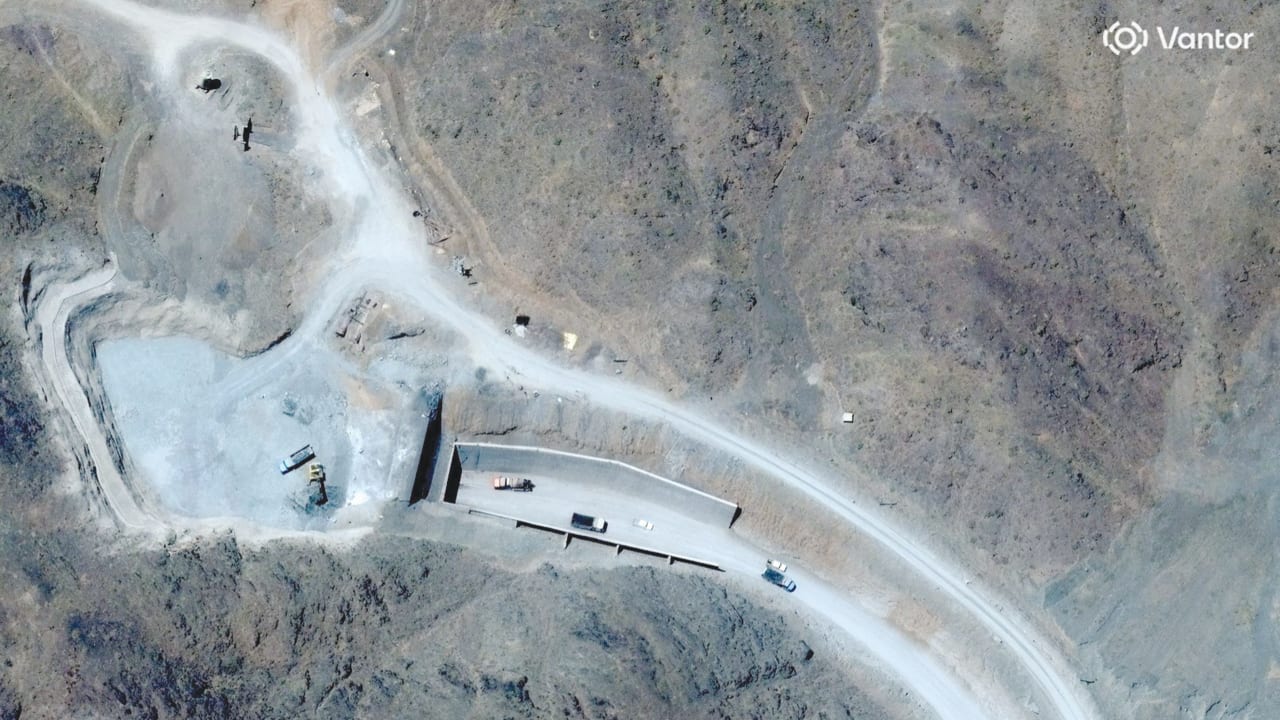
Several signs suggest that Trump is preparing for further escalation. He has threatened to strike Pickaxe Mountain near Iran’s Natanz nuclear facility “very soon,” added multirole B-1 bombers to the aircraft carrying out raids on Iran for the past 12 days, and reinforced US military medical teams at German bases that treat troops wounded in the Middle East.
These reinforcements may also be connected to possible strikes against the Houthis following their announcement of a naval blockade on Saudi Arabia. Despite debate in Congress over the war’s objectives, the Republican-controlled House approved an additional $73 billion to support military operations in the region.
Trump chose the moment when he was receiving the bodies of four American soldiers killed in Iranian attacks in Jordan and Iraq to issue a new warning: US forces would destroy a bridge or power station in Iran every time the Revolutionary Guard attacked an oil tanker in the Strait of Hormuz.
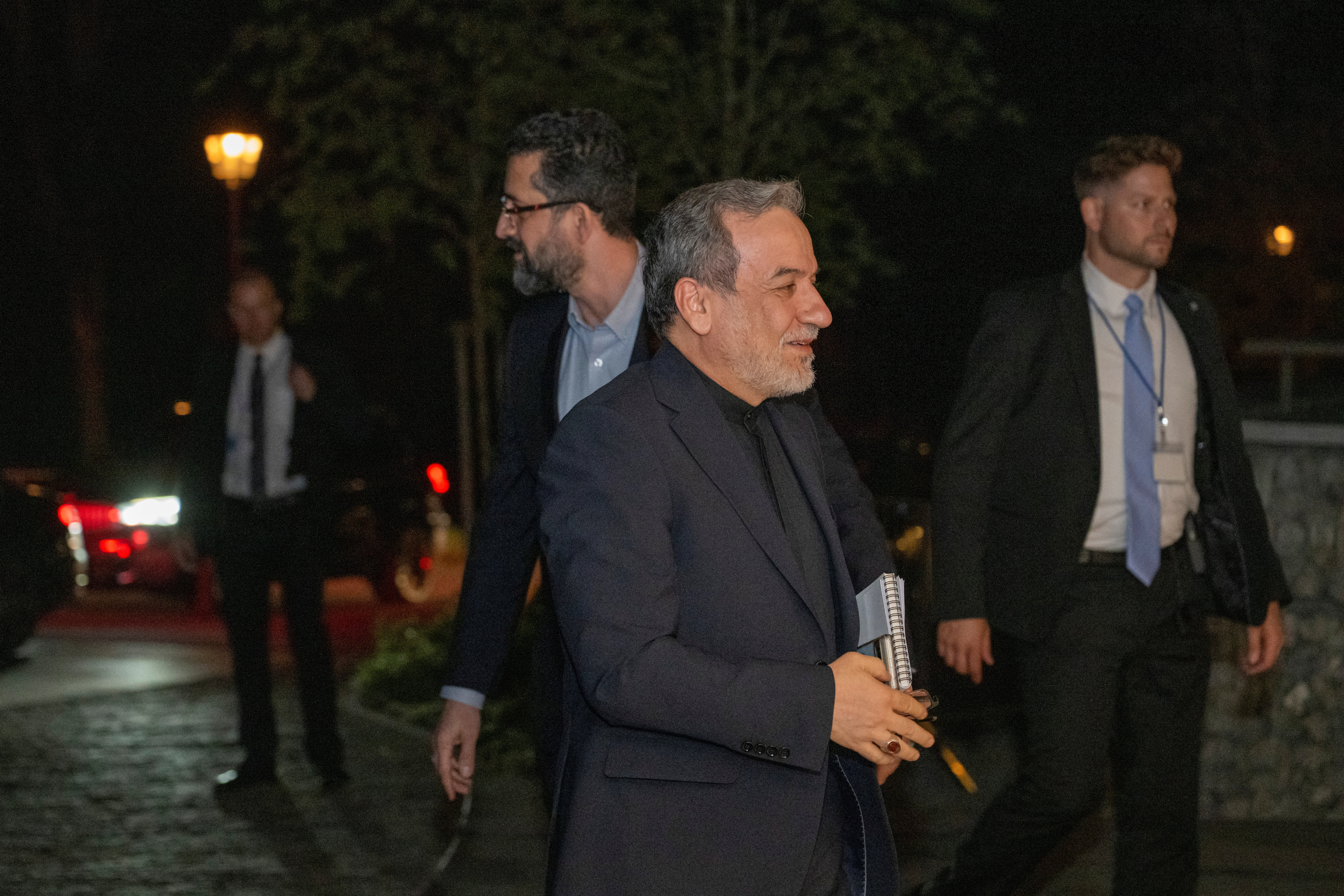
Iranian Foreign Minister Abbas Araghchi answered by invoking the principle of “an eye for an eye.” Iran’s joint military command had already pledged to retaliate against civilian infrastructure across the Gulf states if Trump carried out his threat.
Hours later, the Islamic Revolutionary Guard Corps announced that a tanker had struck a mine while traveling through the southern lane of the strait, while two others turned back. The confrontation is also expanding in the Red Sea.
Riyadh announced that a Saudi oil tanker had been hit by a projectile, while the Houthis claimed responsibility for targeting two Saudi tankers sailing toward Bab el-Mandeb, three days after declaring a maritime blockade of Saudi ports.
Since the Houthis notified oil companies of the blockade by email, several tankers have changed course away from Bab el-Mandeb and toward the Suez Canal, increasing insurance costs and lengthening journey times. Oil prices have reached about $96 a barrel.
US Secretary of State Marco Rubio directly accused Iran of inciting the Houthis to carry out the attacks. The opening of this front places additional burdens on American forces and redraws the map of the confrontation.
A source told CNN that Mossad chief Roman Gofman met Trump administration officials in Washington two weeks ago and provided intelligence concerning Mount Pickaxe in Iran. Did his visit prepare the ground for Israel to join the US in strikes against Iran if escalation continues?
That possibility cannot be ruled out. Against this volatile background, Washington’s announcement of a “historic” civil nuclear cooperation agreement with Saudi Arabia was also highly significant. The agreement, which still requires congressional approval, includes nonproliferation safeguards and would allow the kingdom to enrich uranium on its own soil. – Samih Saab
The war reshaping negotiations
Al-Masry Al-Youm, Egypt, July 24
After more than 10 consecutive waves of American strikes on Iran – 12 as of this writing – alongside continued Iranian retaliation and regional mediation, the anxious question has become unavoidable: Is this a war intended to produce a decisive outcome, or a means of imposing new negotiating terms?
The answer is not easy because the scene combines two apparent opposites. Washington and Tehran are exchanging fire, yet mediation channels remain active and political messages are being sent alongside missiles.
Neither side has abandoned the negotiating table; each has moved part of it onto the battlefield. The US does not appear to be preparing for a war aimed at overthrowing the Iranian regime or occupying Iranian territory.
Its objective is to deprive Tehran of one of its most important strategic assets: the ability to threaten navigation through the Strait of Hormuz and convert it into an instrument of political and economic influence.
Iran, meanwhile, seeks to demonstrate that Gulf security cannot be imposed without it and that any regional arrangement designed to bypass Tehran will remain incomplete and unstable. Hormuz is therefore no longer merely a waterway.
It has become the symbol of a struggle over who has the right to establish the rules of security in the Gulf. Washington wants freedom of navigation that is not subject to Iranian will, while Tehran believes its geography gives it a natural right to serve as an indispensable partner in managing this vital passage.
Yet this confrontation carries mounting danger. Every new round of strikes reduces the ability of both sides to control escalation. An Iranian attack could cause American casualties that compel Washington to respond more broadly.
An American raid could hit a target Tehran considers a matter of sovereignty or survival, turning a limited war into a confrontation that becomes difficult to contain. At that point, decisions would no longer rest with politicians alone, but would become hostage to public pressure, military institutions, and the logic of reciprocal retaliation.
Even so, the signs of full-scale war are not yet complete. There are no American ground forces inside Iran, no campaign openly aimed at toppling the regime, and despite disruption to shipping, the Strait of Hormuz has not been fully closed.
Regional mediators also continue searching for a ceasefire or a formula that could return both sides to negotiations. Here lies the paradox. Each side is using war to improve its negotiating position, but continued fighting may cause the battlefield to determine the future of diplomacy rather than the reverse.
Every additional day of bombing raises the cost of retreat and makes any settlement appear to domestic audiences as a concession. The question is no longer war or negotiation, but whether politics can catch up with the war before it escapes the objectives for which it was launched. The door to a new agreement remains open, but it narrows with every fresh strike.
If this path continues, a limited war may cease to be a tool of pressure and become a strategic reality that redraws the balance of power across the Middle East. – Abdel Latif Al-Menawy
The 2026 World Cup showed how sport builds bridges
Al-Ittihad, UAE, July 24
Spain brought the largest World Cup in FIFA history to an unforgettable close on July 19 with a deserved 1-0 victory over Argentina. The six-week tournament, hosted by the US, Canada, and Mexico, overcame early doubts about ticket prices, difficult travel, and the challenge of expanding the competition to 48 teams. By the final whistle, most critics considered it a success.
The tournament featured 104 matches and an extraordinary range of football drama. Strikingly, the four teams that reached the semifinals were also the four highest-ranked sides before the competition began, an unusual outcome in a sport famous for surprises. Yet the quality of the closing matches justified those rankings.
England defeated France 6-4 in a thrilling third-place playoff, the highest-scoring match of the tournament. The following day, Spain controlled the final and overcame Argentina in extra time to win the title.
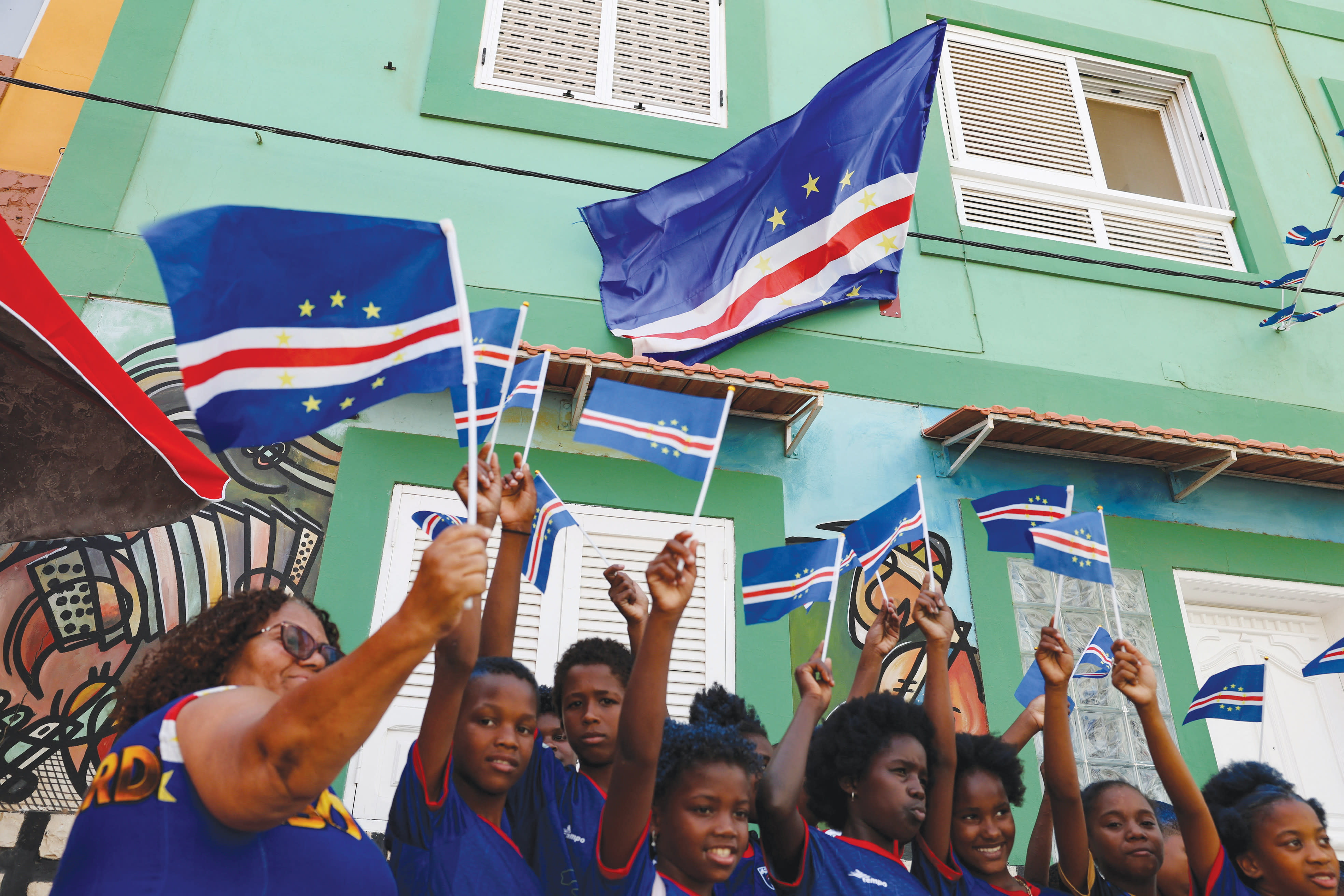
Although the traditional powers ultimately prevailed, the tournament also celebrated football’s growing global reach. Cape Verde, appearing in its first World Cup, stunned supporters by drawing with eventual champion Spain in the opening round. Morocco, Egypt, and Norway showed that rising teams can compete with the established elite, while Norway’s dramatic victory over Brazil ranked among the competition’s biggest surprises.
Perhaps the tournament’s greatest achievement took place away from the pitch. Before it began, there were widespread concerns that host cities would struggle to absorb the unprecedented influx of fans. Instead, the World Cup became a celebration of international friendship.
From Mexico City and Vancouver to Seattle, Kansas City, Boston, and Philadelphia, visitors blended easily into local communities. Scottish supporters filled Boston’s streets, while fans from every continent exchanged songs, flags, and stories. Many overseas visitors left impressed by the hospitality, organization, and warm welcome they found across North America.
Expanding the tournament to 48 teams clearly broadened its appeal. More countries participated, new heroes emerged, and supporters arrived from nations that rarely receive meaningful World Cup coverage.
Debate will continue over further expansion in 2030, but this year showed that, when carefully managed, growth can enrich the event rather than dilute it. The competition may also have marked a turning point in America’s relationship with football. The sport has grown steadily for decades, but millions experienced for the first time the atmosphere, emotion, and celebrations that make the World Cup unlike any other sporting event. For several weeks, it provided a welcome escape from domestic political tensions and even rivaled celebrations marking the 250th anniversary of the US.
Perhaps this was its greatest achievement. In a world fractured by war and political division, people gathered to watch from Gaza to distant Pacific islands and African villages, regardless of whether their countries were participating.
Few sporting events can unite strangers through shared excitement and hope. No tournament is perfect, and organizers will refine the format before the 2030 edition spanning Europe and Latin America. Yet the 2026 World Cup proved that sport can still build bridges that politics so often fails to construct. That may be its most enduring legacy. – Geoffrey Kemp
Two surprises from China
Asharq Al-Awsat, London, July 23
A few days ago, Beijing unveiled two technological surprises that caused a stir in Silicon Valley. The first was the launch of a giant artificial intelligence language model called Kimi K3, developed by a startup. It underwent some of the world’s most important programming tests and outperformed certain models from Anthropic and OpenAI, demonstrating an exceptional ability to analyze unusually large documents, reports, and databases, a capability certain to attract companies. The second surprise may prove even more consequential.

A team at Zhejiang University launched the Qiushi engine, a specialized agent designed to conduct scientific research independently. It too outperformed Anthropic’s Open Science Desktop and Claude Code systems in the ResearchClawBench test, which was designed to measure this type of capability. For the first time, an AI system has demonstrated the ability to function as a researcher that plans, conducts experiments, and corrects its own mistakes, almost like a graduate student.
The system was described as a milestone after completing a study through thousands of steps, from formulating a hypothesis to experimental verification. What concerns Silicon Valley is that China is no longer simply imitating others. It is opening new fronts and pursuing a comprehensive technological strategy, redefining standards and proposing new ways to build artificial intelligence and apply it to daily life.
The unveiling of Kimi K3 caused a genuine shock. It has become one of the largest open models, with as many as 2.8 trillion parameters and the ability to process contexts of unprecedented scale. Yet more important than its skill in handling complex tasks is its low price, recalling the inexpensive DeepSeek model that stunned the industry.
Even if Chinese models are not always the most intelligent overall, their affordability and open-source character pose a real challenge and make them attractive to companies. Qiushi drew particular attention because it does not merely answer a scientific question based on what it has read.
It performs a connected series of tasks, carrying out experiments, analyzing the results, and producing conclusions and suggestions that had not previously been proposed. Its developers did not claim that it would perform reliably in every future test. They acknowledged that it still needs further training, refinement, and human intervention.
Even so, it represents an impressive step and the beginning of a shift from “AI that assists the researcher” to “AI that leads the research itself,” potentially allowing research to advance at a previously unimaginable speed. Together, the two systems reveal part of China’s multifaceted technology strategy, which seeks to cover a wide range of fields rather than merely compete in language models.
Kimi K3 enters a familiar arena, while Qiushi opens a different one and raises a profound question: Can a machine become a genuine researcher, or will it remain only an assistant? The fact that both projects succeeded at roughly the same time through two very different teams – one a startup and the other a university group – suggests an integrated ecosystem advancing in several directions at once.
China has trained some advanced models on domestically produced processors from Huawei, Alibaba, and others, betting that engineering skill can compensate for weaker computing power and disadvantages in advanced chips. In China, nothing happens by accident. Qiushi was launched to coincide with the World Artificial Intelligence Conference in Shanghai, where President Xi Jinping announced a new global alliance to regulate AI in the service of “common prosperity.”
The objective was clear: to present China as a global technological power, not a marginal competitor. The next phase will be fascinating because the competition will no longer be limited to smarter language models in the style of ChatGPT and Claude.
The real race will be to create highly intelligent specialized agents in science, medicine, and engineering. Another issue will become central: which systems deserve users’ trust in terms of safety, reliability, and personal privacy? – Sawsan Al-Abtah
The future belongs to the young – which should worry Israelis
Yediot Aharonot, Israel, July 24
Congratulations are due to the four million American students who graduated this summer from thousands of universities and colleges across the country. Soon they will begin careers at prestigious law firms, on Wall Street, in Hollywood and on Broadway, and at Google, Microsoft, and other leading technology companies.
These talented people in their 20s will help shape America’s economy, science, culture, and politics. They are the country’s future, and Israel should already be asking what that future will mean for it. Since Oct. 7 and the continuing war in Gaza, the pro-Palestinian movement has taken root on American campuses and among students who see themselves as committed activists.
The instinctive response is to dismiss them as naive, ignorant, or manipulated by progressive opinion leaders backed by Qatari funding. That condescension may be justified, or it may not, but it does nothing to address the deeper crisis: most Americans are growing more distant from Israel, while the political protection it long enjoyed in Washington is beginning to erode. Today, a majority support ending military aid financed by their tax dollars.
This shift extends far beyond chants of “Free Palestine.” Recent polling points to a dramatic collapse in Israel’s image, particularly among young adults, 75% of whom hold unfavorable views of a country that once enjoyed near-automatic American sympathy.
In Jerusalem, some still imagine Israel as a beacon admired around the world. Perhaps that was once true, especially among Diaspora Jews who embraced it as both a Jewish and democratic homeland. But even within American Jewish communities, that attachment is weakening.
Older generations remember an Israel of pioneering idealism, liberal Zionism, and a nation striving for peace while fighting for survival. In that narrative, peace failed because of Palestinian and Arab rejection, and Oct. 7 seemed to confirm it.
Yet for many younger Americans, Oct. 7 has also become inseparable from the mass killing of Palestinian civilians that followed. The war in Gaza and settler violence in the West Bank have transformed their understanding of Israel.
Their parents remember Rabin; they know Benjamin Netanyahu. The students who erected encampments at Columbia, marched under the slogan “Not in Our Name,” and voted for Zohran Mamdani grew up knowing only Netanyahu’s Israel: nationalist, brutal, committed to maintaining the occupation, and uninterested in a political settlement.
Some Israelis dismiss them as antisemites or, when they are Jewish, self-hating Jews. Some undoubtedly are. But many are educated, informed, and intellectually serious. Their worldview may be more current than that of Israelis who deny the occupation’s significance or ignore the collapse of their country’s standing abroad. This is not a public-relations failure but a strategic crisis.
Young Americans are not merely rejecting Israeli messaging; they are responding to Israeli policy. Israel’s leaders no longer argue that the Middle East cannot resemble Switzerland – they openly say they have no desire to become Switzerland: peaceful, liberal, and prosperous. Over the past decade, they have made equally clear that they see little value in pursuing peace. The Palestinian Authority became a burden; Hamas became an asset.
From Netanyahu’s perspective, the occupation is not the problem; the problem is the world’s insistence on treating it as one. Yet Israel has forgotten that it cannot exist independently of the world’s judgment. Its greatest long-term threat is not international hostility but complacency, arrogance, national self-righteousness, and the belief that reality will bend to ideology.
The Netanyahu, Itamar Ben-Gvir, and Bezalel Smotrich government prefers messianic certainty to confronting the consequences of its policies. Today’s students will become tomorrow’s judges, executives, journalists, lawmakers, diplomats, and presidents. When they turn their backs on Israel, it may be because Israel first turned its back on the better, more beautiful country in which their parents once believed. – Amir Kagan
Translated by Asaf Zilberfarb. All assertions, opinions, facts, and information presented in these articles are the sole responsibility of their respective authors and are not necessarily those of The Media Line, which assumes no responsibility for their content.