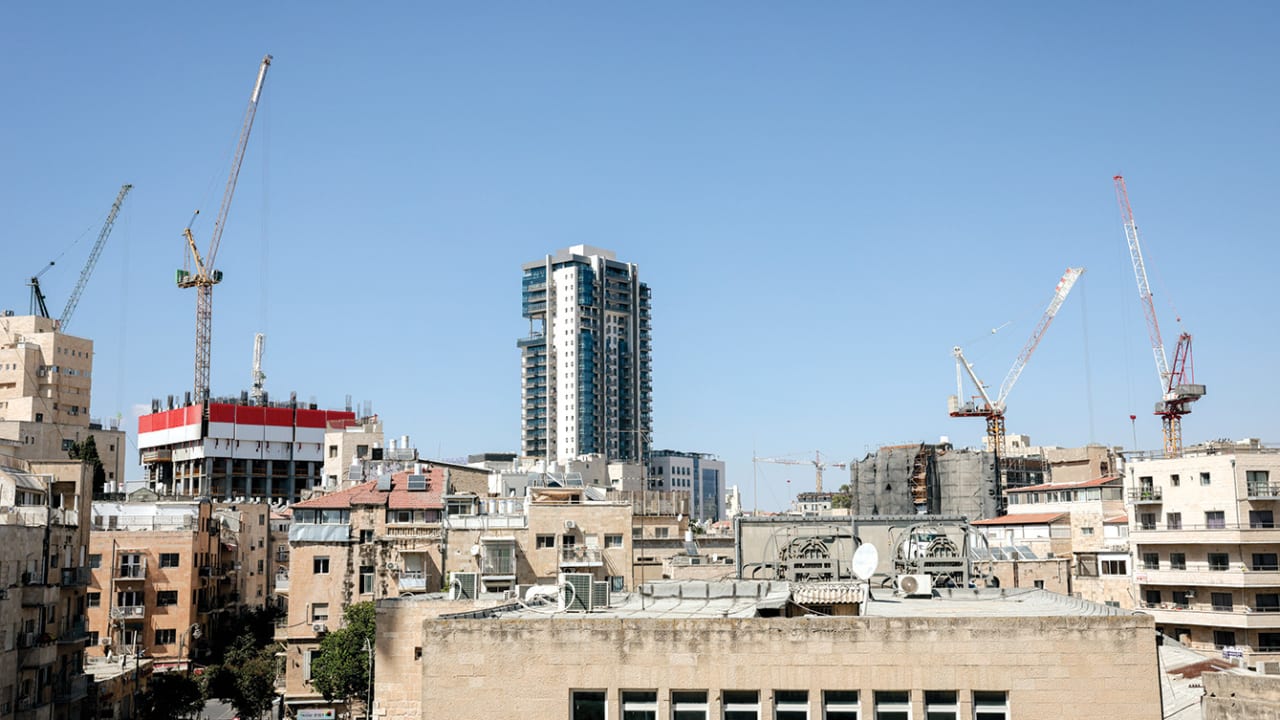
The former President Hotel on Talbiyeh’s Ahad Ha’am Street has been a contentious issue since its 1954 opening.
Haim Shiff, the initial owner, was a man of vision. When he built the hotel, he included a swimming pool, the first hotel pool in Jerusalem. That little luxury cost him his kashrut license, as the rabbinate objected to mixed bathing.
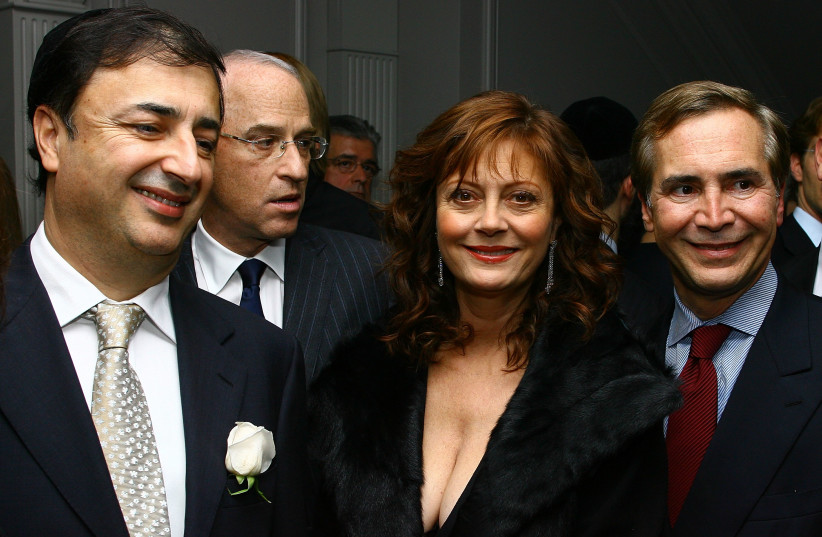
Shiff lost the hotel in 1988 after declaring bankruptcy, and it was purchased by the Africa Israel Group headed by Lev Leviev.
The building was leased to the Jewish Agency, which used it as an absorption center to house immigrants from the former Soviet Union for a couple of years. After they moved out, the building was abandoned and fell into neglect, infiltrated by addicts and the homeless.
A site that keeps changing hands, with no construction to show for it
Since the rear of the building extends to Sokolov Street, Leviev was keen to tear it down and build a huge residential complex with a facade facing Ahad Ha’am, Sokolov, and Keren Hayesod streets.
Neither the municipality nor area residents were in favor of this. The municipality wanted to at least preserve the exterior frame.
In the final analysis, a compromise was reached in 2014: Africa Israel would build a mixed-use complex comprising a hotel and residential units. The plan was approved but never implemented beyond the gutting of the interior.
In 2017, the hotel was sold to the Dayan group along with all the other hotels in the Africa Israel portfolio. But the Dayans did nothing about building a new facility on the site. In 2020, they sold the hotel to Nahum Rosenberg and partners.
Rosenberg was considerate of neighbors’ feelings and came to several local meetings to resolve differences. There was a lot of chopping and changing in the plans, especially regarding the height of complex buildings and how increased traffic would affect the young children playing in Sokolov Park.
In the interim, Rosenberg restored part of the building and made it available as a social space, where it quickly became a popular venue for dance and yoga classes, secondhand clothing exchanges, charity organizations, art exhibitions, and religious services. Eventually, Rosenberg saw that negotiations with the locals were not going anywhere and decided to sell. From his perspective, it was a wise financial decision.
Planning committee approves towers despite residents’ objections
Complicating matters is ownership of the land, which belongs to the Greek Orthodox Patriarchate. The land was leased for 99 years to the JNF, yet some of it was sold by the previous Patriarch. This issue is still murky.
Meanwhile, the District Planning Committee has given the green light to the latest construction plan for the site, for 12- to 13-story residential towers on top of a commercial floor at ground level.
Two residents of the area, Bernice Fogel of Sokolov Street and Colin Leci of Brenner Street, have kept their fingers on the pulse of developments and are angry that the planning committee has ignored objections just as it has ignored the 200-plus objections raised against the construction of a multi-story tower overlooking Mount Herzl.
As yet, there is no published date as to when construction of the President project will begin, but if it is anytime soon, it will cause greater discomfort and aggravation to a significant segment of the community which is still coping with the difficulties incurred by construction of the light rail.
Why build more when thousands of apartments sit unsold?
As for additional construction projects, what reason is there to go ahead at this time when the traditional media is full of stories about thousands of unsold apartments around the country which are simply too expensive for young couples, who, on top of mortgage payments, have to pay high maintenance?
If there are so many unsold apartments, and still a long waiting period before light rail construction is completed and roads and sidewalks are properly paved, what is the point of starting more residential projects at this time?
Mayor Moshe Lion anticipates a huge influx of immigrants due to spiraling antisemitism abroad, but so far, more Israelis are leaving than the number of Diaspora Jews opting to come into the country.
If the wave of antisemitism begins to subside, so will aliyah statistics. What will then happen to all those empty, unsold units?
Even if there is a drastic reduction in the price, people will be reluctant to buy unless they can be assured of plenty of neighbors. No one wants to live in something resembling a ghost town.
greerfc@gmail.com