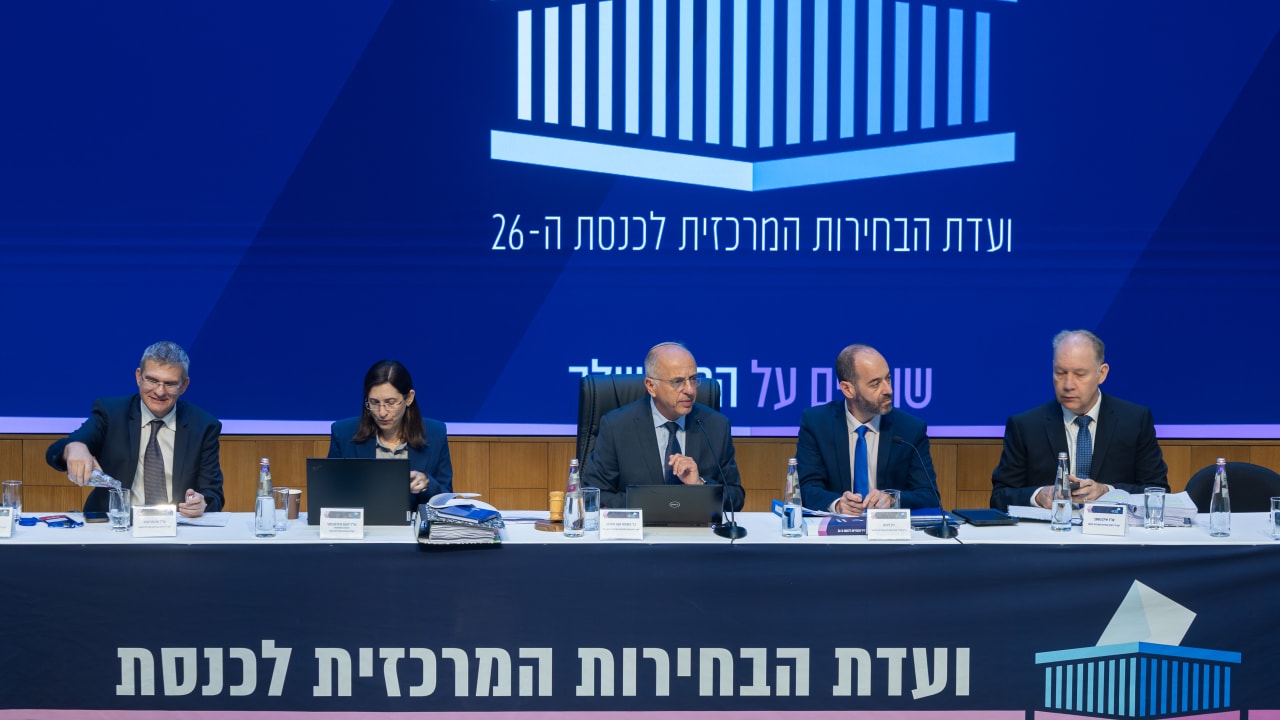
Central Elections Committee chairman Justice Noam Sohlberg issued a temporary order on Tuesday barring United Torah Judaism and its representatives at polling stations from reporting voter turnout figures, prompting the Movement for Quality Government to demand immediate police enforcement nationwide.
The order prohibits reporting the number of people who have voted at a polling station either in real time or through periodic updates. Issued following a petition by the movement, it required UTJ to respond by 2:15 p.m.
In its response, UTJ said it was complying with the High Court’s rulings and was not transmitting information from polling stations. It said it had instructed all its polling-station representatives at 9:27 a.m. not to report voter numbers by any means, before Sohlberg issued Tuesday’s order.
The party said it had initially understood the October 22 ruling to prohibit only digital reporting and had prepared to transmit figures by other means. It claimed it learned only on Tuesday morning of a subsequent decision prohibiting transmission by any means, and issued the instructions after obtaining that decision from the elections committee.
UTJ asked Sohlberg to dismiss the petition and award costs, arguing that MQG could have established its compliance by contacting it before filing.

The intervention brings to Election Day a dispute that has moved through the elections committee and the High Court of Justice since August: whether representatives stationed inside polling stations to administer and supervise voting may pass information obtained there to their parties for campaigning.
The petition followed a report by Channel 13 journalist Yoeli Brim and forms obtained by MQG. The outlet reported that the forms instructed UTJ polling-station representatives to record voter numbers and report them by telephone to a Degel Hatorah system from outside the polling room.
In its subsequent letter to Police Commissioner Daniel Levy, senior police officials and Attorney-General Gali Baharav-Miara, MQG said the order had been issued at 1:08 p.m. and requested enforcement “immediately and without delay” at polling stations throughout the country.
It also asked police to investigate suspected violations where necessary, collect testimony, identify those involved, and gather and preserve evidence.
Movement for Quality Government urges immediate enforcement of court rulings on Election Day
“The High Court’s decisions and the election committee chairman’s order are binding, and on Election Day there is no time to wait,” said Jacqueline Bracha, an attorney in MQG’s economic department.
“We expect the police to enforce the order issued today at all polling stations immediately, so that voters can vote without fear and without party representatives tracking voter numbers in real time.”
The dispute initially concerned reports identifying individual voters who had cast ballots. Systems such as Elector allowed campaigns to compare that information with their databases and contact likely supporters who had not yet voted. The information revealed whether someone voted, not how they voted.
Sohlberg prohibited the practice in August, finding that information available to polling-station officials for election administration could not be transferred for party campaigning without legal authorization. He also provided for the committee to release aggregate turnout figures, giving parties information about participation without identifying individual voters.
Likud challenge leads elections committee to permit identified reporting under restrictions
Likud challenged the prohibition, including Sohlberg’s authority to impose it alone. Under an arrangement approved by the High Court, the issue went before the full elections committee, which voted on September 6 to permit identified reporting subject to restrictions.
On September 17, the High Court unanimously overturned that permission. Justices Yael Willner, Alex Stein and Khaled Kabub held that polling-station representatives perform public functions and lack legal authority to transfer identifiable voter information to their parties for campaign purposes. The court also found that the practice violated voters’ privacy. Parties remained free to contact voters and encourage participation using information they could lawfully use.
The next dispute concerned whether representatives could report numerical totals without identifying anyone.
In an October 14 clarification following a request from Likud attorney Ilan Bombach, acting committee director-general Dean Livne permitted polling committee members and party observers to digitally count voters and transmit those numbers to their parties, provided they did not identify the voters.
Israel Democracy Guard challenges legality of collecting and transmitting voter information
The Israel Democracy Guard organization challenged that permission. Its argument was that removing names did not resolve the separate question of whether officials inside polling stations were authorized to collect and transmit information for party headquarters.
The state and Likud defended the distinction between numerical reporting and identifying individual voters, arguing that turnout figures could help parties encourage participation.
On October 22, the High Court rejected the permission in a 2-1 decision, with Kabub and Justice Ruth Ronnen in the majority and Justice David Mintz dissenting. That ruling barred digital counting and real-time transmission of voter totals by party representatives serving on polling committees or as observers.
Tuesday’s order specifically addresses UTJ and its representatives, expressly prohibiting periodic reports as well as real-time updates.