
The temptation to think of a “doomsday weapon” in terms of a nuclear bomb is natural. It is dramatic, absolute, and instantaneous. But Israel’s strategic reality against Iran and its proxies: Hamas, Hezbollah, and others teaches a different lesson: The real doomsday weapon is already here.
It is not one explosion that decides a war, but an ongoing process of erosion, chaos, attacks on civilians, and the gradual destabilization of a state from within. This is, by nature, an asymmetric war.
On one side: advanced technology, first-rate weapons systems, intelligence superiority, and operational capabilities. On the other: “inferior weapons”: rockets, drones, civilian terror, and global economic threats, such as closing the Strait of Hormuz. Yet it is precisely this “inferior” arsenal that strikes at the most sensitive core of democracy: the citizen’s sense of security, economic stability, and public trust.
The real gap is not technological; it is moral and political.
A democratic state operates under the constraints of public opinion, elections, and legitimacy. It constantly asks itself: “What will the public think?” A dictatorship such as Iran asks a different question: “How do we preserve the regime?” From its perspective, hunger, poverty, and public suffering are acceptable prices as long as the regime survives.

That is the deeper asymmetry, not only who is stronger, but who is willing to pay a higher price over time.
The US as the campaign director
It is impossible to understand this war without the role of the United States. It is not merely an ally, it is the guiding force. In the confrontation with Iran and on the northern front facing Lebanon, Israel operates within a strategic framework shaped in part by American interests.
The US seeks to prevent an Iranian nuclear capability, preserve regional stability, protect the global economy, and maintain its own hegemonic role.
What it does not want is a full regional war, nor is it willing to bear the domestic political cost of one. Therefore, it balances enabling action while restraining escalation. This creates an inherent tension between Israel’s desire for decisive victory and America’s preference for risk management.
The cost is already visible. The US emerged bruised from the confrontation with Iran, worn down domestically and internationally, while Israel lost part of the political credit it once enjoyed. That credit is not unlimited, and in future rounds it may be harder to secure the same level of support.
Long wars: the real strategic threat
Long wars are a strategic failure for almost every nation. They drain economies, erode public confidence, and weaken leadership. But for Israel, a small country highly dependent on reservists and civic resilience, they are especially dangerous.
A prolonged war is not just fought on the battlefield. It damages the labor market, investment climate, education system, and social cohesion. It creates fatigue, polarization, and attrition.
Israel’s enemies understand this well. They are not seeking one sharp victory; they seek to drag Israel into an endless campaign with no clear endpoint.
This is not their mistake. It is their strategy.
Hamas - The price of indecision
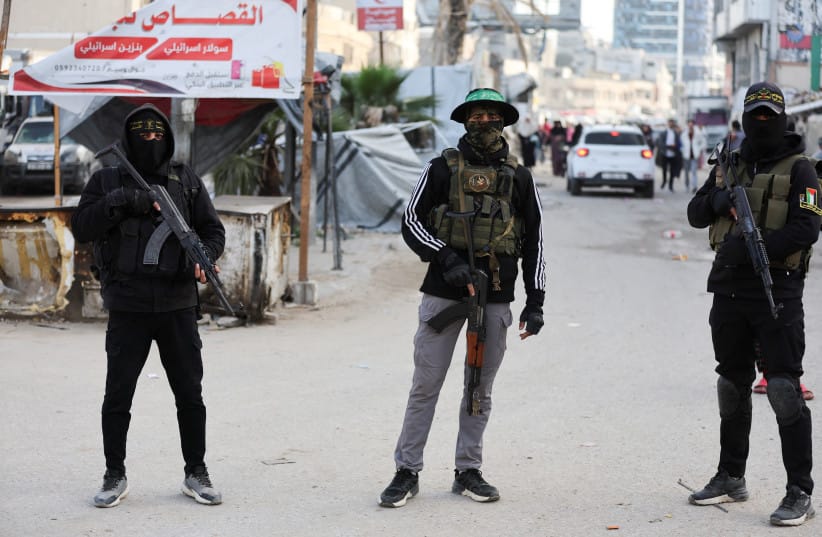
Hamas is the clearest example of what happens when there is no decision about “the day after.” For months, Israel avoided defining who would govern Gaza, who would assume civilian responsibility, and who would prevent the return of terror. But something always fills a vacuum. Half a year later, Hamas is trying to rebuild itself. It is recruiting fighters, probing the border, and restoring infrastructure. Its ideology has not disappeared. Its desire to destroy Israel remains alive.
Here too, the US has stepped in, assuming responsibility for shaping “the day after,” not out of desire, but necessity. When Israel does not define reality, others define it instead.
The conclusion is clear: Without a decision on the day after, there is no victory. There is only a pause.
Why the Iranian regime is not falling
Many hope the solution will come via the collapse of the Iranian regime, this is a dangerous illusion. The regime is built on strong security institutions, economic control, and deep ideological foundations. It knows how to suppress protests and survive.
The international community does not necessarily want chaos in Iran either. The alternative could be even worse. Therefore, a strategy based on “it will collapse on its own” is not a strategy, it is a gamble.
The ‘day after’
Even after impressive military achievements on multiple fronts, the problem remains: Hamas, Hezbollah, Iran, and others still seek Israel’s destruction. How is this to be resolved?
It cannot be done by persuading them to change their ideology. They must be denied the ability to act.
That requires a combination of sustained deterrence, systematic destruction of capabilities, border control, and civilian alternatives that are not terrorist entities. If there is no alternative, the organizations return.
Peace is not created by empty agreements. It is created by combining the following four elements:
- Deterrence: immediate and painful response to every violation.
- Control: military, intelligence, and economic.
- Civilian alternative: Whoever governs the territory must not do so by terror.
- Alliances: regional and international, especially with the US and moderate Arab states.
Hamas must be denied control over civilians and its capabilities must be strangled. Hezbollah needs real distancing from the border and this must be strictly enforced. Iran’s operating system itself must be struck at in its finances, weapons, and proxies.
In parallel, ties with the United States must be rebuilt, and a clear strategy must be presented, not only militarily but also politically.
What about nuclear weapons?
The question of whether the US would use nuclear weapons is almost irrelevant. The global cost would be enormous. Nuclear weapons are instruments of deterrence, not meant for practical use.
The real battlefield is elsewhere, in economics, perception, proxies, and attrition.
The doomsday weapon is not one bomb. It is a war with no end, a prolonged erosion that weakens nations from within.
Therefore, Israel’s challenge is not only to win battles, but to define how wars end.
If Israel does not build a clear “day after” policy, strengthen its alliance with the US, and create a stable regional reality, it will continue to find itself at the same juncture, over and over.
Because in the Middle East, whoever does not define the ending is condemned to live the war.