Traveling while Jewish has always carried an element of risk, more so with an Israeli passport and quantifiably more so since October 7. Yet on Arkia’s inaugural direct flight to Vietnam, I encountered none of the animosity that has shadowed Israeli travelers in recent years.
Instead, I discovered a destination with something for nearly every demographic. With its layered history, vibrant and affordable shopping scene, and exceptional food, Vietnam may well be emerging as a new hot spot for Israeli tourists.
Hanoi, now only a 12-hour direct flight from Israel, thanks to Arkia, offers something for every kind of traveler and is certainly very budget-friendly. It is easy to understand why 50,000 Israelis chose to journey to this floral and bustling country last year, according to figures presented to The Jerusalem Post by the Vietnamese Ambassador to Israel, Yaron Mayer. While 12 hours may seem like a long journey, the comfort of Arkia’s business class makes it no grand sacrifice to enjoy the scenic views, shopping, and food scene in Vietnam.
Walking the streets in the northern city, tourists can expect to see architectural beauty and historical sites dotted around. French influence is still evident, as Paris’s occupation lasted until 1956, though grand Confucian buildings remain.
Combined with the communist flags that line the streets, Hanoi is indeed a very international city. Locals, undoubtedly aware of Vietnam’s beauty, can be seen at the Temple of Literature and the presidential palace dressed in traditional Áo dài for pictures. Those looking for a more daring photo opportunity can also enjoy coffee or a cocktail on the colorful and famous Railway Street, where patrons flatten themselves against walls as trains pass inches from their faces.

From food to fashion, Vietnam charms Israeli tourists
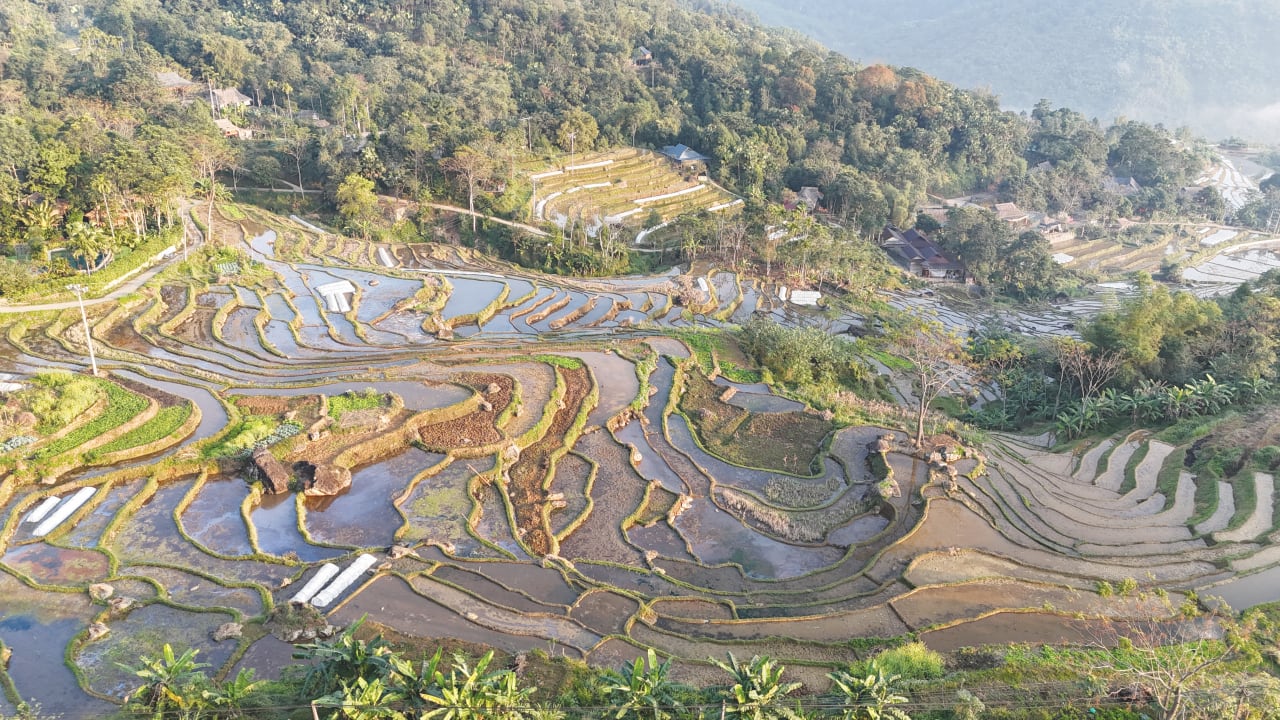
While the city is a must-visit, Vietnam’s charms extend beyond its cities. A short journey of 150 km. to the Mai Chau province offers a very different scene. The rice fields are stunning, and the area is a perfect spot for hiking. Those wandering the trails can expect to be greeted by friendly locals, wild chickens, and bufallos. Those less interested in climbing the admittedly slippery hills can enjoy delicious local cuisine, traditional dancing, and learning about the region’s many ethnic and religious groups.
Those willing to venture outside the city may also enjoy Ha Long Bay, a UNESCO World Heritage Site twice designated, famous for its limestone cliffs. Travelers can board one of the many small boats from Tam Coc for only $10 to see, among other sights, the Bay of Descending Dragons. For a chance to see some local wildlife and to avoid being swarmed by other tourists, it’s advised to wake up early for this trip.
Among the many reasons to visit are the country’s beauty spots. In truth, an entire article could be dedicated to Vietnamese dishes, and I would still struggle to do it justice. The bánh mì sandwich definitely lives up to its hype, but there are many delicacies I think exceed it.
The most delicious dish I tried was from a stall in the rural Da Trang Pass (White Rock Pass) on the way to Mai Chau. Overlooking green mountains, I sat on a wooden floor and enjoyed skewered pork, sticky rice cooked in bamboo, and free-range eggs – all cooked over a barbecue. I will be dreaming about this meal for years to come and would return to Vietnam for this dish alone.
Bordering the South China Sea, Halong Bay also offers an array of fresh seafood. I particularly recommend the mussels, which were larger and sweeter than those I have enjoyed in Europe. If time permits, visitors may wish to board one of the many day-long cruises that offer kayaking, karaoke, and other activities.
IN CENTRAL Hanoi, there are few bad options. I had a delicious meal at the very aesthetic, 4.9-star-rated Mammom restaurant, and also at some local stalls in Hanoi’s Old Quarter.
Vegetarians and vegans can also expect good options, with a variety of fresh fruits, nuts, and vegetables widely available. Those who keep Kosher may now also enjoy the local cuisine, thanks to Nissim Tal’s industrious efforts.
Tal, an Israeli who has resided in Vietnam for the past 13 years, opened Kosher Saigon in Ho Chi Minh City in partnership with Chabad.
“Thirteen years ago, I arrived for six months for a hospitality project in Vietnam... and here I am, in love with this amazing country. I decided to do what I know best, establish a travel company, and focus on the best of Vietnam,” he told the Post.
“As a country that never had an ancient Jewish community, I joined four Chabad houses in Vietnam, and prepared special tours for kosher families and groups. This country has a lot to offer for travelers in Southeast Asia: nature and national parks, a history spanning 2000 years, rivers, mountains, and sea, beautiful beaches, and great hotels.”
One can’t mention the exquisite food without also mentioning the drinks. Vietnam’s recreation costs a fraction of what Israelis are used to paying. During my visit, I indulged in a few cocktails, each priced between 190,000 and 290,000 Vietnamese dong (approximately NIS 23-35), often featuring liqueurs hard to find in Israel. For younger visitors, Hanoi’s bustling nightlife offers very affordable fun.
Beyond beautiful sites and memorable dishes, Vietnam has a booming textile and garment industry, which alone generated nearly $47 billion in exports last year. Many of Israel’s favorite brands are manufactured in Vietnam, making a visit an ideal excuse to refresh a wardrobe at a fraction of the cost.
Beyond international brands, Vietnam’s abundance of independent boutiques offering handmade garments made from local materials means visitors can expect to return home with unique, high-quality clothing. While undeniably beautiful, many of these designs cater to a narrower range of body types. Travelers who are taller or more curvaceous may want to pack accordingly.
SPAS ARE always seemingly a stone’s throw away, particularly after shopping until exhaustion, and the pampering treatments are very affordable. During one visit to a Hanoi spa, I enjoyed a 30-minute scalp scrub, a haircut, and a 30-minute back massage for less than NIS 100. Later, in Tam Coc, a manicure and pedicure with cat-eye gel polish also cost under NIS 100.
After a long day of sightseeing, shopping, and eating, there is nothing better than coming back to a five-star hotel room with a queen-size bed, a toilet with overly complicated buttons, and room service. Luxury is absurdly affordable in Vietnam. The Grand Mercure Hotel, a five-star property featuring two restaurants, a spa, a bar, and a swimming pool, all within walking distance of the bustling Old Quarter and the ancient Temple of Literature, costs as little as NIS 630.
The Puluong Retreat, an eco-friendly specialty hotel resort in the stunning Pu Luong Nature Reserve, costs as little as NIS 200 a night.
As a very affordable destination with so much to offer, spas, sightseeing, hiking, an incredible food scene, and a great place for shopping, Vietnam offers luxury. Equally important to comfort, Hanoi felt incredibly safe. There were no protests, multiple stalls sold Israeli flags, and the people were incredibly friendly.
Hopefully, as more Israelis discover the wonders of Vietnam, the currency will become more widely available in Israel. As a final piece of advice, bring dollars to Vietnam, as it is unlikely you will find anywhere to exchange shekels. The incredibly comfortable flight to Vietnam will be your biggest expense on this holiday, and I found NIS 1,500 to be more than enough to enjoy everything.
Those wishing to arrange Kosher food can order using the website https://koshersaigon.com/. Tours in Hebrew or English can also be arranged by contacting Nissimtal@vietnam247.co.il
The writer was a guest of Arkia.