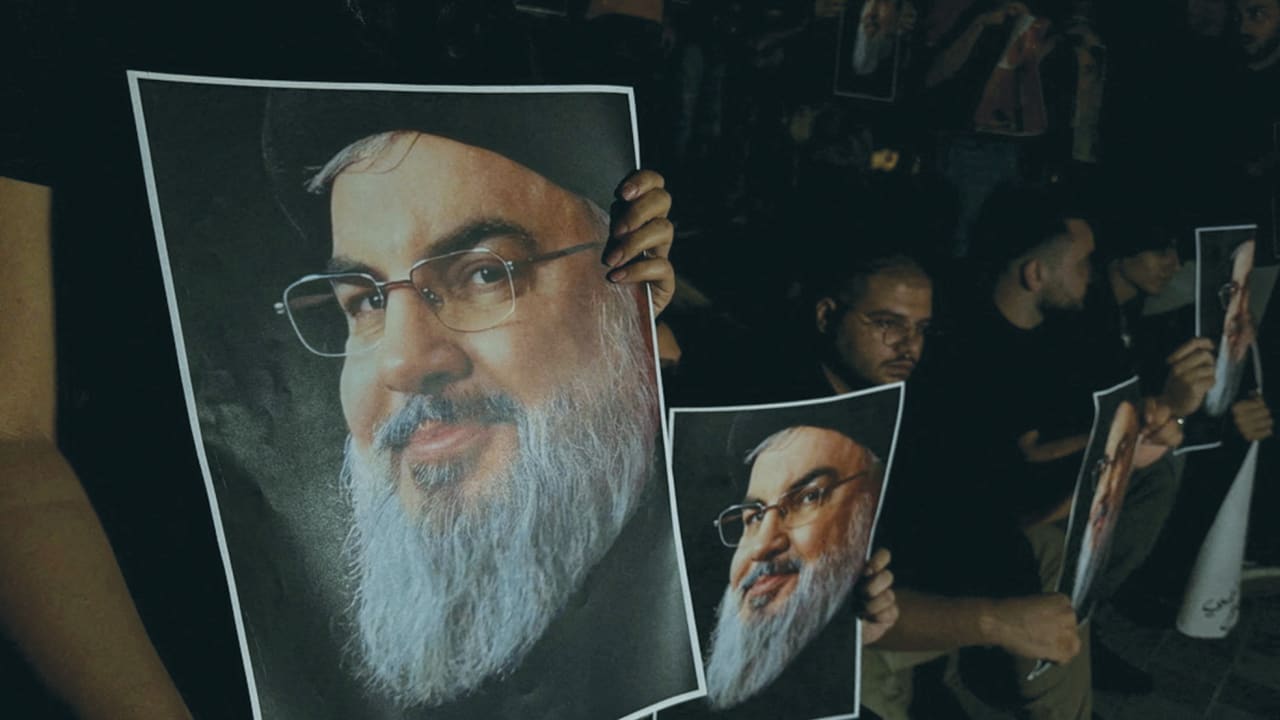
The second anniversary of the pager operation is a reminder that the first thing to explode on September 17, 2024, was not thousands of small devices. It was the carefully cultivated aura of invulnerability that Hassan Nasrallah had built around himself.
For years, the Hezbollah leader had appeared from his hideout, boasting about missiles, tunnels, and “surprises,” asking the Lebanese to believe that his disappearance was strategic brilliance. The terrorist group could see without being seen, strike without being touched.
Then an old-fashioned device exposed the reality. The organization that had cowed Lebanon through fear had been compromised through its own supply chain. Its leader, who threatened to bury his enemies, did not know his men were carrying booby-trapped devices.
This was not simply an intelligence coup worthy of a spy thriller. Israeli intelligence had constructed a false reality in which Hezbollah operated with complete confidence. Public investigations and the book In the War Room trace the idea’s origins to 2002-2006, during Meir Dagan’s tenure.
Around 2014, Mossad and Israeli military intelligence began introducing wireless devices into Hezbollah’s network, monitoring them while retaining the option of detonation. In 2022, they turned to pagers: devices operatives would carry rather than leave in an office or warehouse.

Front companies, licensing arrangements, dummy websites, and stores gave a battery unavailable on the open market a convincing commercial identity. A Taiwanese brand and a supply chain stretching from Hungary to Hong Kong supplied the cover. The Mossad did not simply intercept a shipment. It created the product, marketed it, built its reputation, and cut the price until Hezbollah’s procurement officials chose the trap themselves.
This was the difference between penetrating an organization and shaping the choices it believed were its own. The procurement process offered the appearance of control while delivering precisely what the adversary wanted.
They thought they were vetting a product. In reality, the product was exposing the organization.
Explosives were built into the batteries
A Reuters investigation found that explosives and a concealed detonator were built into the battery, allowing the devices to pass Hezbollah’s security checks. Even when officials noticed that batteries drained faster than advertised, distribution continued.
The message and alert were designed to make recipients bring the device toward their faces and use both hands. The alert tone and explosive charge had been tested to produce the intended response. The Mossad had choreographed the movements of those carrying its bombs.
The bitterest irony was that Nasrallah himself helped the operation. In February 2024, he called mobile phones more dangerous than spies and urged his men to smash them, bury them, or lock them in metal boxes. Hezbollah accelerated its adoption of pagers. His warning did not create the operation, but it drove more men toward the prepared device. The leadership’s fear had become a predictable procurement decision. Hezbollah had chosen its own poisoned remedy.
I see something deeper here than a procurement mistake. An entire security doctrine collapsed: secrecy supposedly meant switching off a phone, while the enemy was manufacturing the alternative.
At 3:30 p.m. on September 17, the devices began to ring. Roughly 3,000 exploded. The next day came the wireless devices, some held by Hezbollah for nearly a decade. Dozens were killed and more than 3,400 wounded. Devices had been distributed among fighters, commanders, support personnel, and affiliated medics. The penetration even reached Iran’s ambassador. The target was the infrastructure that enabled an Iranian-backed militia to operate as a state within Lebanon.
More important, in my view, was the assault on trust. Anyone still carrying a device had reason to fear its battery. Those who watched colleagues fall simultaneously understood that the enemy had helped build the walls behind which they sheltered. The equipment meant to connect the organization had become a source of fear. Replacing it could restore communication, but could not erase the discovery that trusted channels had carried the enemy inside.
Two former Mossad officers described the intended psychological impact. Wafiq Safa, a close Nasrallah associate, later recounted that the attacks left him deeply shaken and barely eating for almost a day. The man who had spent his life instilling fear in the Lebanese discovered, days before his death, that fear had reached his own hideout.
The operation also opened a military campaign. On September 20, Ibrahim Aqil and Radwan Force commanders were killed. Strikes expanded to weapons depots, facilities, and positions. On September 27, Nasrallah was killed beneath the headquarters he had regarded as an impregnable fortress.
Intelligence derives its real power from turning secrets into paralysis and confusion at the moment military force can exploit them. Without the subsequent strikes, the explosions would have remained an extraordinary intelligence feat. Their succession made the operation the opening phase of a broader dismantling.
Nasrallah had built his authority on the belief that obscurity proved knowledge, disappearance meant immunity, and questioning the leadership betrayed resistance. The farther he withdrew, the more formidable he appeared. Secrecy became wisdom beyond scrutiny.
The pagers exposed what that mythology concealed. His disappearance was isolation. His secrecy hid ignorance of what entered his warehouses. His speeches promised deterrence while his security apparatus was already penetrated.
That is the weakness of closed ideological organizations. They confuse loyalty with competence and treat questions as betrayal. Eventually, the leader’s word becomes a vulnerability no one dares challenge. A professional intelligence service could engineer the environment around its target; a terrorist militia had mistaken suspicion and obedience for security.
Two years later, Hezbollah can buy devices, change intermediaries, and rebuild parts of its network. It cannot turn the clock back to before the first ring.
The militia that claimed to protect Lebanon could not even protect its own supply chain. The leader who threatened to bury his enemies was himself buried beneath the concrete, along with the project he had built. And the Shi’ite community asked to believe in divine protection saw that an aura of sanctity could neither stop a signal nor reveal a compromised battery.
The most devastating part was that Hezbollah’s own leadership had led its men, step by step, to the very tool Israel designed to reach them. In doing so, it shattered the image of Nasrallah as an infallible leader.
The writer is a UAE political analyst and former Federal National Council candidate.