
“And the seasons they go round and round; And the painted ponies go up and down; We’re captive on the carousel of time; We can’t return, we can only look behind; From where we came; And go round and round and round; in the Circle Game” – Joni Mitchell
Twenty-five years ago, this Friday morning, September 11, the world changed.
And this Friday evening, September 11, as the sun goes down, the Jewish world will begin celebrating Rosh Hashanah.
The convergence is extraordinary.
One date commands us to remember. The other commands us to begin again.
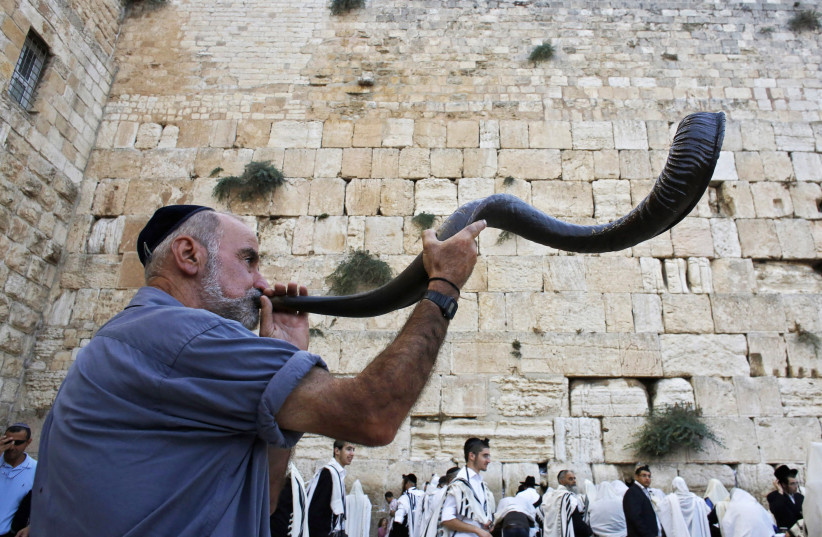
One represents a moment that can never be undone. The other insists that despite everything that has happened, we retain the capacity to change how we react to what happens next.
Perhaps there is no more appropriate message for the people of Israel and America as we enter the Jewish New Year of 5787.
Because we arrive at this Rosh Hashanah carrying an almost unbearable weight.
Israel remains surrounded by the threats of what I have described as an eight-front war. Iran remains determined to destroy us and America, with the renewed possibility of direct attacks and its network of proxies and partners continuing to threaten Israel and the region.
Gaza, Lebanon, Syria, Yemen, Iraq, Iran, Judea and Samaria, and the broader cognitive and diplomatic battlefield remind us that war today has no neat geographic boundary.
At the same time, Israelis are heading toward another election.
Instead of providing clarity, the campaigns threaten to reopen every wound in Israeli society: For Prime Minister Benjamin Netanyahu or anti-Netanyahu. Right or Left. Religious or secular. Who was responsible for October 7? Who can keep us safe? Who betrayed whom?
Once again, fear, anger, and hatred threaten to become substitutes for thought.
Outside Israel, the picture is hardly more comforting.
Antisemitism, anti-Israel sentiments become normalized
Global antisemitism has reached frightening levels. Anti-Israel sentiments have moved from demonstrations to being normalized in universities, cultural institutions, politics, and increasingly into the mainstream discourse of Western society.
America, too, is entering its own election season deeply polarized and uncertain about its direction, its values, and its relationship with Israel.
And then there is New York.
On the morning of September 11, the city will commemorate the 25th anniversary of the worst terrorist attack ever committed on American soil.
Among those attending the Ground Zero ceremony will be Mayor Zohran Mamdani, a politician whose positions toward Israel and Zionism and the American Jewish community have made many Jews profoundly uncomfortable.
For many of us, this convergence is almost surreal.
To many supporters of Israel, the contradiction feels almost as jarring as imagining someone from the Neo-Nazi Party occupying a place of honor at a Holocaust memorial event.
Yet it is happening.
Iran. October 7. War. Hostages. Antisemitism. Elections. Political hatred. Israel’s growing isolation. America’s polarization.
They press upon our hearts, our minds, and our souls.
And then, almost as if scripted, the sun sets on September 11. Rosh Hashanah begins.
And somewhere in my mind I hear Joni Mitchell singing The Circle Game, written about the passage of time.
“The seasons they go round and round,” Mitchell sings, before arriving at that devastating conclusion: “We’re captive on the carousel of time.”
There is something painfully true about it.
Time moves only forward. We cannot go back.
September 11 happened.
October 7 happened.
The carousel keeps turning.
But are we really its captives? That question may lie at the very heart of Rosh Hashanah.
Judaism makes an extraordinary distinction between being captive to time and being captive to our reactions to the past.
We cannot stop time. We cannot reverse it.
But we can decide whether each revolution of the carousel must repeat the one before it.
That is where Joni Mitchell’s circle encounters the Jewish idea of teshuva, repentance. But the word means something much more profound: return.
Return to what? Not yesterday. Yesterday is gone.
Return to ourselves, to what matters.
Return to the values we allowed ourselves to forget while distracted by anger, fear, ambition, ideology, trauma, and tribalism.
Rosh Hashanah does not erase the past. It asks us to become conscious of it.
Carl Jung expressed something remarkably similar when he warned that until we make the unconscious conscious, it will direct our lives, and we will call it fate.
Think about how often we tell ourselves today that we “have no choice”: Iran gives us no choice, October 7 gives us no choice, our political leaders give us no choice, our enemies give us no choice, the other political party gives us no choice, history gives us no choice, our trauma gives us no choice.
And slowly, almost imperceptibly, yesterday begins deciding tomorrow. We call it reality. Jung might have called it the unconscious.
Judaism calls upon us to interrupt it: Wake up. Examine yourself, and ask yourself what you are doing and why.
Ask whether the enemy you hated yesterday must determine who you become tomorrow; whether the political leader you supported yesterday must automatically receive your support tomorrow; whether someone you opposed yesterday must forever remain your enemy; whether the assumptions through which you have interpreted the world are still true.
And perhaps hardest of all, ask whether being right has become more important than being wise.
That is teshuva.
It is the moment when the unconscious becomes conscious, and fate becomes a choice.
This is why the convergence of September 11 and Rosh Hashanah is so powerful.
September 11 represents history at its most immutable.
Twenty-five years later, nothing can alter what happened that morning. The planes struck. The towers fell. Nearly 3,000 people were murdered. Families were shattered. America changed. The world changed.
We remember because we must. But remembrance can serve two purposes: it can become a prison in which yesterday continuously dictates tomorrow, or it can become wisdom.
Rosh Hashanah begins precisely as that anniversary ends and asks us which we will choose.
The same is true of October 7.
We cannot undo it. But not being able to return to the past does not mean we are condemned to repeat it. That distinction matters enormously.
Because if our response to trauma is simply more hatred, more division, more ideological certainty, and another turn around the same political track, then we really have become captives on the carousel.
This is true in Israel. It is true in America. And it is true within the Jewish world.
These are our choices, we tell ourselves.
We go round and round and round.
But Rosh Hashanah arrives every year to challenge that assumption.
The circle is real. The captivity is not.
The seasons really do go round and round. History cannot be rewound.
But built into the Jewish understanding of time is something extraordinary: the concept of renewal.
Rosh Hashanah provides us all with the opportunity to stop, to look backward without becoming imprisoned by what we see; to recognize patterns we have unconsciously repeated; to distinguish between what is essential and what is peripheral; to acknowledge what we have done wrong; to rediscover what we know is right, and then consciously choose differently.
Somewhere beneath our political loyalties, our anger, our rationalizations, and our accumulated scars, most of us know more than we admit.
We know when hatred is consuming us, when ego is driving us. We know when loyalty has become blindness, when fear is making decisions for us, and when winning has become more important than solving.
We know.
The challenge is making what we know unconsciously conscious, and then having the courage to act on it.
Perhaps that is the extraordinary message of this September 11.
At sunrise, we will remember one of the darkest mornings in modern American history.
At sunset, we will enter the Jewish New Year.
Memory and possibility separated by a few hours.
We cannot change the morning. But we can decide what we carry into the evening.
Joni Mitchell was right about something fundamental. We cannot return. We can only look behind from where we came.
But Judaism adds one crucial idea: We can decide where we go from here.
We cannot reclaim yesterday. But we can change what those past events make us become tomorrow.
The carousel will continue to turn. The seasons will continue to pass. History will leave scars.
But we are not painted ponies condemned to travel the same circular track forever.
We possess consciousness. We possess choice. We possess the gift of teshuva.
And every Rosh Hashanah, God built into the system something miraculous, not the ability to change yesterday, but the opportunity to ensure that yesterday does not dictate tomorrow.
The circle game is real. Captivity is a choice.
As 5787 begins, perhaps that is the choice God is asking us to make.
The writer is a global strategist and a strategic adviser at the Jerusalem Center for Security and Foreign Affairs. Follow him on X: @jeffkahn2020.