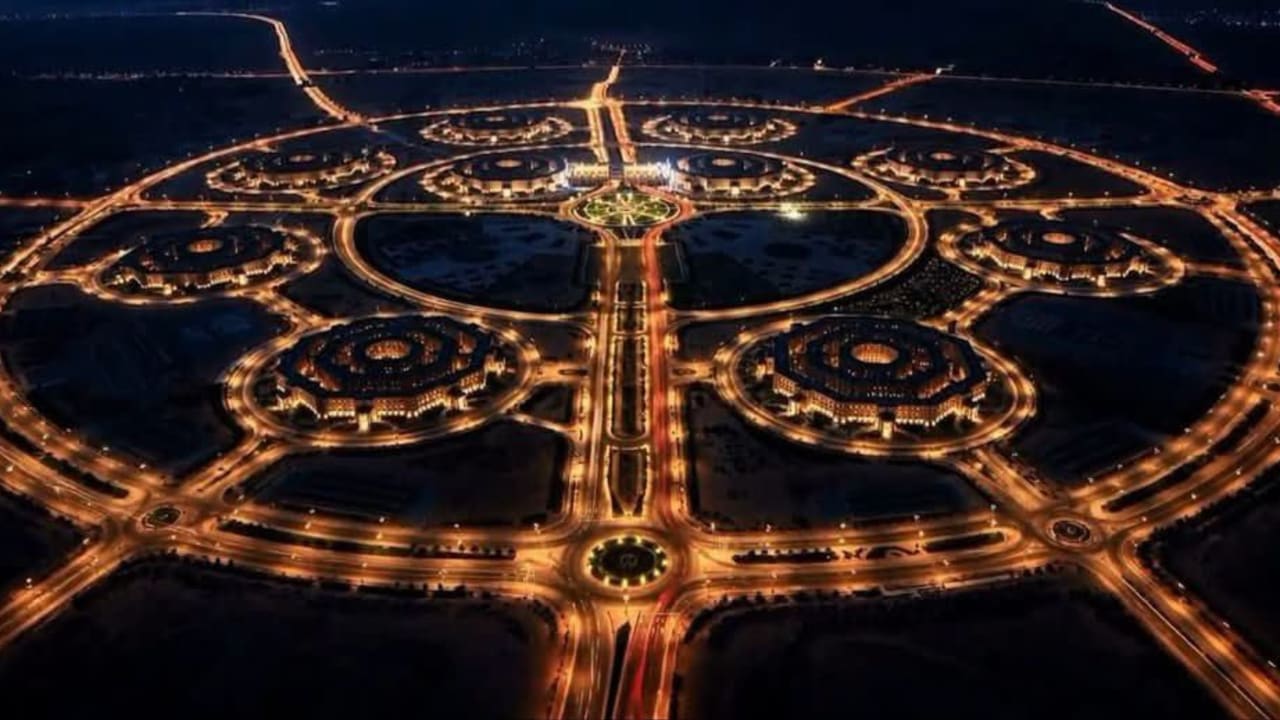
Egypt is showcasing its new Strategic Command Headquarters, dubbed the “Octagon,” in a move aimed at demonstrating Cairo’s power.
“Egypt is committed to peace for those who want peace,” Egyptian President Abdel Fattah al-Sisi said at the inauguration of the new Strategic Command HQ. This is a major point of pride for Egypt and is meant to showcase that Egypt is returning to its place of influence in the region.
Egypt is one of several countries undergoing an important military buildup in recent years, alongside Israel, where defense exports and the defense budget are at an all-time high.
Saudi Arabia and Turkey are also among the states seeking to showcase strength in the third decade of this century.
It’s worth recalling that Egypt is not only an ancient civilization, but it also became a strong military power in the 1950s and 1960s under Arab nationalist leader Gamal Abdel Nasser. In many ways, Egypt today is a descendant of that power.

What has changed in recent years? Egypt is a partner of the US, and Sisi enjoys warm ties with the Trump administration. Sisi came to power in 2013 when the Muslim Brotherhood was overthrown after its short rule from 2012-2013. Brotherhood leader Mohamed Morsi died while on trial in Cairo in 2019.
According to Al-Ain news in the UAE, the new Octagon military center “represents a qualitative leap in developing the command and control system and enhancing the defense capabilities of the Egyptian Armed Forces.”
New command center an improvement for Egypt's military, 'ensures constant readiness'
The Egyptian flag was raised during the ceremony as Sisi delivered a speech about the important role of this Strategic Command center. It is located in Egypt’s new capital. Sisi says this is all about peace and stability.
However, Al-Ain notes that it is also about “a state capable of confronting challenges and achieving the aspirations and unity of its proud people and its valiant armed forces.”
Sisi has said that the “strategic command headquarters in the new capital ensures the integration of planning and coordination for all branches of the armed forces, enhances combat capabilities, and ensures constant readiness to effectively and efficiently confront challenges using the latest advanced technology systems, in a way that achieves the state’s strategic goals and contributes to securing its capabilities,” Al-Ain added.
Sisi concluded his speech by repeating: “Long live Egypt… Long live Egypt… Long live Egypt.”
The Al-Ain report asks what we know about this massive center that has been constructed. It is a “colossal structure that was not built merely to be an administrative building, but rather to be the integrated nervous system center for managing and controlling state institutions; improving the efficiency of data exchange and crisis management; and strengthening Egypt’s security and defense capabilities in accordance with a scientific vision that anticipates future prospects.
The concept is interesting and harkens back to other similar projects, such as the US building the Pentagon. Clearly, the name “Octagon” has a kind of Pentagon-ring to it. “This massive project was born out of the Egyptian state’s comprehensive plan to build a modern administrative capital that includes the most important and prominent sovereign institutions of the state,” Al-Ain added.
“The design was inspired in its architecture by the greatness of ancient Egyptian civilization, and the octagonal design was taken as a symbol of strength and close interdependence between all branches of the state, which enhances institutional work and accelerates the successful response to emergencies.”
The new center is supposed to showcase Egypt’s strategic thinking. Egypt has a role to play in North Africa and the Arab World. Egypt is also celebrating its win over Australia in the World Cup, another victory that will make Egypt proud.
The center has a 'massive, highly advanced digital infrastructure'
The Octagon is intended to centralize the country’s administration of the armed forces and is a strategic concept. It is also supposed to address modern threats, such as “dealing with fourth and fifth generation cyber warfare and threats that require highly advanced digital defense systems,” Al-Ain says.
The report notes that the center has eight central buildings with an octagonal geometric design. It stretches over some 22,000 acres. It also seeks to harness new technology such as big data and cyber. “A massive, highly advanced digital infrastructure, dedicated to storing, processing, and protecting national data with the highest cybersecurity standards,” Al-Ain added.
Egyptian and regional media all covered the opening of the center. This illustrates how it is already helping Egypt showcase its capabilities in the region. In an era when Iran has been threatening the Gulf, Egypt seeks to present itself as a bulwark in the Middle East.