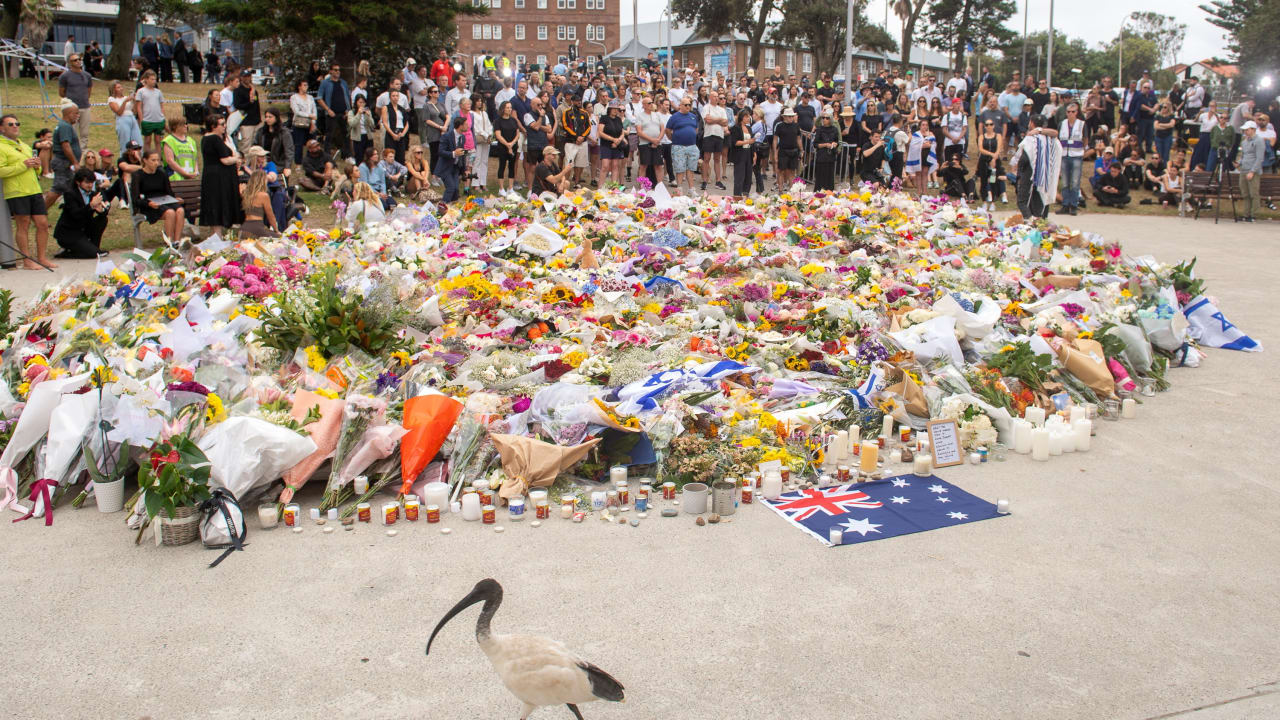
The Bondi Beach terror attack on Jewish people celebrating Hanukkah in December 2025 shocked the community in Australia, New Zealand, and around the world. For New Zealand Jews, the incident felt very close to home, as strong familial ties bind the two communities.
The Royal Commission on Antisemitism and Social Cohesion (the Bondi Commission) is currently holding public hearings on the mass shooting, which claimed fifteen innocent lives and injured more than forty others. It has been described as Australia’s worst such incident since the 1996 Port Arthur Massacre and the deadliest terrorist incident in the country’s history.
The Commission’s interim report, released at the end of April and containing fourteen recommendations, was met with cautious approval from the Jewish Australian community. The fact that antisemitism is being treated as a national security and social cohesion issue is welcome. Jewish leaders, however, are insistent that the report must lead to lasting institutional and political change rather than simply platitudes and temporary attention.
As the scourge of antisemitism surges globally, the findings of the commission will have significance for Jewish communities everywhere. One of the issues to emerge from the hearing is when anti-Zionism becomes antisemitism. When we have politicians and public figures donning keffiyah and chanting "from the river to the sea" and yet able to declare with a straight face, "I’m not antisemitic, I am anti-Zionist", the pertinence of this question becomes clear.
One of the testimonies at the Bondi Commission was delivered by Jewish Studies Teacher Sharonne Blum, who described the bewilderment of her students at the fact that when neo-Nazis demonstrated at the Victorian Parliament House, they faced legal consequences and the force of law, and yet when Palestinian protesters hurled hateful slurs and libels at Jews at the Sydney Opera House, they were given a free pass.

This example highlights the need to understand why antisemitism is treated differently from anti-Israel animosity.
Blum articulated the lessons she taught her students to assist them in navigating the anti-Jewish hate they face on a daily basis. Echoing the work of a new group of anti-anti-Zionist scholars and academics, Naya Lekht, Andrew Pessin, Adam Louis-Klein, and Joshua Dabelstein, amongst others, she explained the "long arc of history of anti-Jewish vilification."
The evolution of antisemitism
There have been different eras of Jew hatred in which the Jew is constructed as a villain opposed to the moral currency of the age. In the era of anti-Judaism, the Jews were constructed as the villains because they opposed Christianity. In the era of antisemitism, the Jews were cast as the villains in opposition to the era’s highest moral virtue: racial purity and national vitality. The Jew thus represented the antithesis of racial and national purity.
She argues that we are now in the anti-Zionism era, in which Israel and Zionism are portrayed as villains because they are said to stand in opposition to what this era elevates as its highest moral virtues: decolonization, anti-racism, and, more broadly, human rights.
In reality, none of these accusations against Jews can be upheld when scrutinized, whether under the anti-Zionist, antisemitic, or anti-Judaic regimes. They are manifestations of the Jew-hatred that Jonathan Sacks described as a mutating virus.
Sadly, New Zealand is not immune to this virus, even though positioned at the "ends of the earth." An anecdotal example is both enlightening and alarming.
A friend who teaches a Year 13 course on religion and war commented that he had taught his students about Pacifism, Just War Theory, and the Crusades using the works of Augustine and Aquinas. He thought he would add some perspective by introducing an article by the Jewish philosopher and theologian Rabbi Moses Maimon, known as Rambam or Maimonides (1138–1204 CE).
The teacher remarked, ‘About three minutes in, the students began laughing and taking photos of the article. When I asked why they were doing this, the response I got was "We are reading Zionist propaganda in class."
That these students would label the work of a 12th-century Jewish philosopher as Zionist propaganda, when political Zionism is a product of the late nineteenth century, is truly astounding. They had not merely confused a medieval Jewish source with modern Zionism.
They had absorbed a more corrosive assumption: that Jewish thought itself is politically suspect, and that "Zionist" is a label sufficient to discredit it. It is not surprising that young people have absorbed these assumptions, given the sustained portrayal of Zionism in activist, academic, and online discourse as uniquely illegitimate and morally toxic.
Anti-Zionism seeks to legitimize antisemitism
Anti-Zionism is not about criticism of Israel, its leaders, or its policies, all of which can be entirely legitimate and in which Israelis themselves vigorously engage. Anti-Zionism is an ideology that rejects the legitimacy of Jewish sovereignty altogether and assigns collective blame to Jews in relation to the existence of a Jewish state.
In practice, anti-Zionism frequently functions not merely as opposition to Israeli policy, but as a moral framework through which hostility toward Jewish collective identity is expressed and legitimized. These ideas did not arise spontaneously on social media after October 7.
Modern anti-Zionism has an intellectual and political genealogy stretching back decades, shaped by Soviet propaganda allied with Arab and non-aligned groupings and UN institutional campaigns. In addition, elements of post-colonial frameworks in academia migrated into activist networks and popular discourse.
Some strands of Indigenous and anticolonial activism absorbed the anti-Zionist narrative. When Māori politician Willie Jackson declared in New Zealand’s parliament in December 2023 that Māori were pro-Palestinian and that their heroes were Nelson Mandela, Fidel Castro, and Yassir Arafat, he was referencing an activist heritage linked to the "Red-Green" alliance of radical Leftists and political Islamists.
Furthermore, within academia, post-colonial theories such as settler colonialism have propagated the view that Jews are foreign colonizers of their ancient homeland, a claim that sits uneasily alongside the archeological, historical, literary, and genetic evidence of continuous Jewish connection and presence in the land.
Israel fails to meet the settler colonial model. There is no metropole seeking economic extraction or imperial expansion. The expulsion of Jews from Middle Eastern and North African communities complicates the binary of "European settler" versus "native." Zionism is better understood not as a settler-colonial project, but as the national revival of a dispersed Indigenous people returning to their homeland after centuries of foreign rule.
Whatever criticisms may be made of Israeli governments or politicians, the historical experience of Jewish return does not fit neatly into the classical settler-colonial model of a foreign metropole implanting a population for imperial extraction.
New Zealand cannot afford to be complacent in dealing with Jew-hatred, whether antisemitic or anti-Zionist. The government recently approved a motion without notice presented by the ACT Party, stating: "That this House condemn all incidents of antisemitism in New Zealand, and affirm that antisemitism has no place here."
However, when ACT Party Member of Parliament, Simon Court, posted this news on social media, he was inundated with hateful comments, including accusations of Jewish control, being paid off, and Holocaust denial. Among the comments: "It’s not antisemitism - just criticism of genocide, war crimes & colonialism", "Has Bibi's office infiltrated our shores much?" "If you want to know who controls you, look to who you aren't allowed to criticize."
This may be dismissed as the unfortunate downside of social media ignorance. However, official data indicates that we have an antisemitism problem in this country, in line with other Western nations.
The New Zealand Jewish Council recently released its Annual Report on Antisemitism in New Zealand. According to NZ Police, New Zealand Jews are disproportionately targeted relative to other ethnic and religious groups. The number and severity of reported antisemitic incidents in New Zealand reached unprecedented levels following the 7 October 2023 terror attacks in Israel.
There were a total of 143 antisemitic incidents in 2025, the highest number ever recorded in a single year in New Zealand. Incidents were more severe and included five assaults (the most assaults in any year). One disturbing example was an assault on a kindergarten child by a teacher.
There has also been a large number of individual Jewish New Zealanders targeted with antisemitic hate mail sent to private homes. Prominent non-Jewish Israel supporters have also been targeted.
As a nation, we need to take stock and watch carefully what is unfolding over the ditch. The Jewish teacher, Sharonne Blum, concluded her testimony at the Bondi commission hearing by expressing how heartbroken she was for her students, who are made to feel excluded and dehumanized as 15-year-olds in the diaspora.
She had also made a promise to herself that she would not finish her speech without mentioning that six months earlier she had buried her husband and sprinkled the soil of Israel in his grave. This act exemplifies the depth of feeling many Jewish people have for Israel. Israel is in their hearts and is core to their identity. These were her final tear-filled words: "That is Zionism."
The writer is the director of the Indigenous Embassy Jerusalem.