
The most dangerous misunderstanding about today’s information environment is the belief that it is merely chaotic.
It is not.
It is structured, it is strategic, and it is unfolding in real time – during an active war.
As the conflict involving the United States, Israel, and Iran intensifies, global markets are reacting, energy routes are under threat, and the risk of broader escalation continues to grow. This is not simply a military confrontation. It is a multi-front conflict.
And one of its most consequential battlegrounds is information.
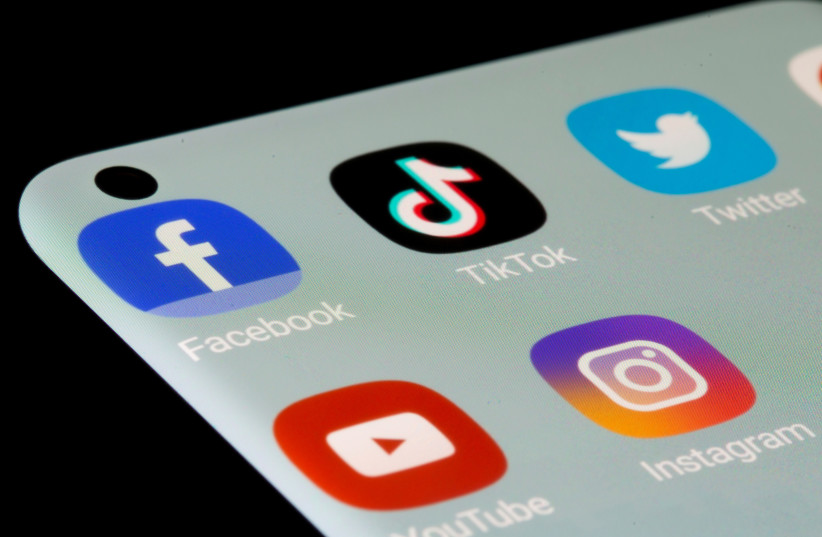
The effects of this are no longer confined to headlines or social media feeds. They have entered everyday conversation – and they are shaping how people interpret reality itself.
In a recent exchange with an Iranian expatriate driver, I asked a simple question about the unfolding conflict. His response was immediate and absolute: what I was hearing elsewhere was “just media,” and the United States – particularly under US President Donald Trump – was acting as a war-monger driven by oil and global control.
Let’s be clear about what is happening here.
That framing does not appear out of nowhere. It reflects narratives long cultivated by state-aligned and ideological media ecosystems that are openly hostile to Western democracy and individual liberty – systems that portray the West as predatory and themselves as aggrieved.
These narratives are built to be simple, emotionally persuasive, and easy to repeat. They give adherents a ready-made explanation for complex events and a set of sources to cite as authoritative.
And that is the mechanism.
People are handed a narrative and a media loop to reinforce it – follow these voices, trust these outlets, dismiss everything else. The result is not an independent analysis.
It is alignment.
The same talking points surface in different places, from different people, with the same confidence. That is what propaganda looks like when it works: it equips individuals with a script and convinces them it is their own conclusion.
Adversaries do not need to defeat the United States or Israel directly to weaken them.
They need only fracture them from within.
The most effective way to do that is not through force, but through narrative.
Outrage amplified by media, Influencers
Consider how modern outrage actually moves. A claim appears – often from an obscure or foreign-linked source. It is emotionally charged, framed as urgent, and presented as something hidden or suppressed. Within hours, it is amplified by influencers, commentators, and media personalities who may have no connection to its origin but enormous power over its reach.
Figures across the political spectrum now function as force multipliers in this system. They do not need to create a narrative to shape it. They only need to elevate it.
And once elevated, origin becomes irrelevant.
Repetition creates legitimacy.
This is how narratives move – from obscurity to dominance – before their source is ever examined.
Velocity replaces verification.
And the public becomes the delivery mechanism.
But not all of this is spontaneous.
Some of it is built.
In recent years, reporting has exposed networks tied to American businessman Neville Roy Singham, who, after selling his company for hundreds of millions, relocated to Shanghai and began channeling substantial funding through nonprofits and media platforms aligned with pro-China messaging. These networks overlap with activist organizations that maintain proximity to outlets linked with Iranian state media, such as Press TV.
This is not incidental.
It is infrastructure.
A system now exists in which narratives can be seeded, shaped, and transmitted across borders and across political lines with extraordinary efficiency.
This dynamic is not new.
For centuries, adversaries have sought to weaken societies by turning populations inward. In ancient Rome, political factions weaponized rumor and forgery. In the twentieth century, propaganda campaigns during global conflicts were designed to fracture morale and deepen internal divisions.
During the Cold War, the Soviet Union refined this strategy into what it called “active measures,” deliberately planting false narratives into Western discourse. One of the most infamous examples spread the claim that the United States had created the AIDS virus.
The objective was not persuasion.
It was corrosion.
That strategy has not changed.
Only the speed – and the scale – have.
Social media has eliminated the friction that once slowed these operations. What once required years now takes hours. A narrative seeded anonymously can reach millions before anyone asks where it came from – or why it appeared at that particular moment.
And there is now an added incentive.
Outrage is profitable.
The most emotionally charged narratives generate the most attention. The most attention generates the most revenue. And the most divisive voices rise the fastest.
Division is no longer just a tactic.
It is a business model.
And that model aligns perfectly with the interests of those who benefit from prolonged instability – particularly in a moment like this, when the United States and Israel are engaged in an active conflict with Iran.
This is why the same patterns appear across political lines – and across countries.
In Israel, conspiracy-driven narratives surrounding leadership and decision-making have spread rapidly in the aftermath of the October 7 massacre, deepening internal divisions at a moment of national vulnerability.
In the United States, similar dynamics unfold daily, as viral narratives – often with unclear origins – fuel distrust, outrage, and fragmentation.
Different countries.
Same outcome.
Internal fracture.
And that fracture is not incidental to the war.
It is part of it.
There is a particularly uncomfortable dimension to this within the Jewish community.
Jews have historically been the primary target of conspiracy theories – from medieval blood libels to modern accusations of hidden global control. Yet in the digital age, some individuals – often acting in good faith – have helped amplify narratives built on similar frameworks.
During the COVID-19 era, conspiracy ecosystems exploded online, trafficking in ideas about secret networks, engineered crises, and unseen forces shaping global events. Many who shared this content believed they were exposing the truth.
Few asked where those narratives originated.
Or who benefited from their spread.
That is precisely the point.
The most effective influence operations do not require you to believe a lie.
They require you to pass it along.
Skepticism is not the vulnerability.
Participation is.
Because in this war, you are not just the audience.
You are the infrastructure.
The author is a writer, strategist, and public speaker specializing in community mobilization, messaging, and advocacy. She is brought in to help organizations and leaders build engaged audiences, clarify their message, and translate ideas into real-world action. She is the host of The Silent Revolution podcast and is on Instagram @LindaAdvocate.