The Hungarian Revolt’s 2,500 fallen fighters had long been buried, but it still inspired millions on both sides of the Iron Curtain.
“Conquered and in chains,” wrote French novelist Albert Camus, Hungary “has done more for freedom and justice than any people in the last 20 years.” Writing this in 1957, in a famous essay titled “The Blood of the Hungarians,” Camus would have been stunned to learn that Hungary would one day become authoritarianism’s engine and democracy’s foe.
Now, after a new generation of Hungarians dealt that authoritarian engine an electoral trouncing, the questions are: What was that reaction about, what caused its defeat, and what can it mean for the Jewish state?
As noted here already last decade (“Who won at Tienanmen?” June 6, 2019), the democratic groundswell that followed the downfall of communism and swept Eastern Europe, Latin America, and parts of Asia and Africa, was followed by a counterrevolution. What began in China and proceeded to Russia and Turkey, soon penetrated the West. And that process, which later reached Poland, Brazil, and the US, was spearheaded by Hungary’s Viktor Orbán.
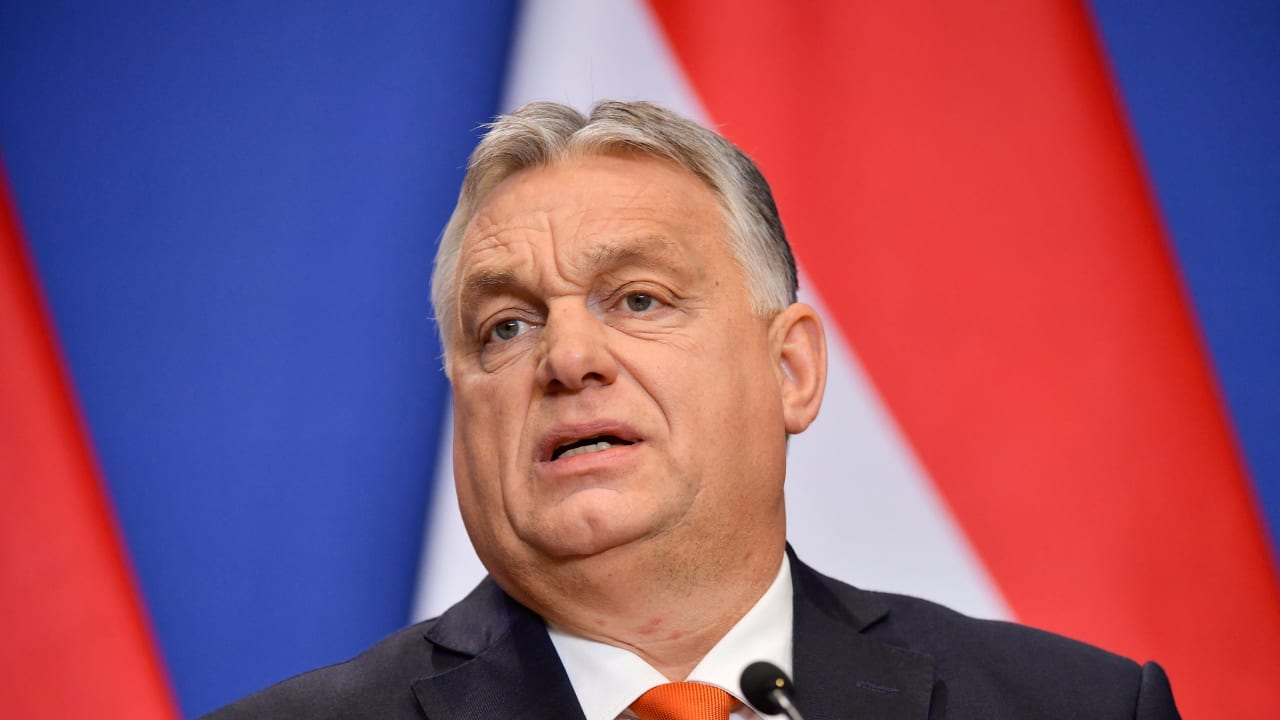
The prime minister who led Hungary for an aggregate of two decades, gradually emerged as a dismantler of democracy. Coining a new term in political theory, “illiberal democracy,” he hammered at his country’s democratic institutions, one by one.

First, he changed the appointment system of the constitutional court’s justices, so they would be appointed by the government alone, and appointed a “president of the judiciary” who flooded all courts with the prime minister’s loyalists.
Then Orbán established a court for public administration, wresting the scrutiny of corruption cases from the independent constitutional court. That court’s establishment was canceled following pressure from the European Union, but the direction was clear. Checks and balances were a threat to the government, and their engines had to be subdued.
And castrating the courts was not enough. The media had to be cowed as well. A new law thus demanded “balanced news coverage” and allowed fining news organizations whose coverage, according to Orbán’s bureaucrats, was unbalanced. The idea was to fine critical media so heavily that they would not survive.
Having thus blinded voters, Orbán also manipulated the voting system, remapping districts so that the opposition’s electoral strongholds would get fewer lawmakers, and his strongholds would get more.
It all worked well, handing Orbán successive electoral victories – until this week. In an electoral landslide reminiscent of Ariel Sharon’s trouncing of Ehud Barak in 2001, Viktor Orbán and his Fidesz party were decimated, plunging from 135 to 55 seats, as opposed to prime minister-elect Peter Magyar, who took two-thirds of parliamentary seats.
The meaning of all this is profound.
'Democracy can be manipulated only for so long'
Politically, Orbán's downfall means democracy can be manipulated only for that long. Shenanigans, trickery, and hoodwinking can cause serious damage, but ultimately they will be exposed, and the people will remove their engineers.
Socially, Hungary has shown that the working class – unlike Orbán’s assumption – are not idiots. At a certain point, they would realize they had been taken for a ride. And once they do, they will join the middle class and eject the authoritarian driver from his seat.
Yes, it may take a while until a solid majority of voters understand what corrupt populists are doing to them, but when they see the corridors of power crowded with their politicians’ inept cronies, they get it.
Having said this, Orbán’s most fateful mistake – worse even than his emasculation of the judiciary, the media, and the government – was in the improbable realm of patriotism. And that is also where the Israeli lesson from his downfall comes in.
Faced with the Ukraine War, Orbán took Russia’s side. Yes, initially he paid lip service to his eastern neighbor’s cause, but ultimately he fought it, obstructing the flow of European Union funds to Ukraine.
The official reason was that Hungary needed Russia’s gas, but that was unconvincing. Some of Hungary’s neighbors faced a similar predicament, but in the clash between egoism and morality, they took the side of freedom, standing up to Russia, and siding with Ukraine.
Orbán’s real motivation was apparently that Russia, if victorious, would cede to Hungary a sliver of western Ukraine, where some 150,000 ethnic Hungarians live. On the face of it, that’s the kind of nationalist quest that the masses, especially in nationalist Hungary, should appreciate. But Hungarian nationalists, it now turned out, had other priorities.
A Greater Hungary is one thing, but waltzing with the Russian Bear – the historic enemy that crushed the revolt in 1956 and also the revolution of 1848 – is an entirely different thing. That they wouldn’t have.
Orbán, the man who purported to embody Hungarian patriotism, was dethroned as an anti-patriot. That is what thousands of demonstrators rallying in downtown Budapest meant when they chanted “Russians go home!”
And that, albeit in an entirely different way, is what is now happening to Benjamin Netanyahu.
Orbán's Israeli groupie has been trying to emulate his alter-ego’s authoritarian assault – storming the judiciary, laying siege to the media, and flooding the cabinet, Knesset, and public service with a collection of servile non-entities.
It all seemed to work well until war broke out and too many people realized that, like the Hungarian who stormed democracy while tangoing with the Russian enemy, Netanyahu stormed democracy while waltzing with the ultra-Orthodox deserter.
Hungarian voters abandoned their authoritarian idol after one war in which none of them fought, let alone died. Israeli voters have been fighting, sacrificially and intensely, for more than two years – they, their children, their elders, their friends, everyone. Everyone, that is, except the draft dodgers who feasted by authoritarianism’s golden calf while all others went to war. Is there any doubt that the Israeli idol’s aftermath will be the same as its Hungarian twin’s?
www.MiddleIsrael.net
The writer, a Hartman Institute fellow, is the author of Ha’Sfar Ha’Yehudi Ha’Aharon (The Last Jewish Frontier, Yediot Sefarim 2025), a sequel to Theodor Herzl’s The Old New Land.