
The Talmud in tractate Pesahim famously declares, Sho’alin v’dorshin b’hilchot haPesah kodem haPesah shloshim yom. “One should inquire and explore the laws of Passover 30 days prior to the holiday.”
While it is important to prepare for Passover and its intricate laws well before the holiday begins, it is no less important to look back on this seminal festival – the first in the Jewish year – and mine some vital ideas and inspiration from it.
I was privileged to share Passover thoughts with my son this year – that’s what the days of wine and matzot is about, isn’t it?! – and I think they’re worth bringing to you for your consideration.
One of the deeper ideas behind the story of Passover is not just the journey from slavery to freedom but the bitter reality of what it means to exist as a people without independence.
In Egypt, the Israelites were not just enslaved; they were a minority community living within a much larger, more powerful civilization. They had no sovereignty, no ability to protect themselves, and no control over their future. Their fate was ultimately determined by the will of others. And this is not unique to that specific moment in time.
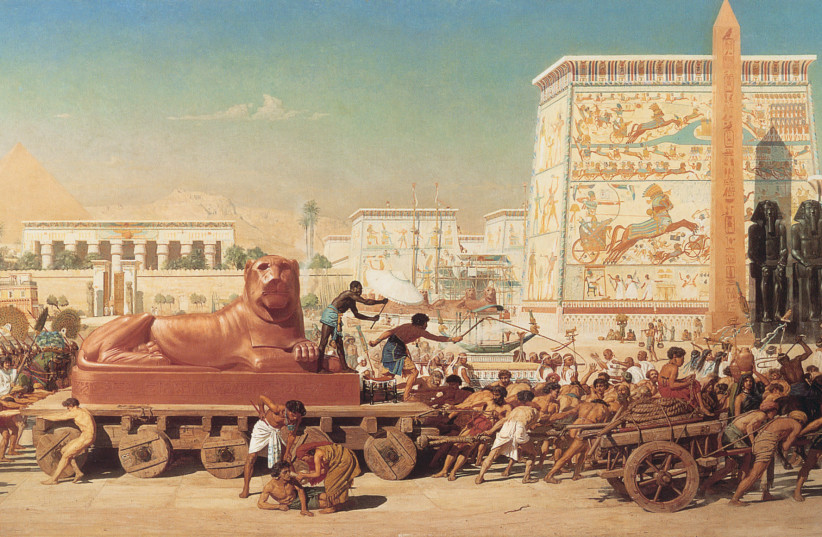
For most of human history, smaller nations, tribes, and communities living within larger empires faced similar outcomes. Many were conquered, erased, or assimilated beyond recognition. Entire cultures disappeared without a trace. We don’t even know the names of most of them – because history is generally written by those who survive.
What came after the Exodus
What makes the Jewish story remarkable is not just the Exodus but what came after.
Despite repeated cycles of exile, persecution, and displacement, the Jewish people has endured. From the destruction of the Temple and the long exile that followed, to events like the Spanish Inquisition and the Holocaust, Jewish existence has often meant living as a minority among more powerful nations – frequently vulnerable and at times tragically unprotected. And yet, somehow, with the help of God, our story continued.
This raises a powerful idea: Survival is not something we can cavalierly take for granted. It is something that historically requires both resilience and the ability to stand independently.
The Exodus itself didn’t end with leaving Egypt; that was just the start of our journey through time and space. It continued with the formation of a people, a set of values, and eventually a homeland. That monumental accomplishment – having a land, a society, and the ability to shape one’s own future – was not incidental. It was essential for our continuity.
In modern times, this idea takes on renewed significance. After thousands of years without sovereignty, the Jewish people returned to having a homeland in 1948. This engenders more than just a political reality; it represents the ability of a people, long dependent on the goodwill of others, to take responsibility for its own safety, endurance, and future.
For Israel in the here and now, these ideas are not theoretical; they are playing out in real time. The current conflict with Iran and its proxies is not just a geopolitical event; it is part of a much longer story about our survival, our security, and our right to exist and defend ourselves.
This isn’t only about governments or armies; it’s also about people. For us who live in Israel, being here is not just a location; it’s a choice and a commitment we make. Building a life, raising children, contributing to society, strengthening the economy – these are all part of what it means to ensure a future that is stable, independent, and thriving.
There are different ways that people contribute to this story. Some are physically present, building and protecting. Others work on the global stage, helping shape understanding, standing up for truth, and advocating for fairness in how events are globally perceived. Still others – though they remain committed to foreign counties and are largely silent – nourish and keep alive the dream that one day we will all be together, here in our homeland.
The world today is complex, and perspectives differ. But one thing that history shows clearly is that communities without the ability to protect themselves face immense challenges to their survival.
So when we tell the story of leaving Egypt, it is not only about freedom from oppression. It is also about what comes next. It’s as much, if not more, about entrance as it is about exit.
It raises important, even existential, questions that should be widely deliberated: How does a people ensure its future? How does it protect its identity? What is the goal of independence, and are we pursuing it?
While we are deeply thankful for the heroic partnership with the United States in this conflict – to the exclusion of virtually all of our other erstwhile “allies” – are we abdicating our sacred pledge to depend on no other country for our survival? In the long run, have we strengthened or weakened our future?
The lesson that lingers
THE LAST mishna in Pesahim tells us that we end the Seder by partaking of the afikoman – once the Paschal lamb, today the matzah – so that “the taste will remain in our mouths” long after the feast has concluded.
Perhaps the lesson that lingers is that freedom is not just about leaving a place of hardship; it is about creating a reality where that hardship does not repeat itself.
The responsibility to build, protect, and sustain that reality is part of the story that continues long after the Exodus and the Seder end.
With thanks to Yedidya Weiss.
The writer is director of the Jewish Outreach Center of Ra’anana; rabbistewart@gmail.com