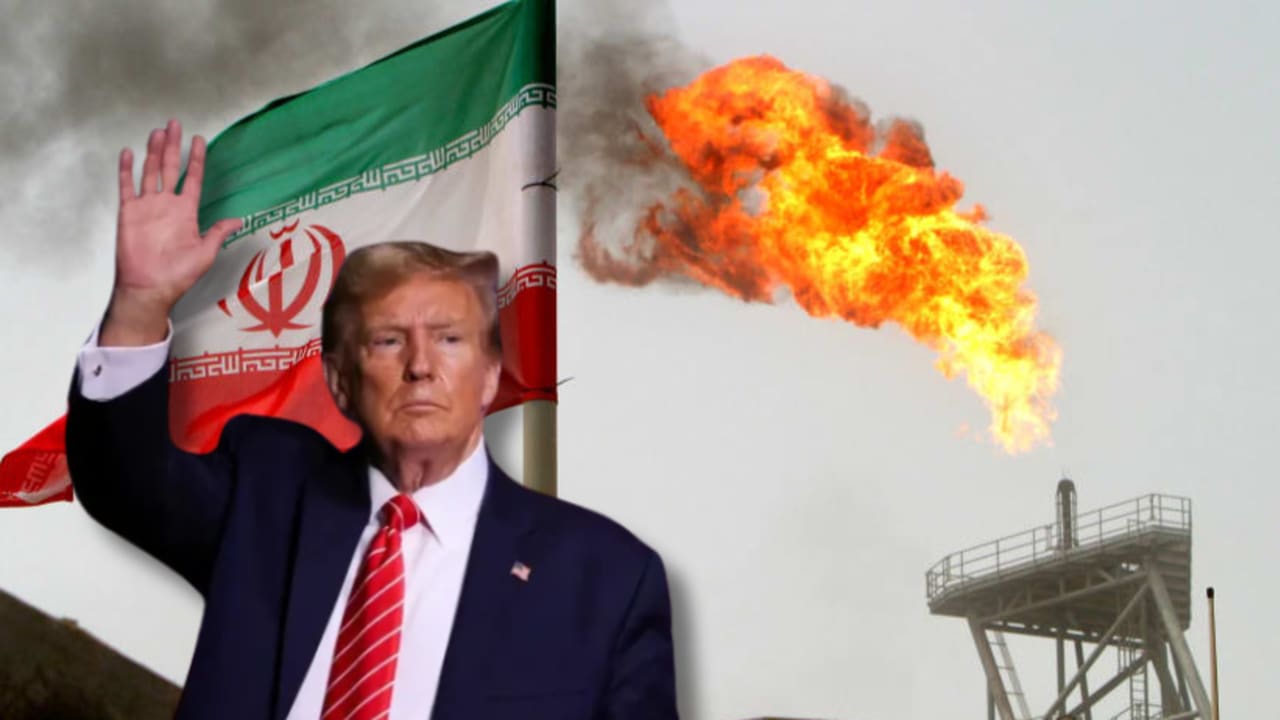
This war has exposed truths that too many in Washington have spent years trying to avoid.
This war has shown again that Israel’s indispensable ally is not elite fashion or diplomatic theater. It is the United States of America when led by a president willing to act. Donald Trump made that clear not with rhetoric, but with force, resolve, and strategic clarity.
The second truth is just as important: the Gulf states also have only one genuine great-power ally, and that is the United States.
When Iran and its terror network threaten the region, every major power reveals what it really is. America acted. Russia watched. China calculated. Trump chose to use American power, credibility, and deterrence to protect regional partners under pressure. He could have behaved as Russia did, observing the conflict with satisfaction as instability spread and America’s allies came under attack. He could have behaved as China does, speaking the language of balance while protecting only its own interests. But he did not. He acted.
Too much of the Arab and Muslim world, meanwhile, has watched this war from the sidelines. Divided, weakened, and strategically confused, many have offered rhetoric without any meaningful logistical, military, or political weight. Worse, one gets the impression that some are quietly pleased to see successful Gulf states placed under pressure. Countries such as the United Arab Emirates, Bahrain, Saudi Arabia, and Qatar have built influence, wealth, and relative stability while others remained trapped in grievance, stagnation, and failure. To watch dictatorial and expansionist forces menace these states while responding with passivity, envy, or cynical silence is not merely disappointing. It is disgraceful.
Making a difference
This war may leave behind one lasting political consequence across the Gulf: a re-evaluation of alliances. States in the region are likely to separate true friends from false ones with much greater clarity. They have now seen who acted, who hesitated, who hid behind slogans, and who quietly enjoyed the spectacle. And they have also seen that the United States — and only the United States — remains the power capable of making a real difference.
That matters because this war has settled another question once and for all: the regime in Tehran is not a difficult negotiating partner, and not a normal regional power. It is the central engine of organized instability in the Middle East.
Chaos is its method
For decades, the Islamic Republic has armed proxies, fueled sectarian conflict, intimidated Arab governments, threatened Israel, undermined regional security, and treated terror not as an exception but as an instrument of policy. Chaos is not an accidental byproduct of the regime. Chaos is its method. That is why this moment cannot end in another half-measure.
If this war stops with the regime still standing, still organized, and still capable of rebuilding, Tehran will do what it always does: declare survival a victory, turn endurance into propaganda, and return more dangerous than before. A wounded regime is not a reformed regime. It is often a more vindictive one.
And the danger is not only external. It is internal as well. If the regime survives this war with enough of its coercive machinery intact, it will tighten repression at home, claim renewed legitimacy through defiance, and intensify the persecution of its own people. It will imprison more dissidents, crush more protests, silence more women, and brutalize more students. The Iranian people are not partners of the regime in this confrontation. They are its first victims.
This is where too many European analysts still fail to understand the stakes. The issue is not simply whether Iran can absorb military punishment. The issue is whether the regime will be allowed to convert survival into political recovery. If it does, then this war will have achieved far less than it should.
That is why the objective must be stated plainly. Not another fake diplomatic reset. Not another cosmetic agreement that buys Tehran time. Not another pause dressed up as strategy. The goal must be to break the regime’s machinery of coercion so thoroughly that it can no longer threaten Israel, blackmail the Gulf, dominate its own people through terror, or hold the region and the global economy hostage.
This is not an argument for endless war. It is the opposite. It is an argument against strategic hesitation.
A conflict without a clear political end state only postpones the next crisis. A ceasefire that leaves the regime structurally intact is not peace. It is an intermission. It is a guarantee that the same threat will return in altered form, demanding a higher price later. But military pressure alone cannot write the final chapter. That chapter belongs to the Iranian people.
Years of corruption, repression, economic ruin, and ideological brutality have hollowed out this regime from within. Women have resisted. Students have resisted. Workers have resisted. Families have resisted. Ordinary Iranians have shown remarkable courage in the face of a system that has stolen dignity, prosperity, and freedom from an ancient nation.
They deserve more than sympathy. They deserve an opening.
Once the regime’s coercive capacity is broken far enough, the center of gravity must shift inward. The free world should speak not only about Iran, but to Iranians — to the women who refused humiliation, to the youth who refused silence, to the workers who refused fear, and to all those who know their country deserves better than clerical violence and permanent captivity.
That would be the real victory.
Not just damaged facilities. Not just destroyed launchers. Not just another temporary restoration of deterrence. A real victory would mean a regime unable to recover its old posture, a stronger alignment among responsible regional states, restored deterrence in the Gulf, and an Iranian people finally given the chance to reclaim their nation.
Trump has already helped shatter the myth that Tehran is untouchable. He should not now allow the regime to survive this war by pretending survival is strength.
He should finish the job.
It must end with Iran’s terror state broken, America’s allies strengthened, deterrence restored, and the opening of a different future for Iran and for the Middle East.
The writer is the publisher of the Jerusalem Strategic Tribune and serves on the boards of directors of the Atlantic Council, the International Crisis Group, the Center for Strategic and International Studies, the Foreign Policy Research Institute, and the Center for the National Interest.