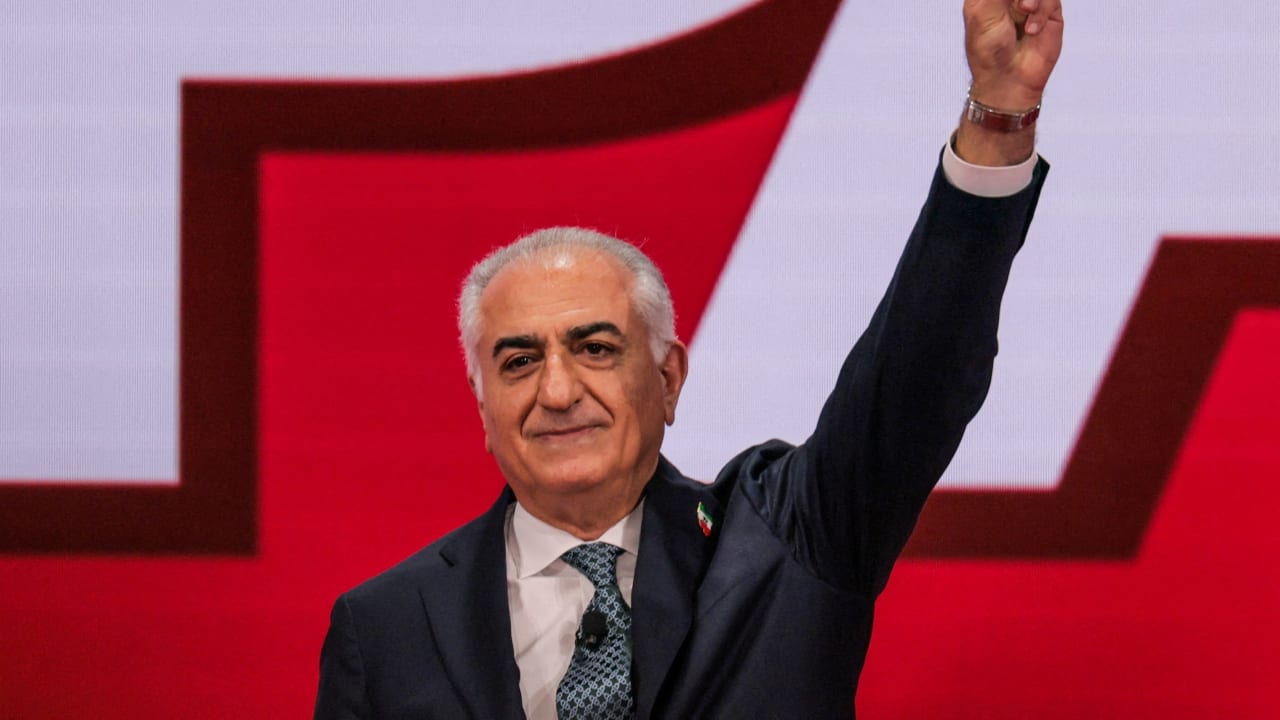
At the Conservative Political Action Conference in Grapevine, Texas, on Saturday, Iranian Crown Prince Reza Pahlavi called for the full dismantling of the Islamic Republic and urged audiences to imagine “a new Middle East where Iran is a friend of Israel,” with the Abraham Accords expanded into what he called the “Cyrus Accords.”
He framed a post-regime Iran as a future democratic partner of both the US and Israel, The Jerusalem Post’s Alex Winston reported. He also warned against any deal with the current regime, saying Iran’s opposition remains fragmented, Reuters reported.
Those facts should come first, because they define both the promise and the limits of Pahlavi’s message. He did not present a peace treaty, a governing coalition, or a road map that is likely to materialize next week. He presented an argument, public and explicit, that the Islamic Republic does not speak for all of Iran, and that hostility to Israel is a regime doctrine, not an eternal Persian truth.
That distinction matters for Israelis. For nearly half a century, the Islamic Republic has invested money, weapons, training, and ideology in a regional campaign against the Jewish state. Hezbollah, Iraqi militias, and the Houthis have all formed part of that pressure system. Israelis have learned, with reason, to treat Tehran as the center of a long war conducted through missiles, proxies, and terrorism.
Israel and Iran share a historical weight
Pahlavi is asking Israelis to separate Iran from the regime that has ruled it since 1979. That is a serious political claim. It also carries historical weight. When he invokes Cyrus the Great, he is trying to place Iran inside a much older story, one that includes Persian tolerance, Jewish memory, and a period before the Islamic Republic turned anti-Israel hostility into state identity.

The Post believes that claim deserves to be heard seriously, even by those who doubt Pahlavi’s political viability.
Israelis have no reason to be naive. Iran’s rulers are still funding, arming, and directing forces that target Israeli civilians and soldiers. A speech in Texas does not change the battlefield. It does not disarm Hezbollah. It does not erase the October 7 massacre or years of Iranian entrenchment across the region. Sentiment is not strategy, and slogans do not alter the facts on the ground.
But strategy also requires the ability to recognize an opening when one appears. The Abraham Accords themselves were treated for years as a diplomatic fantasy. Leaders then decided to say openly what many had preferred to discuss only in private: that common interests were stronger than old formulas, and that public normalization served real national goals.
Pahlavi is trying to do something similar with Iran. He is telling Western audiences, Arab states, Israelis, the Iranian diaspora, and Iranians at home that a different alignment is possible, and that Israel need not remain fixed forever as the organizing enemy of Iranian politics.
That does not make him the future ruler of Iran. Reuters is right to note the opposition’s fragmentation, and any serious editorial judgment must acknowledge that point. A vision is easier to proclaim than to build. The fall of a regime, if it comes, does not automatically produce liberal order, clean institutions, or a stable successor.
Still, there is value in a public Iranian figure saying clearly what many others avoid saying. There is value in rejecting the regime’s lie that hatred of Israel is a mark of Iranian authenticity. There is value in giving both Israelis and Iranians a language for something other than permanent war.
Pahlavi should not be romanticized - but tested
The Post urges policy-makers in Jerusalem and Washington to keep their judgment hardheaded. Pahlavi should not be romanticized. He should be tested by political reality, by organization, by support inside Iran, and by his ability to convert symbolism into a credible alternative.
He should also not be dismissed out of habit. One of the West’s recurring failures with Iran has been its narrow imagination. Too often, policy has swung between fear of the regime and accommodation of the regime, as though the regime were the only Iran available.
Israel cannot build policy on hope alone. It can, however, recognize when an Iranian voice is offering something this region rarely hears: an argument that peace with Israel belongs inside a legitimate vision of Iran’s future. That horizon is distant. It is also worth naming.