Shortly after Oct. 7, Marina Maximilian released a song called “Hazakim b’yahad” (“strong together”), with a chorus that said it all:
Poland, Baghdad
Everyone together in the mamad [safe room]
We are one beating heart
We will survive only if we remain strong together
It resonated then. It resonates even more now, as Israelis – over the past few weeks – have spent much of their time hovering near, or securely inside, safe rooms and shelters.
Poland, Baghdad, all together in the mamad.

Meaning: Where you came from, what you believe, how you vote – none of it matters. We are all huddled together, once again in the same proverbial boat under attack.
However, if we’re being honest, we are not all experiencing this war equally.
In a country of 10 million people, some are more in the line of fire than others. For instance, the difficulties facing those in Petah Tikva – among the cities with the most Color Red warning sirens since February 28 – are far greater than those facing people living in Mitzpe Ramon, a city with the least.
The country is divided, but not in the way we often think about. Not between those who love Prime Minister Benjamin Netanyahu and those who hate him; not those who sleep at night because they have no loved ones in the reserves and those who don’t sleep because they do; not those who want to expand the settlements and those who are opposed.
In this war, the division is between those who have small children and those who don’t, and those who have a safe room in their home or apartment and those who do not.
LET’S START with the safe room. For decades, conventional wisdom held that when assessing real estate values, the most important factor is location, location, location.
Not anymore, at least not in Israel. Now the greatest selling point is not walking distance to the beach, but a safe room in your apartment – near the bathroom, not far from the kitchen.
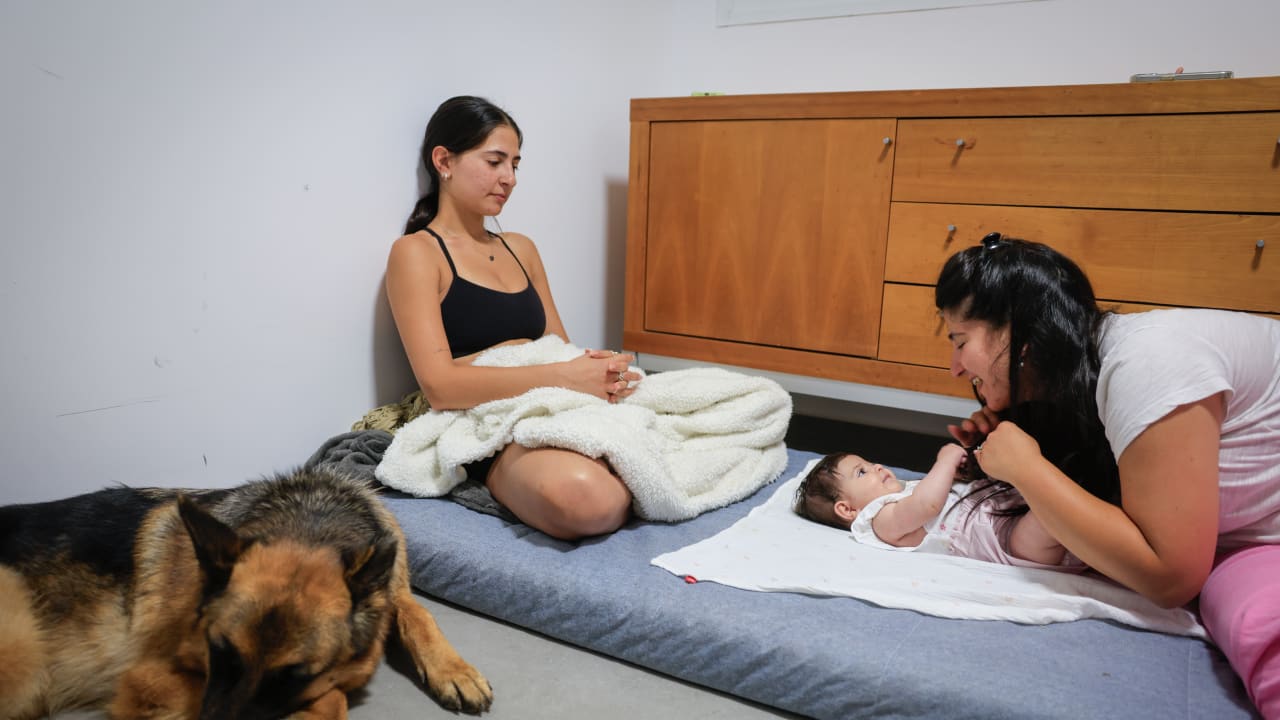
The mamad changes the experience of this war entirely. You hear the preliminary alert on your phone to get near a safe place, and you just move a few steps. You hear the siren, and you’re already there. You’re inside with your family, with blankets and pillows and books and toys. At night, you can sleep there. It’s not great – it can get claustrophobic – but it is manageable.
But what about those who don’t have a mamad?
They have to seek out a bomb shelter. The lucky ones have one in their building, so when the siren sounds they scurry down the stairs into a communal space with neighbors they may have previously only nodded to but are now getting to know in a very different, far more intimate way. They experience the war very differently from those with a mamad – the constant schlepping, the sometimes crowded, cold, or dusty shelters, depending on how well they are maintained.
At the bottom of this particular food chain are those without a bomb shelter in their building. They have to run to a neighborhood shelter, a parking garage, or a train station. It’s a completely different experience. They look at those with shelters in their building and think, “Aren’t they lucky”; and those with shelters in their apartments look at those with safe rooms and say, “Aren’t they lucky.”
That is one distinction.
THE OTHER has to do with children.
Those with young children – say, under bar or bat mitzvah age – experience this war very differently from those without children at home.
It is one thing to trudge half asleep into a safe room, an apartment building’s shelter, or even a public space if you and your spouse are on your own – inconvenient, but doable. It is quite another when, a couple of times a night, you wake toddlers or grade school children from deep sleep and carry or drag them down to the building’s shelter or across the street to a public one.
“You’re lucky,” my daughter, The Lass, told me one night after a run to the nearby neighborhood shelter with her husband and three small girls. “It’s a lot easier without kids.” Indeed.
And those experiencing the war with the least grief and inconvenience, of course, are our relatives and friends abroad. They feel for our situation. They worry. They empathize. But they are not going through what we are.
The Wife received this message from a friend very much involved with Israel, who has close family living here but lives abroad:
“I feel a bit guilty admitting I am on an airplane waiting to take off for a couple of nights in Florida. The kids have a couple of days off school.”
She felt guilty because we’re here, running to shelters, while she is going to Disney World over there.
Who really are the lucky ones?
But here is the strange part: I’m not sure she’s the lucky one.
YES, IT’S difficult. Yes, it’s stressful. Yes, it’s hard. Yes, it’s inconvenient. And yes, it is tough watching your kids – or your grandkids – go through this. But I’m not sure the lucky Jews are the ones overseas.
There is something to be said for being here right now – for the possibility that the Jews abroad may be the ones missing out. That those of us here, going through it all, are the privileged ones, living through a pivotal moment in Jewish history and helping shape what comes next.
The going is rough. But those who go through rough times that lead to much better days are – when people look back decades later – often considered the lucky ones.
As Naomi Shemer sang in “Yerushalayim shel Zahav” (“Jerusalem of Gold”): “We have returned to the cisterns, to the markets and the square.” In other words, we didn’t just remember history – we returned to living it.
That was then, in 1967.
Today, we are the generation living through it as it unfolds. Not lucky, perhaps, in any conventional sense. But lucky, nonetheless.