
It would be a major understatement to say that this Passover will likely be very different from what we would typically hope for at this time of year.
While the war is constantly developing with miraculous achievements seen on all fronts at all times, we live with an ongoing threat to our home front that will mean many families who might have traveled abroad or to northern Israel will be spending Passover in their homes.
Thousands of those homes will also feel painfully empty, as the Seder tables will be set with the knowledge that many spouses, sons, and daughters will once again be away, serving in yet another round of reserve duty.
And even those of us blessed to be in our homes, and particularly those along the northern borders, will be reading the Haggadah with the anticipation of when the next alert might be incoming.
We also know that Passover is typically a holiday that welcomes thousands of families from abroad who choose to spend this time in Israel. However, this year the war and travel restrictions will deprive many of them of that opportunity.
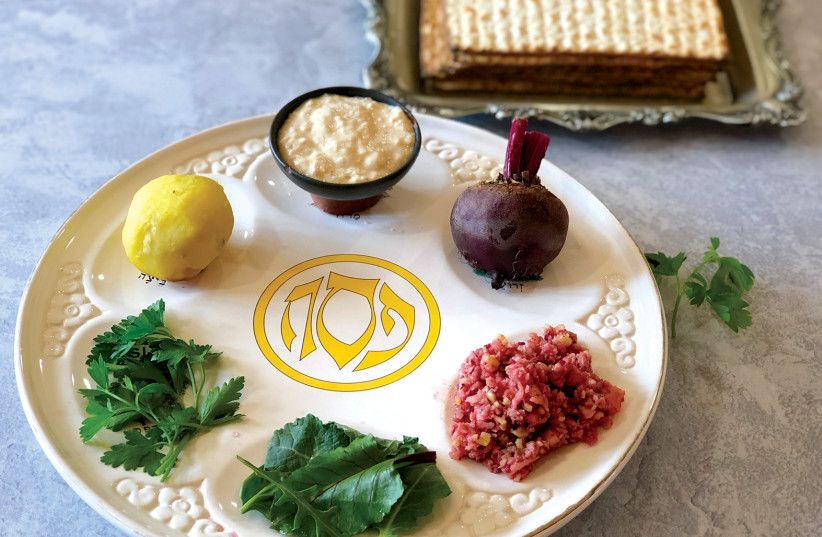
So while some might argue that these are just “material sacrifices” amid far greater problems, one should not downplay the emotions that people are feeling.
It is completely understandable and acceptable to feel a sense of loss over a traditionally joyous and family-oriented holiday being spent under these trying conditions, and that this is yet another factor in the mental exhaustion that we are all living with these days.
I would therefore suggest it is worth harnessing our thoughts around Passover to focus on the central themes of the holiday.
Passover is the holiday of freedom
As we all know, Passover is the holiday of freedom, our exodus from Egypt, but also freedom and survival in the face of many other threats we have endured over the generations.
The Haggadah is filled with songs and expressions of gratitude to Hashem (God) for redeeming us from slavery and bestowing upon us the freedom that is perhaps the most recognizable aspect of our nation-building identity.
I would often read those passages at the Seder with some sense of bewilderment, realizing that millions of people gathered around Passover tables were in environments that were anything but free.
Passover was observed in pogrom-riddled Europe, in the ghettos, in hiding in Communist Russia, or in flight from Arab lands, alongside many other settings where real freedom was the furthest thing from people’s minds.
Certainly, this year, amid the threats and challenges we face in Israel and in Diaspora communities around the world, it would be completely understandable to share a similar feeling that, as much as we have to be thankful for, true “freedom” remains elusive.
As we look at some of the opening words of the Haggadah, this challenge comes into even greater focus. In the passage “Ha lachma anya,” it states, “This year we are slaves, next year we will be free.” If indeed we are to acknowledge that we are still enslaved and are still working to achieve true freedom, are we really able to celebrate?
The answer perhaps lies in the fact that unlike popular understandings of redemption, freedom is not some absolute where yesterday we were trapped and today we are free.
Real freedom, the likes of which we as a Jewish people long to achieve, is a long and difficult process. But the Jewish approach to freedom is the firm belief that, as individuals created in the image of Hashem, we all have the right to live as a free people.
At the same time, that spiritual right to freedom will not always live hand in hand with physical or political liberty. Even in the harshest of conditions endured by Jews in past and present generations, the freedom of Passover is an internal emotion.
The lesson is that real freedom is often not a product of our surroundings. People can and have felt free in the most horrific of historical settings, while others live in luxury, material wealth, and comfort and remain trapped by feelings of jealousy, desire, hatred, and frustration.
Ultimately, Passover teaches us that believing in freedom is predicated upon a person’s faith that he or she has the unbelievable power to frame how he or she perceives and reacts to the experiences that surround him or her. One can approach Passover this year deeply disappointed that the chag won’t look the way we had planned, and those emotions are more than valid.
But at the same time, we can approach these days with gratitude and even joy that we live at a time where our people have the strength and resolve to repel, and with God’s blessing, even destroy, our enemies. This is a place that previous generations only dreamed of.
So wherever we will be spending Passover, amid all types of personal and national difficulties and fears, we can approach this moment with the recognition that Hashem instilled within us this ability to recognize good even in moments of evil, and hope in moments of pain.
And if we are to embrace this power to approach missed opportunities with perspective and optimism, we can pray that we will still be blessed with a Passover of joy, meaning, and the hope that we will have only better days very soon.
The writer is the chief rabbi of the city of Shoham and founder-chairman of the Tzohar Rabbinical Organization.