In the midst of the war, when public discourse naturally focuses on security threats, it is easy to forget that the soul, too, is under attack. Children, adolescents, and entire families are coping with fear, the loss of their sense of security, and profound uncertainty. Alongside the necessary physical protections, there is an urgent need for spaces that allow people to process their experiences and begin to regain a sense of stability.
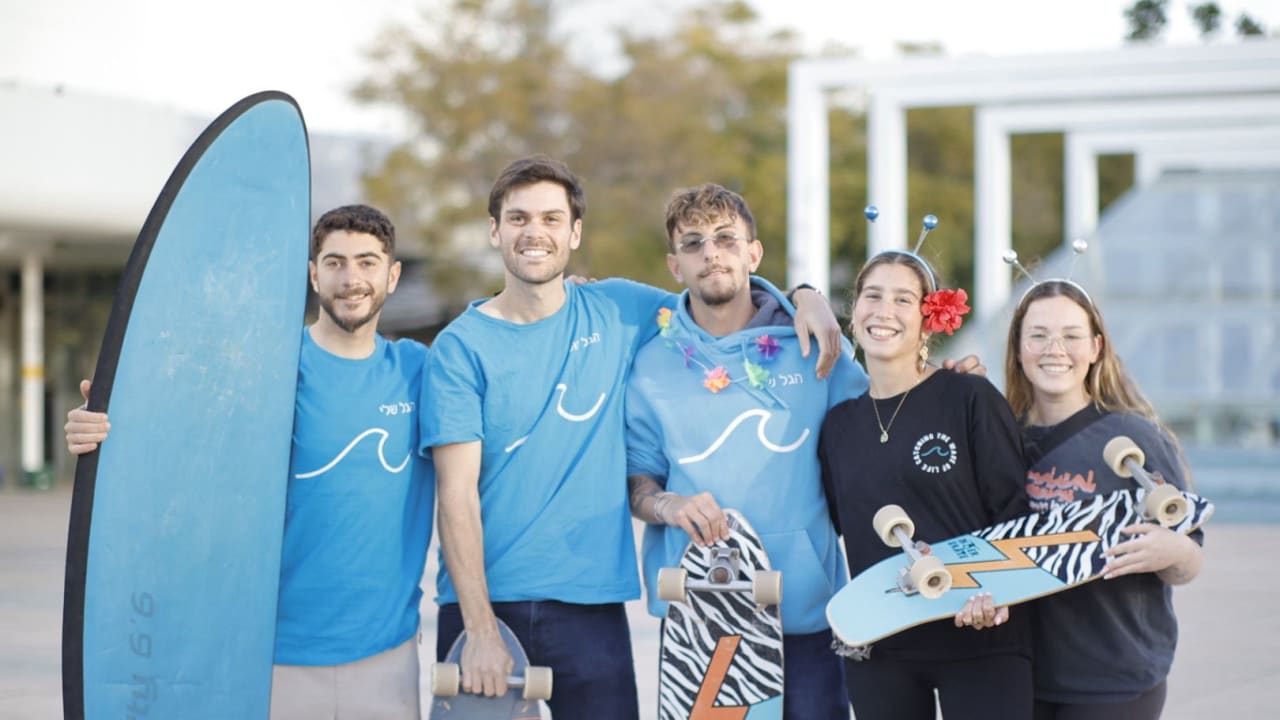
As a social worker at HaGal Sheli (My Wave), an organization that supports individuals from all walks of Israeli society, including those coping with post-trauma, through surf therapy, the sea is usually the space where our healing activities and processes take place. That is the environment in which conversations take place, where movement helps release tension, and where a sense of safety and the ability to face challenges are gradually built among participants. Such healing usually happens when the traumatic factor is no longer present around them.

Heavy missile and rocket fire
But since the outbreak of the war with Iran and the heavy missile and rocket fire toward Israel, the beaches have closed and all activities have halted. For many of the participants we support, it is precisely now, when reality is so deeply distressing and chaotic, that this space is more absent than ever.
The missiles across the country destroyed more than buildings and infrastructure; they also damaged people’s basic sense of security. In several locations, homes and entire neighborhoods were hit, and many residents were evacuated from their houses to hotels. Within minutes, people found themselves gathering a few belongings, leaving their homes, and trying to understand where to go from here.
On the third day of the war, a team from HaGal Sheli arrived at a hotel in Jerusalem, where residents from Beit Shemesh had been evacuated to after losing their homes due to a direct missile hit.
Evacuating teens
The first sight we encountered was people attempting to rebuild their lives. Among them were elderly men and women, children, and adolescents, some carrying the few belongings they had managed to grab at the last minute, others arriving with almost nothing. Everyone there had left the chaos and uncertainty of their damaged homes only to find themselves in an unfamiliar place that wasn’t their own.
Our team arrived at the hotel with substantial prior experience in emergency response, along with the desire and tools to be there for them in any way possible.
Most of our work focused on the evacuated teens. Many are on their phones for hours and can't always share their experiences. Some remain deeply immersed in the trauma of their damaged homes and the uncertainty surrounding their future.
Through our activities in the hotels, we focus on simple but essential tools that can help anyone cope: practicing self-compassion and forgiving ourselves even when we feel we are not doing enough; limiting news consumption; and reducing prolonged screen time, which can heighten stress and a sense of lack of control. Throughout the day, we teach the teens not to withdraw but to discuss their emotions and challenges in an attempt to maintain connections with those around them. As the days go by, they slowly open up more and more. We even celebrated Purim together and managed to create a space where they can be present and practice tools that help them cope with this frightening reality.
Usually, we work with teenagers through the sea, using surf therapy and experiences at sea, to teach principles for coping with fear and lack of control and maintaining balance while confronted with a changing wave. These principles continue to guide us in the hotels, even when the sea itself is inaccessible. With movement and balance-centered activities, participants learn to release tension and regain a sense of stability and control. Sometimes, a moment of shared activity is enough to spark a conversation and put the tools they’ve learned into practice.
Right now, public attention is rightly directed at the security threats we face in Israel. But alongside the physical damage, an internal storm is unfolding for children and adolescents who, in a single moment, lost their sense of home and stability. Precisely in such situations, it is crucial to create small anchors for them within the uncertainty.
We can't take them to the sea, but we can show them its lessons: that even in a storm, balance is possible, and you can get up and try again after a fall. During these days, sometimes the most important thing is simply to be there and offer a sense of routine amid their disoriented reality.
The writer is a social worker and a supervisor at HaGal Sheli.