One of the most impressive things I found in Israel when I moved here 42 years ago was that there was an Egged bus to “everywhere.” Even if one lived in a remote corner of the country on a 20-person moshav, the bus to the city may have only run three times a day, but there was a bus, and the system was ubiquitous and, frankly, quite amazing.
Remember, I made aliyah from Chicago, which certainly has a huge metro system (commonly referred to as the “EL”). However, it was seemingly built primarily to get people into the city from various parts of the region, but disappointingly offered no cross-town service.
To travel to a different part of the city, one first had to get to the city’s center, or “Loop,” and then transfer to a different train to take you to your destination. Crosstown travel was solely the province of slow and relatively unreliable surface buses.
Yet, a country like ours, which is regularly attacked by rockets, drones, and ballistic missiles, and which 42 years ago figured out how to make public transportation available to every resident regardless of where he or she might live, has still not been able to figure out how to ensure that every resident can reach a bomb shelter in the time recommended by the Home Front Command.

Millions at risk
This is, by definition, a failure of our government to protect its people and a situation that demands a timely solution.
As in every challenge of this type, there is a history attached to the problem.
A recent Jerusalem Post article stated that while Israel has required buildings built since 1969 to include a communal shelter and, since 1993, to provide safe rooms (i.e., mamad) as well, the Israel Builders Contractors Association estimated that 56% of homes did not have a mamad as of 2024. The Media Line also reported in 2023 that almost 28% of Israelis do not have a bomb shelter in their immediate vicinity.
To make matters worse, there is a large discrepancy between the Jewish and Arab areas as well. At a recent Knesset hearing on the subject, as reported by the Jewish Telegraphic Agency, statistics from the IDF Home Front Command show that only 37 of 11,775 public shelters in Israel, or roughly 0.3%, are located in Arab municipalities, even though Arabs make up about 15% of Israel’s population.
This information dates to January 2025, before last year’s war with Iran, yet it is the last data available. In Jerusalem itself, for example, there is only one public bomb shelter in east Jerusalem, according to BIMKOM (Planners for Planning Rights), a group advocating for equitably built environments in Israel.
The mandate that all new construction projects include a safe room in each unit or a basement shelter, first enacted in the 1990s, shifted Israel’s safeguards away from public shelters. As a result, overall, there have been no additional public shelters built in the last decade.
According to the March 2026 report on the topic issued by Israel’s State Comptroller, 3.2 million Israelis (a third of Israel’s citizens) DO NOT have access to bomb shelters. In addition, 11.7% of public shelters are unusable. This is an inexcusable situation that puts millions of us at risk for our very lives.
To be sure, there are some NGOs that have risen to the challenge and are making some headway in solving this problem.
One, called Lifeshield (https://www.operationlifeshield.org/), provides ready-to-use shelters constructed in Israel by leading manufacturers of steel-reinforced concrete products, which can be deployed quickly. The 1000+ Lifeshield shelters currently in use throughout the country have been donated by caring individuals and organizations from around the world, including Jewish and Christian groups.
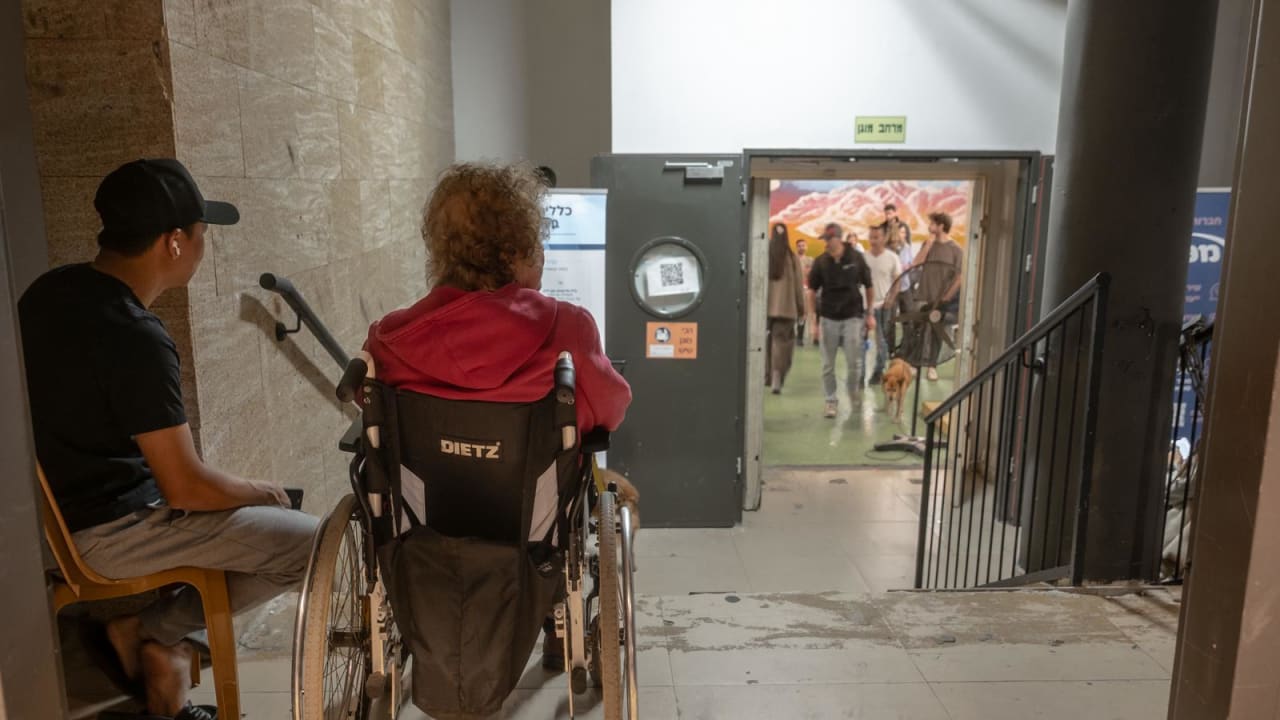
Another group is the Purple Vest Initiative (https://purple-vest.net/partners/), which helps people with disabilities and the elderly who may need assistance with accessible evacuation. Others may choose to remain in place but still need support. Purple Vest, in coordination with the Jewish Agency, Zaka, JDC Israel, and the like, steps in, leaving no one behind.
These and other NGOs are doing great work, but the overall obligation rests on the government of Israel to reach as close as possible to 100% coverage so that every person living here can be assured of access to a bomb shelter in case it is needed.
There will always be experts who say that this is not an achievable goal. Nevertheless, the founding father of this country, David Ben-Gurion, once said: “If an expert says it can’t be done, get another expert.” Israel needs to identify the expert who says this can be done and give that person the mandate to fix the problem. We have no time to waste in addressing this dangerous situation.
The writer, a 42-year resident of Jerusalem, is a former national president of the Association of Americans and Canadians in Israel, a past chairperson of the board of the Pardes Institute of Jewish Studies, and a board member of the Israel-America Chamber of Commerce (AMCHAM).