
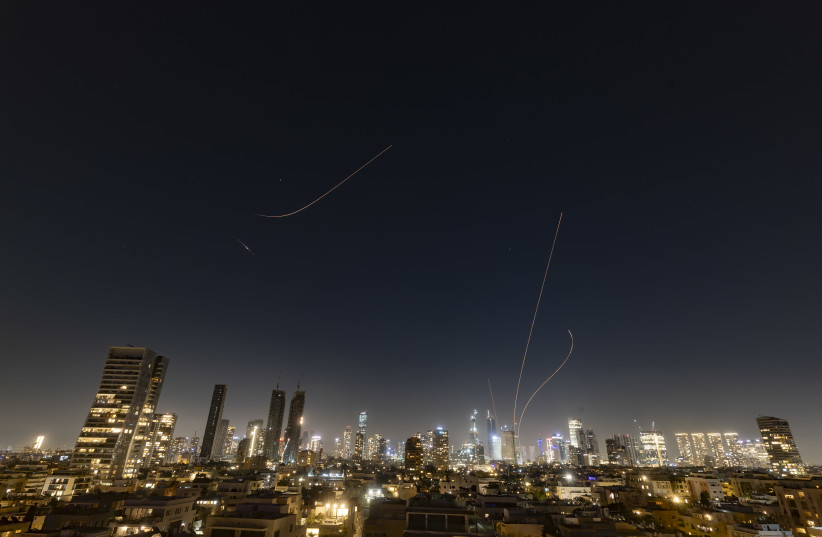
It’s March 2026. The Middle East holds its breath under the shadow of direct conflict and surging security tensions.
It is a region where the skies are often darkened by clouds of metal and the earth trembles under the weight of steel. Yet, beneath the surface, at a depth where the echoes of explosions fade into a dull vibration, a different kind of rupture is stirring.
This past weekend witnessed a rare calendrical convergence: the new moon of the Hebrew month of Nisan, the Persian Nowruz, and the Muslim Eid al-Fitr all met within a span of a few hours.
This is an etymological and political journey toward a shared linguistic root that seeks to breach the walls of enmity, precisely when the ground is shaking. While leaders above ground are preoccupied with the bitter question of “who will strike whom” on the battlefield, the earth beneath their feet – from the Iranian plateau to the Judean hills – is engaged in the exact same labor: the cracking of the seed, the budding of the sprout, and renewal.
At first glance, everything today appears separated by absolute polarity. Observant Muslims in Iran celebrate Eid al-Fitr as the victory of the spirit over the body, while Nowruz, the ancient new year of the Persian peoples, returns them to pre-Islamic roots, to fire and spring. Conversely, for the Jewish people, the first of Nisan heralds the “Festival of the Bud,” the moment when a miracle bursts forth from nature.
However, a deeper look into the region's languages and cultures reveals that, beneath political disputes, words and customs emerge from the same conceptual womb.
The shared root of these spring festivals is not merely chronological but deeply linguistic and existential. The name “Nisan” itself was brought from Babylonian culture during the exile, derived from the Akkadian word “nisannu,” originally meaning “bud.”
The sages interpreted Nisan as related to the word “nes” (miracle), for in this month, the miracle bursts through the rigid laws of nature, just as the bud pierces the hard earth. Here we find the “pe’ter” (from the Hebrew root P-T-R, meaning opening or release) of nature in the buds of Nisan and the “pe’ter” of the Jewish people emerging from the womb of Egypt from slavery to freedom, alongside Nowruz, which declares the “dismissal” (piturim) of the previous year, sending it on its way toward a fresh new era. Nisan is the month of the “pe’ter” of the year; it is the moment when the earth “releases” (poteret) the seed from the bonds of darkness and sends it toward the light.
A shared language of renewal
Parallel to the Hebrew “pe’ter,” we encounter a fascinating link to the Muslim holiday Eid al-Fitr. The root of the holiday’s name in Arabic carries a profound meaning of rupture and renewal following a break, strikingly similar to the Hebrew root P-T-R. The “fitr” is the blessed breaking of the fast: after a month in which the individual subjugated physical needs for the sake of the soul, the physical body is “broken” and exhausted to allow the spirit to reappear in its full strength.
Eid al-Fitr is a moment of rebirth, where the soul emerges from the envelope of the hungry body. There is a wondrous similarity here: the “fitr” of the Muslim soul at the end of Ramadan, the “pe’ter” of nature in the buds of Nisan, and the “pe’ter” of the Jewish people exiting the straits of Egypt. All celebrate the drama of emerging into the light – from winter to clarity, and from subjugation to liberty.
The connection between these clashing nations is also surprisingly revealed in the Persian tradition of Nowruz. A thousand years ago, Persian philosopher al-Biruni linked the holiday specifically to King Solomon.
According to the legend, Solomon lost his kingdom and his magic ring during this period and wandered as a pauper. On the day he returned to rule and restored his splendor, light returned to the world. The Persians, impressed by the miracle and the return of the righteous king to his throne, cried out: “Nowruz Amad” – Behold, a new day has arrived.
This link is not accidental; it is deeply rooted since the time of Cyrus the Great, who supported the Return to Zion. In the ancient world, differing worldviews did not prevent cultures from influencing one another. Customs and rituals were shared without anxiety, a magnificent example being the similarity between the “Haft-sin” table of Nowruz and the Seder plate.
The parallel extends into the domestic sphere: in Persia, it is customary to perform “Khaneh-tekani” (shaking the house), a thorough cleaning of every hidden corner as a value of spiritual renewal, while Jews labor over the “removal of hametz.”
In both traditions, cleaning is not merely physical; it is an attempt to “release” (l’iftor) the soul from the residues of the past year’s “souring” or “leavening.” This process of cleaning the home and the soul symbolizes casting off the sediments of the past to allow the new bud to grow and eventually become a full flower.
Ancient sources remind us that in Nisan, “it is neither too hot nor too cold,” a grace bestowed upon those leaving Egypt, bringing them out at the most fitting time. Nature itself refuses to surrender to war and offers “conditions of grace” for new beginnings. The bud of Nisan is proof that life is stronger than destruction. The bud is the promise; it is the stage where potential becomes actual, where the “pe’ter” (P-T-R) rupture turns into blooming.
The convergence of these holidays in 2026 is an invitation for deep reflection on the shared rhythms of life in our region. Spring insists on outlasting war; it shows us that in both Tehran and Jerusalem, the same bulb is now bursting beneath the earth.
While leaders are occupied with battles, the earth beneath their feet performs a “pe’ter rechem” (an opening of the womb) for every seed and bud; the earth does not choose sides. It grants the power of growth to all equally, reminding us that our shared roots are far deeper than the walls of enmity we have built on the surface.
Perhaps the true miracle of Nisan this year will be the realization that we are all celebrating, each in our own language, the same bulb bursting beneath the ground, waiting to become a blossom of peace rather than a flower of mourning.
This year, more than ever, we need the faith that “in Nisan they were redeemed, and in Nisan they are destined to be redeemed,” and that the spirit of spring will bring the redemption for which all residents of the region yearn. The time has come for us to recognize that the earth chooses life; the time has come for us to choose it as well.
The writer, a PhD, is an expert on Iranian culture and religion and is a member of the Bama Tova organization.