Iran’s “Axis of Resistance” was designed to let Tehran fight its enemies indirectly. But that model depends on one critical assumption: that the patron remains stable and in control.
When the patron itself becomes the battlefield, the system begins to fracture. What looks like a coordinated regional alliance starts to reveal itself as something far looser, far more fragile, and far less controllable than many assume.
For years, Iran’s regional strategy has relied on its Axis of Resistance, a network of partners that allows Tehran to project power across the Middle East while avoiding direct war with Israel or the United States.
The IRGC’s Quds Force spent decades building this system through training, weapons transfers, and personal relationships with commanders across the region.
Analysts often describe this posture as the “Ring of Fire”: Hezbollah in Lebanon, Hamas in Gaza, militias in Iraq, and the Houthis in Yemen forming a unified arc of pressure around Israel. It is a powerful image, and a convenient one. It suggests coordination, discipline, and intent.
It is also potentially increasingly misleading.

The Ring of Fire has always depended on coordination from the center. When that center comes under sustained pressure, the model begins to break down.
The Axis of Resistance may not be the unified alliance it was once assumed to be. It is looking more like a loose network of organizations that share funding streams, ideological narratives, and operational ties with Tehran, but do not operate under constant centralized command.
In practice, coordination depends heavily on informal relationships: IRGC officers, liaison figures, and personal channels that link these groups together. When those individuals are targeted, whether in Lebanon, Syria, Tehran, or elsewhere, the effects go beyond the tactical. These strikes disrupt the network’s connective tissue, slowing communication, increasing friction, and making synchronized action across multiple theaters far more difficult.
From central control to fragmented autonomy
But the deeper problem is not logistical. It is structural.
After decades of Iranian support, these groups have “grown up.” They have their own constituencies, their own pressures, and their own survival calculations. The idea of a tightly coordinated “axis” has always been part strategy, part branding. Under pressure, that distinction starts to matter.
Hamas offers the clearest example. October 7 proved that Hamas is not a subcontractor. It is an independent actor willing to initiate large-scale conflict on its own timeline, even when doing so risks pulling its patron into a war it may not have been prepared to fight. That decision reflected Hamas’s local reality, not a synchronized regional plan.
This dynamic creates a very different constraint for Hezbollah. Unlike Hamas, Hezbollah is deeply embedded within the Lebanese state. It holds parliamentary power, manages extensive social services, and sustains a broad political base. For Hezbollah, escalation is not only a military question, but also a domestic one.
A full-scale war would not just threaten its missile stockpiles. It would put at risk the political legitimacy and internal stability it has spent decades building. That reality helps explain Hezbollah’s “calibrated” posture: signaling alignment with the axis while carefully avoiding the level of escalation that could leave its position in Lebanon in ruins.
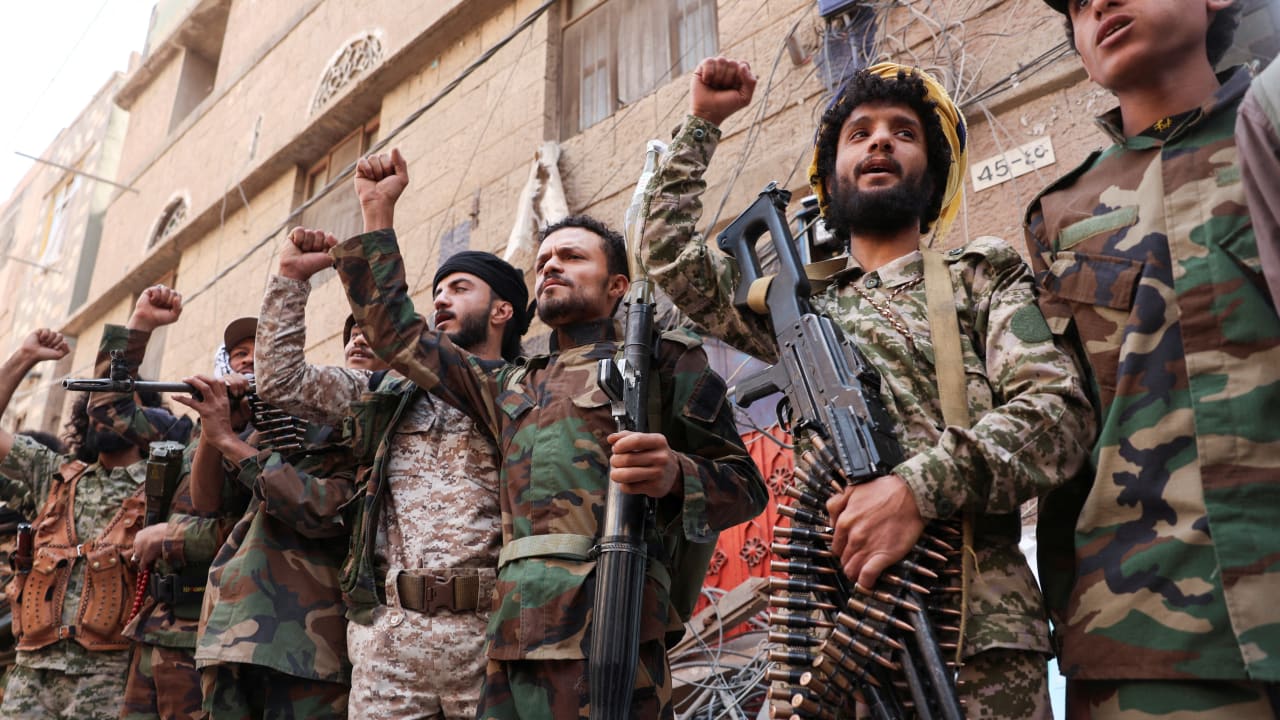
On the opposite end of the spectrum sit the Houthis. Operating outside the constraints of a stable state, they face fewer domestic pressures. They do not manage a functioning economy or a large middle class. That freedom allows them to act more aggressively, including disrupting global shipping routes, with far fewer internal consequences.
The Iraqi militias fall somewhere in between, balancing their dependence on Iranian support with their integration into the Iraqi political system. They are pulled in two directions at once, toward Tehran and toward Baghdad, which often produces inconsistent and cautious behavior.
What emerges across this landscape is a simple reality: patronage does not equal control.
As Iran comes under direct pressure, these groups are increasingly checking their own survival maps before they look to Tehran. The result is not a unified front, but something messier. Each actor is calculating its next move based on local conditions, not waiting for instructions from above.
This is not just a tactical challenge for Iran. It is a failure of the model it has spent decades building.
The Axis of Resistance has long projected an image of ideological unity, presenting itself as a disciplined coalition advancing a shared regional cause. In practice, that unity has always been conditional. As pressure on Tehran increases, the transactional nature of these relationships becomes harder to ignore.
These are not brothers-in-arms in a single command structure. They are clients of a patron that is now under fire, each deciding how much risk they are willing to absorb.
The popular image is of a coordinated Ring of Fire. The reality looks closer to an octopus under stress. When the head is hit, the tentacles do not move in perfect sync. They pull back, lash out, or act on their own.
The Axis of Resistance is not disappearing. But it is changing.
For Israel and the West, that change matters. A coordinated network, however dangerous, offers some degree of predictability. A fragmented system does not.
As Iran’s ability to manage escalation weakens, its partners are not falling into line. They are improvising. That means fewer clear signals, less centralized control, and a greater risk of miscalculation across multiple fronts.
The era of a tightly managed proxy network may be ending. What replaces it will be more fragmented, more reactive, and in many ways more dangerous.
The writer is a research fellow at the Program on Extremism at George Washington University. A former Project Manager and Researcher at the International Institute for Counter-Terrorism (ICT) and head of operations at the International Legal Forum, his work focuses on narratives, radicalization, and extremism.