
As clerical authority weakens, Tehran faces a more volatile and confrontational future.
The elimination of Ayatollah Ali Khamenei on February 28 has introduced a moment of profound uncertainty in Iran’s political trajectory. While the country’s constitutional framework provides for an interim leadership arrangement, the evolving reality in Tehran suggests a deeper structural shift, one that may redefine the balance between clerical authority and military power within the Islamic Republic.
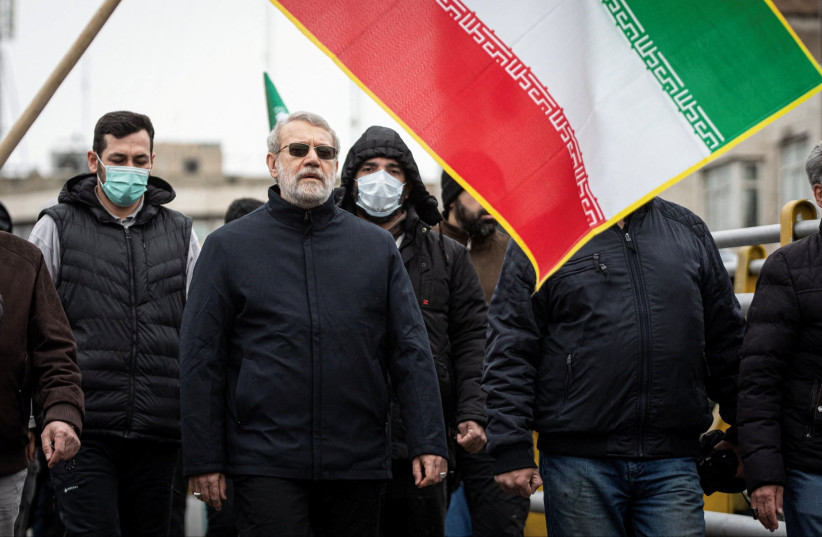
In practice, the center of gravity appears to be moving decisively toward the Islamic Revolutionary Guard Corps (IRGC), which already exerts considerable influence across Iran’s political, economic, and security institutions. Figures such as Ali Larijani, who was killed in an airstrike, and Mohammad Baqir Qalibaf – both with IRGC backgrounds – highlighted the continuity of elite networks that blend military experience with political authority.
Khamenei’s leadership, while ideologically rigid, was at times marked by tactical pragmatism. His concept of narmesh-e qahremananeh – or “heroic flexibility” – provided the regime with a framework to justify compromise under pressure, most notably during nuclear negotiations and in moments of heightened regional tension.
That balancing role may now be diminished. Without a figure capable of mediating between competing factions, the decision-making process risks becoming more centralized within harder-line institutions. This could result in a more assertive – and potentially less predictable – regional posture.
From internal shift to external risk
When Israel assassinated senior Iranian figures in Syria over the years, Tehran’s responses were typically measured. Even in April 2025, after Iran launched a barrage of missiles and drones at Israel, the response was calculated rather than escalatory.
The reported elevation of Mojtaba Khamenei underscores this evolving dynamic. Unlike his predecessor, Mojtaba does not appear to command significant religious authority within the traditional clerical hierarchy. This relative weakness may increase his reliance on security institutions, particularly the IRGC, thereby reinforcing their influence over state affairs.
Such a development would represent a subtle but important transformation: from a system in which clerical legitimacy underpinned political power to one in which military structures play a more decisive role in shaping outcomes.
Even before Khamenei’s death, Iran faced mounting internal challenges. The presidency of Masoud Pezeshkian raised expectations of economic reform, yet structural inefficiencies and entrenched interests limited the scope for meaningful change.
By late 2025, economic strain – marked by inflation, currency instability, and resource shortages – triggered widespread protests across multiple social groups. The state’s response, prioritizing order over accommodation, highlighted the limited space for reform within the current system.
Diplomatic efforts to reduce tensions have struggled to gain traction. Reports indicate that proposals aimed at limiting nuclear activity were not sufficient to bridge the gap between Tehran and Washington, contributing to renewed confrontation.
Subsequent Iranian actions, including strikes beyond its immediate adversaries, suggest a willingness to broaden the scope of engagement. Whether this reflects a coordinated long-term strategy or reactive escalation remains an open question. However, it does underscore the heightened risks facing the wider region. Several scenarios may unfold in the coming period.
A negotiated de-escalation remains possible if the costs of confrontation become prohibitive for all parties. In such a case, indirect channels – potentially involving mediators such as Oman – could regain importance. Alternatively, a prolonged period of low-intensity conflict may emerge, characterized by indirect engagements and strategic restraint calibrated to avoid full-scale war.
More transformative outcomes, such as internal political change or external military intervention, appear less likely in the near term given current constraints. Iran appears to be entering a transitional phase in which the relationship between clerical authority and military power is being recalibrated. The absence of Khamenei removes a central figure who, despite his hardline ideology, often acted as a balancing force within the system.
What emerges in his place may not be a fundamentally different regime, but rather one that operates with altered internal dynamics – potentially more centralized, more security-driven, and more inclined toward assertive regional behavior.
For policymakers and observers, the key challenge will be to understand this shift not simply as a change in leadership, but as a transformation in how power is exercised within the Islamic Republic, and what that may mean for regional stability in the years ahead.
The writer is an award-winning journalist, writer, and editor of the newspaper Blitz. He specializes in counterterrorism and regional geopolitics. Follow him on X: @Salah_Shoaib