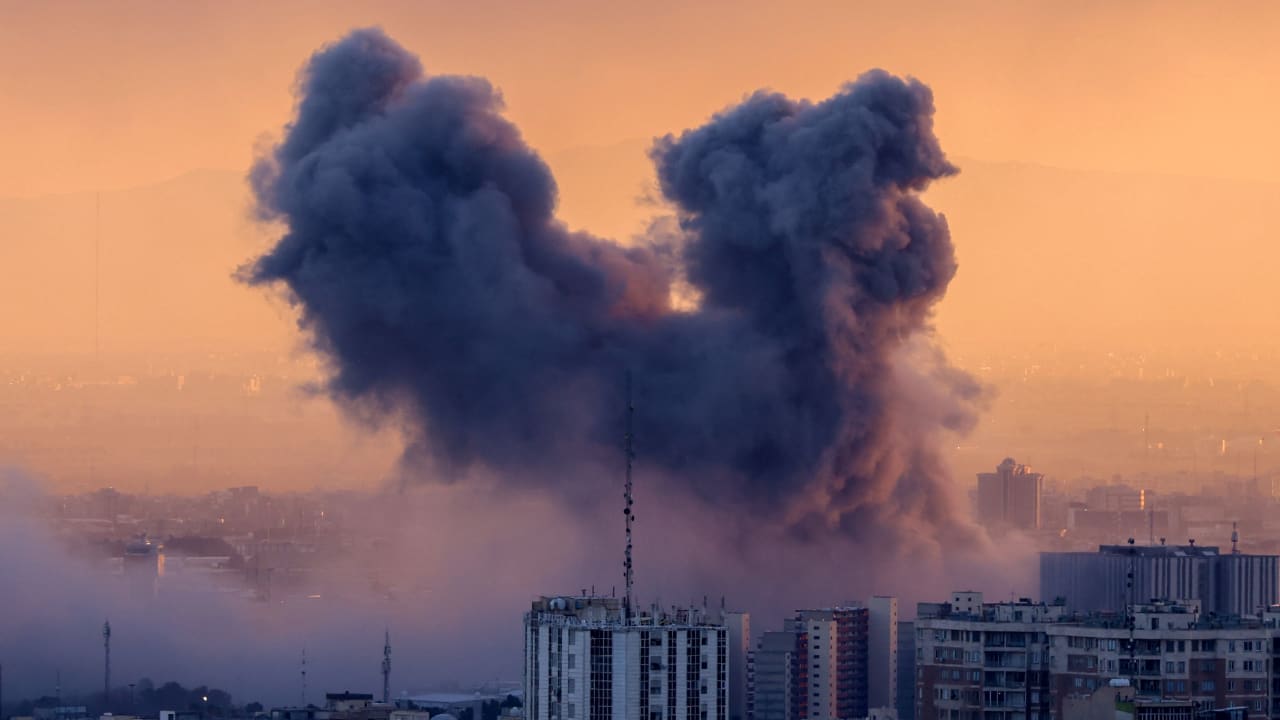
Last June, just four days into the first Iran-Israel War, German Chancellor Friedrich Merz looked squarely into the camera on the sidelines of the G8 meeting and said that Israel was doing the world’s “dirty work.”
“We are also victims of this regime,” he said. “This mullah regime has brought death and destruction to the world.”
The chancellor spoke the truth. But that was then.
On Monday, as NATO leaders rejected US President Donald Trump’s appeal to send warships to assist in opening the Strait of Hormuz, and a day after Japan, Australia, and the UK said they had no plans to do so, a spokesman for Merz said the United States “did not consult us before this war, and so we believe this is not a matter for NATO or the German government.”
Germany’s Defense Minister Boris Pistorius was even more blunt: “This is not our war. We have not started it. What does Donald Trump expect a handful or two handfuls of European frigates to do in the Strait of Hormuz that the powerful US Navy cannot do?”
In other words, why should Europeans get their hands dirty when the Americans will take care of it, or at least should be able to do so?
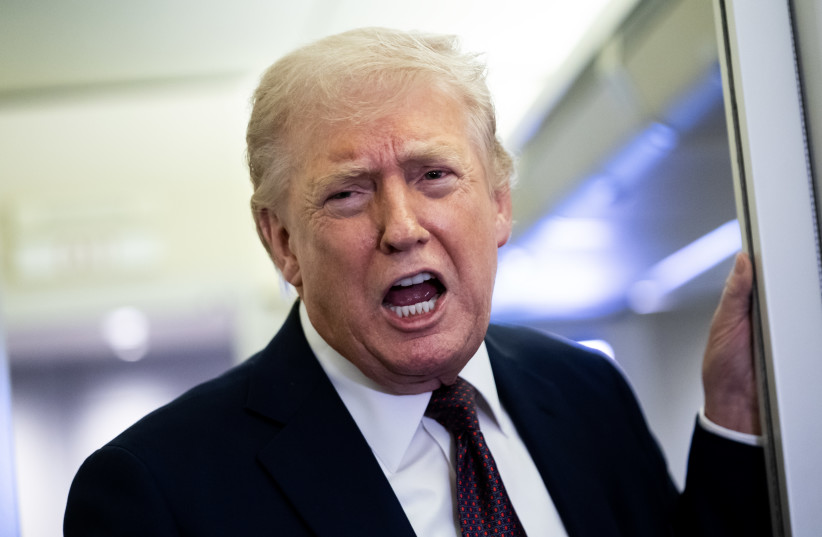
No wonder Trump is exasperated with his allies – not only his European allies but also America’s allies in Asia, notably Japan and South Korea.
All those countries are much more dependent on oil passing through the Straits of Hormuz than the US is, yet they are unwilling to get involved and do not want to “widen the war.”
The purpose of the Iran war
Operation Epic Fury, as the Americans call it, or Roaring Lion, as Israel refers to it, is an operation to free the world from the spectre of a fanatical regime and the globe’s top exporter of terrorism from getting nuclear weapons or mass-producing ballistic missiles that will give it immunity from efforts to stop that program.
It is a war to prevent one of the world’s most odious regimes from getting the capabilities to realize its fanatical designs that include destroying Israel and bringing the US and the West to its knees.
Yet Europe says: It’s not our war.
That would be like the US sitting out all of World War II, because its borders were not punctured by the Nazis, and rationalizing staying out of it by saying that Hitler is not America’s problem.
Into that vacuum stepped Trump – angry, undiplomatic, and, in this case, very much on point.
He framed the Strait of Hormuz issue in stark, transactional terms. The US, he noted, receives less than 1% of its oil through the waterway. Japan gets roughly 95%, South Korea about 35%, and Europe significant amounts as well.
And yet, when Washington asked for help securing that vital artery of the global economy, the response was, at best, hesitant – and, in many cases, a flat refusal.
For decades, Iran has not merely been a regional irritant but a systemic threat: advancing its nuclear program, building ballistic missile capabilities, and establishing a vast network of proxies that have destabilized the Middle East and targeted Western interests.
This is not a war of choice in the way European leaders like to talk about Iraq. It is a war born of ignored threats, allowed-to-grow capabilities, and a regime that has consistently signaled both intent and ambition.
And now, with the Strait of Hormuz effectively choked off, the consequences are immediate and global.
Trump, as usual, did not deliver his argument in the most diplomatic way. He mocked allies for their lack of “enthusiasm,” hinted he would publicly name those who refuse to help, and warned that NATO itself could suffer as a result.
The style is abrasive. But the substance is spot on. Countries that depend overwhelmingly on the stability of the global order are reluctant to defend it – even when the threat is direct, even when the stakes are immediate, even when the moral case is strong.
If a regime that funds terrorism, admits that it has enough enriched uranium for 11 nuclear bombs, and is now holding the world’s economy hostage, is not a shared threat, then it is fair to ask: What is?
And if this is not a war worth supporting, then another question becomes unavoidable: Which war is?