
The current war with Iran is swiftly approaching its 12th day, the length of the June 2025 war that saw Israel and the US target and damage Iran’s nuclear capabilities.
According to many of the players involved, from US President Donald Trump to IDF Chief of Staff Lt.-Gen. Eyal Zamir, Operation Roaring Lion – or Epic Fury as the US calls it – is bound to last considerably longer.
Since the war started, Iran has fired over 200 ballistic missiles at Israel. Since Hezbollah joined the fray, the Lebanon-based terror group has launched another 200-plus projectiles, around 160 rockets, and 43 drones.
They are trying to kill as many Israeli civilians as possible, firing indiscriminately, no different than last June. British Defense Secretary John Healey’s asinine statement to Sky News over the weekend that Iran’s response to the Israeli offensive last year was “proportionate; it was targeted only at military installations,” while admitting that, in this round, they are more “indiscriminate” and “widespread” and are targeting other countries besides Israel, is disdainful.
Like last year, Israel has suffered casualties in this war, including the horrific attack last week in Beit Shemesh, which left nine people dead. Just on Monday, a missile penetrated through the interceptors, and a person was killed in the center of the country. There have been many more wounded, and thousands are suffering from trauma and shock.
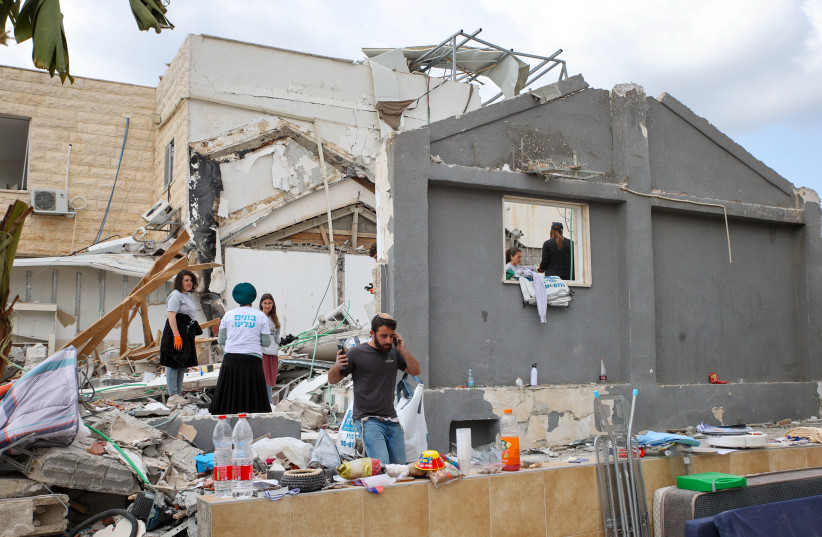
However, all of those numbers would have been far greater if not for the discipline and resilience the Israeli public has shown, both last June and now.
Day or night and regardless of the frequency of the alerts, the vast majority of Israelis have been following instructions and, upon getting the Home Front Command alert, have dutifully entered safe rooms or shelters and waited there until the all-clear notice.
The rhythm of the war has become apparent – a handful of alerts and sirens each day with only one or two missiles fired each time – and the edge of the first days of the war have made way for a bizarre kind of routine. Cars are back on the roads, and people are back sitting at cafes, while a war rages on.
The fear within the home front is that, as the war drags on from days to weeks, complacency will creep in, and little by little, people will stop following the lifesaving instructions.
Another fear, which Iran undoubtedly hopes to capitalize on, is that cracks will form in Israeli society, not so much about support for the war but about the issues of opening the economy and the dilemma of schools, parents, and work.
Unlike in the US, where the war is divisive and split along political allegiances, polls show that the vast majority of Israelis support the efforts to weaken the Iranian threat and, hopefully, spur regime change that will help change the face of the Middle East.
There, we are united. However, political fighting has already begun to sprout about how to manage the war internally. Last week, Home Front Command allowed employees to return to their workplaces in person, at the urging of the Finance Ministry, due to the damage the war has inflicted on the economy.
At the same time, schools are operating in a remote-learning format, and for families with pre-teens, the dilemma is how to go to work if the kids are home.
Finance Minister Bezalel Smotrich announced on Sunday a plan to provide unpaid leave (halat) for one parent in families with a child under the age of 14 to assist working parents during the war while schools remain closed for in-person learning.
The move has sparked knee-jerk outrage from parents across the country and opposition lawmakers, who claim the government has failed to provide an adequate solution for working parents.
No perfect solution for society, routine during wartime
The reality is that there is no perfect solution during wartime. Israel must jumpstart the economy as much as possible, but allowing students to return to school is irresponsible and dangerous.
As the war continues with no end in sight in the short term, Israelis not only need to remain vigilant and resilient but also united. We can’t afford cracks in society at this critical juncture.
At the same time, the government, which is elected for exactly these reasons, must be creative in its efforts to enable the country’s inhabitants to live as ‘normal’ a life as possible during wartime.