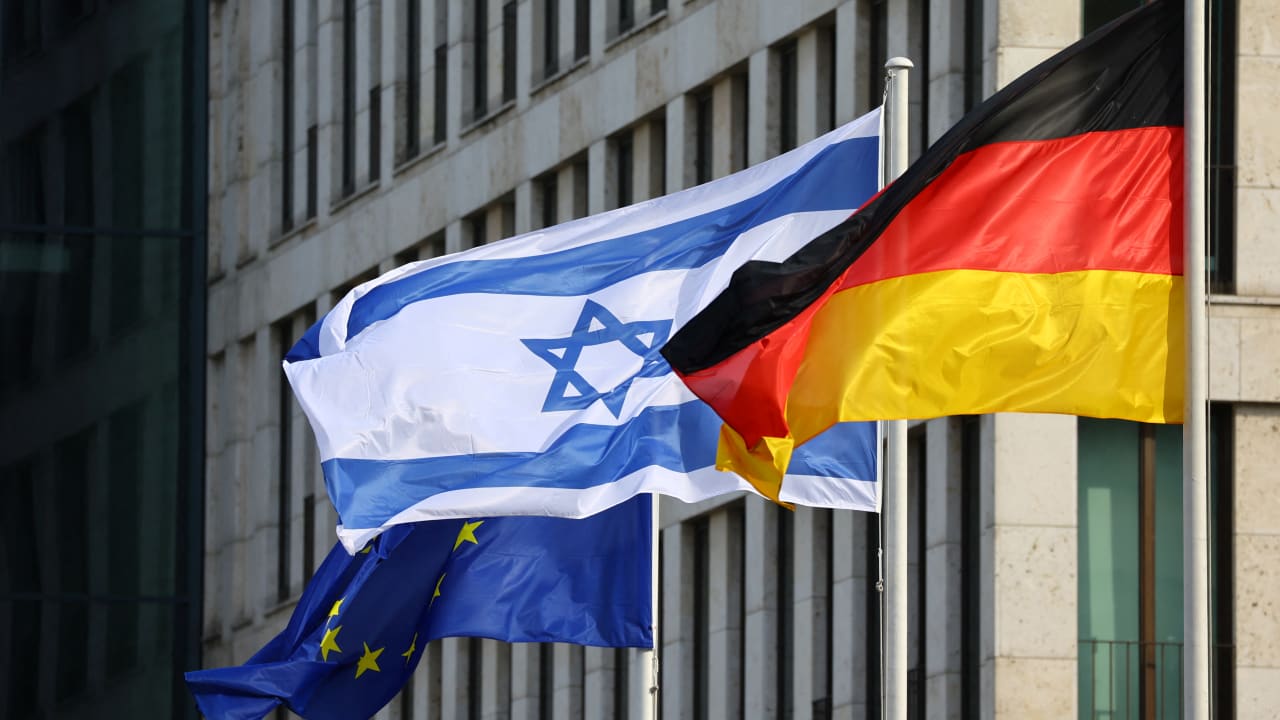
Europe has long imagined itself as a global strategic power with the agency to shape its own destiny. Yet the geopolitical landscape of recent years has revealed a far more uncomfortable reality.
Whether Europeans like it or not, the European Union’s (EU) economic stability is increasingly determined by forces outside its borders.
In the east, the war in Ukraine has bound Europe’s energy and security outlook to Russia. To the south, a widening conflict between Israel and Iran is beginning to tie the Union’s economic future to decisions made in Jerusalem.
This shift is structural rather than ideological. A war involving Iran immediately reverberates through global energy markets. Iran sits near one of the most critical maritime passages for global oil trade. Even the possibility of disruption sends markets into turbulence.
Europe is particularly vulnerable to these shocks. After cutting its reliance on Russian pipeline gas following the invasion of Ukraine, the continent replaced much of that supply with more expensive liquefied natural gas and imports from distant suppliers.

As a result, Europe is now deeply exposed to the volatility of global energy markets.
If the conflict between Israel and Iran continues or intensifies, energy prices will almost certainly rise further.
Shipping costs increase, traders price in geopolitical risk, and supply becomes more uncertain. The economic consequences quickly reach Europe.
Higher energy prices fuel inflation, weaken industrial competitiveness, and slow economic growth. Households face rising energy bills, and European industries struggle with higher production costs.
Even a modest disruption can have outsized economic effects in such an environment.
This is why the war’s duration matters so much for Europe. A short conflict might allow markets to stabilize.
A prolonged campaign against Iran would have the opposite effect. Continued instability in energy markets could weigh on Europe’s economy for years and undermine confidence in the euro.
Migration pressures ahead
But energy is only one dimension of the challenge. Fresh waves of migration may become an equally significant consequence. Iran is a country of more than 90 million people whose economy has already been under heavy strain for years.
Inflation, sanctions, and political unrest have eroded living standards across the country. A prolonged war would deepen that pressure dramatically.
If the conflict disrupts infrastructure or creates widespread insecurity, large numbers of people would likely flee the country. The experience of earlier conflicts across the Middle East demonstrates how quickly such movements can grow.
Geography places Europe directly along the likely route. Any large-scale migration from Iran would most likely move west through Turkey and toward the southeast borders of the EU.
European governments are well aware of this possibility.
Countries along the migration corridor are already watching the situation closely. For states such as Hungary, which lies on a key land route into the Union, the prospect of another migration wave represents a serious political and security concern.
A prolonged conflict in Iran could therefore generate pressure not only on the EU’s economy but also on its internal cohesion. Migration crises have repeatedly exposed divisions within the Union.
Another sudden influx of refugees could revive those tensions.
Energy shocks and migration pressures together create a powerful geopolitical reality. Both depend heavily on how the conflict between Israel and Iran unfolds.
This leads to an uncomfortable conclusion. Europe’s economic outlook may increasingly depend on strategic decisions made in Jerusalem. Israel’s leadership will determine whether the war remains limited or develops into a longer confrontation.
Those decisions will naturally be driven by Israel’s security priorities. And their consequences will extend far beyond the Middle East.
The irony is striking. For years European leaders have spoken about strategic autonomy and the EU’s capacity to shape its own future. The current geopolitical environment reveals an opposite trend.
Russia’s invasion of Ukraine forced Europe to reorganize its entire energy system and exposed deep vulnerabilities in its economic model. Now, a second external dependency is emerging.
If the war with Iran becomes prolonged, Europe’s future will increasingly be shaped not by decisions taken in Brussels but by those taken in Jerusalem.
Europe now stands between two geopolitical fault lines. In the east, the war in Ukraine ties the continent’s security environment to Russia. In the south, the confrontation between Israel and Iran threatens to bind Europe’s economic stability to Israel’s military strategy.
This is the strategic reality that Europe must confront.
Like it or not, the EU’s future is being shaped less in Brussels and increasingly in Moscow and Jerusalem. Decisions far from the halls of the European institutions now carry profound consequences for Europe’s economy, security, and political stability.
As the war with Iran unfolds, choices made in Jerusalem may influence energy prices, migration pressure, and financial stability across the continent.
The uncomfortable reality is that the Union’s prosperity and cohesion are becoming ever more dependent on conflicts and calculations beyond Europe’s borders.
The writer is a senior fellow at the Jewish People Policy Institute (JPPI) and a professor of European studies and international relations in the Department of Politics and Government at Ben-Gurion University of the Negev.