On the night when the death of Ali Khamenei was confirmed, people took to the streets in many Kurdish towns across Iran. They celebrated, danced, and cried.
For many, this was not an ordinary political event but the beginning of a new era. After decades of repression, executions, forced disappearances, and systemic discrimination, this moment ignited hope that freedom and self-determination might finally be within reach.
Kurds in Iran have endured generations of oppression. Since at least the mid-20th century, they have faced brutal crackdowns on political, cultural, and linguistic rights under both monarchist and Islamic-regime rule. Kurdish uprisings and demands for autonomy were met with military force in 1946, 1967, and most violently during the 1979 Kurdish rebellion, when tens of thousands were killed, and hundreds of thousands were displaced. Even non-violent expressions of identity and resistance have often been met with repression.
The slogan Jin, Jiyan, Azadi, meaning “Woman, Life, Freedom,” emerged from this long history of Kurdish resistance.
It was first popularized as a rallying cry against state oppression during protests in 2022 after the murder of Kurdish woman Jina Mahsa Amini by Iran’s morality police, and quickly became the unifying chant of the wider uprising. Jin, Jiyan, Azadi expresses not only a cry for women’s rights but also echoes a deeper desire for societal liberation from authoritarian rule.

At the same time, Iran’s geopolitical landscape is shifting. Military strikes by Israel and the US on key regime structures have inflicted heavy losses. Many observers believe the system could collapse in the near future. Yet this process will not be quick or peaceful; months of uncertainty, power struggles, and regional instability are likely.
Right now, the West risks repeating a familiar mistake. While new political forces are emerging in Iran, many debates continue to focus on familiar names and central power structures. The future of the country will not be decided solely in Tehran. It will be determined in the regions, especially those that have borne the brunt of state violence and resistance.
Celebrations take place in historically repressed regions of Iran
Already, dynamics are unfolding in marginalized areas. In Kurdish towns and other historically oppressed regions, spontaneous celebrations have taken place. For many, this moment symbolizes the possible end of a system built on violence, economic exclusion, and cultural repression.
This joy is not merely emotional. It is a political signal. It shows that the momentum for change will come not only from the centers of power but from regions that have built societal self‑organization under extreme pressure for years.
Herein lies the strategic challenge for Iran’s future. A stable nation-building process will only succeed if historically oppressed regions such as Kurdistan, Balochistan, Luristan, and others are not sidelined again. They must be integrated into the new political structure. Without real political participation, recognition of minority rights and decentralization, sustainable stability is impossible.
Yet, much of the Western debate still focuses on familiar names. Reza Pahlavi, in particular, is portrayed as a potential figure of integration. But returning to a highly centralized order that ignores minority rights and regional autonomy would merely recreate old conflicts. Stability built on exclusion is fragile.
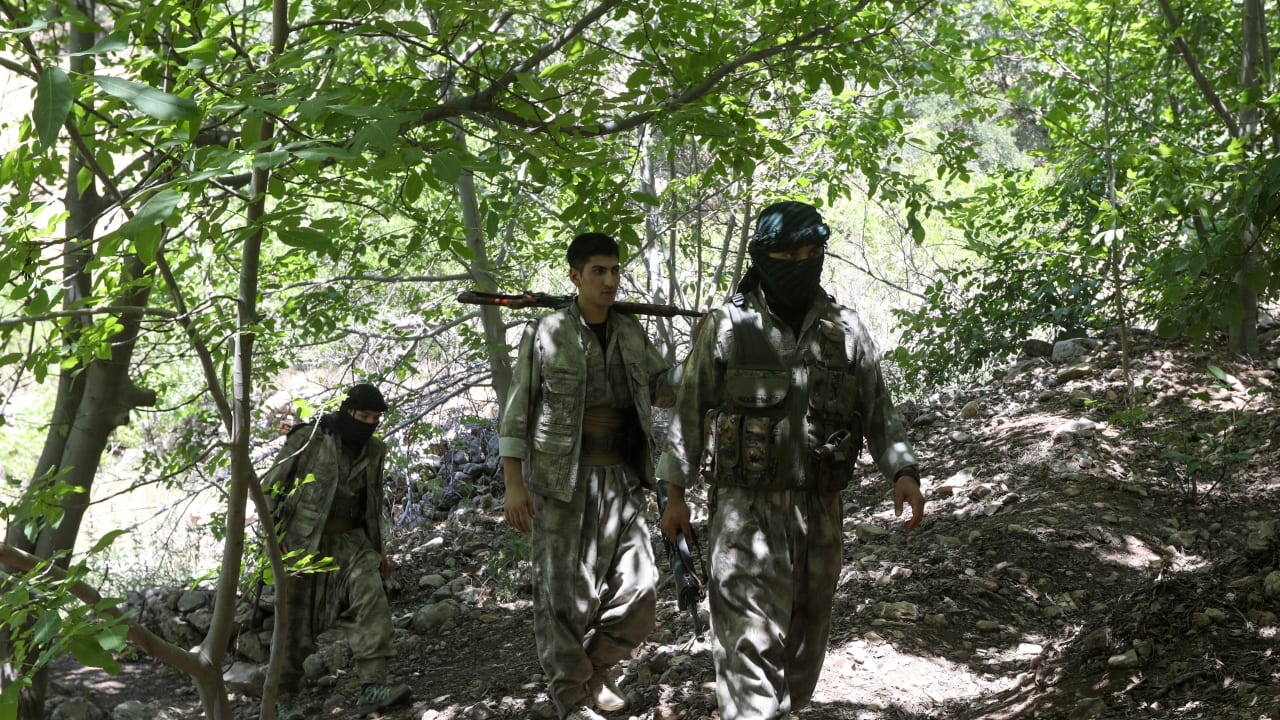
On February 22, five Kurdish political parties agreed on a joint strategy to oppose the regime. This move has historic significance. These forces have social roots, organizational capacity, and political experience. They define themselves as secular, democratic, and pluralistic. With adequate political and security support, they could quickly establish stability in their regions and enable an orderly transition.
Iran now faces a historic choice. One path relies on central power and reproduces old patterns; the other fosters a pluralistic order based on decentralization, regional participation, and minority rights.
Without the active inclusion of minority regions, there will be no stability. Without regional participation, there will be no democracy. And without structural reforms, there will be no sustainable future.
The turning point has been reached. The direction is still open.
The writer is a Kurdish exiled journalist, political analyst, and Middle East observer focusing on Turkey, Iraq, Iran, Syria, and Kurdish affairs. a.mardin@icloud.com