
Purim is one of the most dramatic stories in the Bible. At first glance, it looks like a tragedy waiting to unfold – an evil decree, a threatened people, and a future that seemed sealed in darkness. But Purim reminds us of something vital: We never know the end of the story until it’s truly over.
What looked like certain destruction became a story of redemption, because Esther and Mordechai refused to give in to despair. They did not wait passively for light to appear. They acted with courage, and because they did, the story ended in victory.
That is the heart of Purim. It teaches us that even when everything looks bleak, God is still writing the story. And until He has finished, it’s not over – and it will not end until it is good.
What defines Esther for me is the word hineni: “Here I am.”
Esther did not ask to be queen. She did not want the position she was placed in. She was young, afraid, and living in a palace that was not her home. Yet God put her there for a reason.
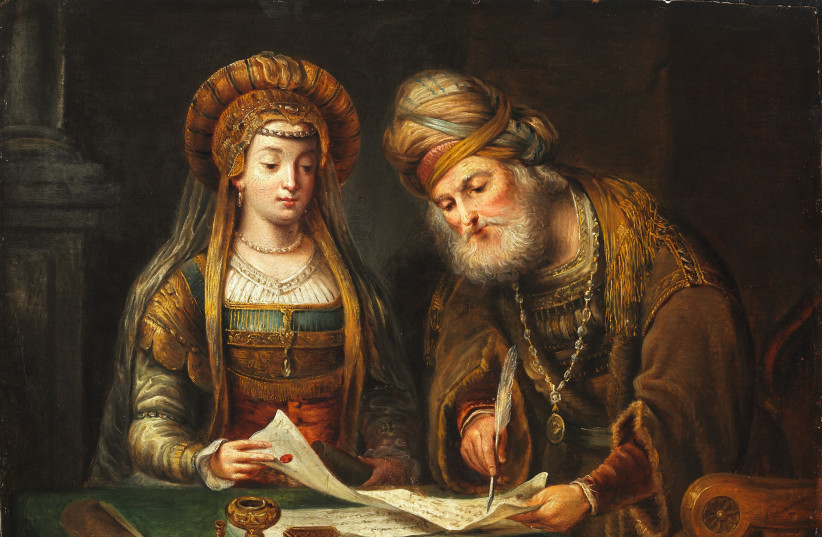
When Mordechai told her, “You were brought to the kingdom for such a time as this,” she understood something profound. She knew she had a role to play. She could choose fear, or she could choose faith. She could hide, or she could stand up and say, “Here I am.”
Showing up when it is hard
Hineni is not a word of comfort. It is a word of courage. It means: Here I am, even though I am afraid. Here I am, even though the outcome is uncertain. Here I am, ready to do what is right, even when it is hard.
Not everyone in the Purim story was Esther. But everyone had a part. Some prayed and fasted. Each person stepped forward in the way they could. And because they did, the story ended in victory, not destruction.
Living in Israel during these past years of war has made the message of Purim painfully real. There is constant uncertainty. We do not know what tomorrow will bring. We hear threats from Iran. We face the possibility of further conflict. We live with questions that have no easy answers.
But what sustains me is this: It’s not over until it’s good. God brings goodness in the end. Our job is to say “hineni” in the meantime.
After the terrible attacks on Israel of October 7, 2023, International Fellowship of Christians and Jews staff and volunteers could have stayed in their bomb shelters. It would have been understandable, just as it would have been understandable for Esther to remain silent and hope someone else would act. But when you are uniquely positioned to help, hiding is not your calling.
So, we went into war zones. We delivered aid to families who had lost everything. We comforted survivors. We supported soldiers. We did things that were dangerous and difficult because we knew we were placed in this moment for a reason.
This is what hineni looks like today.
Finding our calling
Every Purim, I ask myself two questions. I believe they are questions for all of us, no matter where we live or what faith we come from.
First: Where am I beginning to fall into despair? Where have I started to believe that the story is over, that nothing can change, that darkness will win? Purim reminds us that even when everything looks bleak, God is still working. The story is still unfolding, and the ending is not yet written.
Second: Where am I being called? Each of us has a place where God is whispering, “Where are you?” And each of us has a moment to say, “Here I am.”
For some, it may be visiting a neighbor who is lonely. For others, calling a parent, volunteering at a soup kitchen, or offering kindness where it is desperately needed. For some, it may be stepping outside your comfort zone in a way only you can.
Not everyone is Esther. But everyone can bring light. Everyone can say hineni in their own way.
Purim teaches us that God’s redemption often begins in the darkest chapters. It teaches us that courage can change the course of history. It teaches us that when we step forward – when we refuse despair, when we choose hope, when we say “here I am” – God meets us there.
The story of our world is not finished. The story of Israel is not finished. The story of your life is not finished. And if it isn’t good yet, then it isn’t over.
This Purim, may we each find the strength to say hineni. May we bring light where there is darkness. And may we trust that God is still writing a story that ends in goodness.
The writer is president of The International Fellowship of Christians and Jews, one of the world’s largest religious charitable organizations, and is a respected Jewish leader, speaker, bestselling author, and an award-winning podcast host and humanitarian.