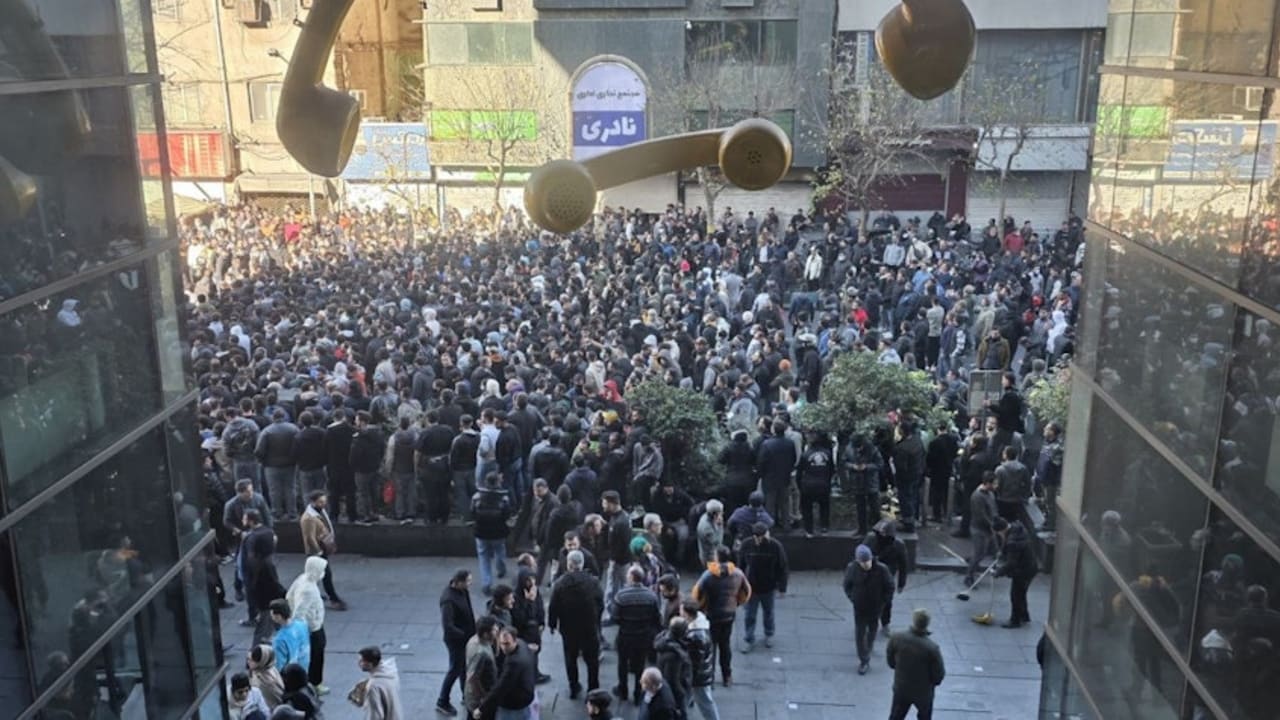
When precious human lives are lost without achieving a tangible political outcome, it is time to pause and rethink.
The path to regime change is not in waiting for an American attack, nor in a frontal confrontation that serves the machinery of repression. It lies in the systematic erosion of the regime’s power base.
Every totalitarian regime rests on three pillars: legitimacy, the economy, and an enforcement apparatus. The Iranian regime lost its legitimacy years ago when it suppressed legitimate protests within Iran.
It has devastated the economy, creating a shattered economic reality while billions of dollars are paid to militias and terrorist organizations around the world. The last remaining pillar is the enforcement mechanism.
Real change occurs when the mechanism of loyalty begins to crack; when those loyalists understand that, at a decisive moment, they may find themselves standing alone. That is the moment when they begin to recalculate their course.

Survival of the Iranian regime is dependent on loyalists
In a country where millions are integrated into systems of control and supervision, such as the Basij, a volunteer militia within the Islamic Revolutionary Guard Corps, every citizen knows someone who serves the system. The regime relies on those loyalists who, when ordered, will go out to suppress and kill protesters.
But these people are not made of iron. They are human beings. They have families, children, and a future they wish to secure. Their loyalty is not only ideological; it is also the product of fear, economic dependence, and habit. In the natural hierarchy of loyalty, family comes first.
The regime can protect the elite close to it. It can even concentrate the families of thousands of Revolutionary Guard officers in a secure location. But it will not take care of each and every family of a Basij member, police officer, or prison guard. The moment uncertainty takes hold, the first crack appears in the wall.
If there are 50 or 100 citizens capable of taking to the streets or demonstrating at a university, then they also have the ability to organize, to build networks of solidarity, to protect one another, and to act wisely.
A sharp call to all freedom seekers in Iran by opposition leaders, including Crown Prince Reza Pahlavi, signaling to regime loyalists that the regime’s day of reckoning is approaching, would further undermine the regime’s loyalty mechanism.
Peaceful action - even symbolic gestures, such as putting notes in mailboxes or painting messages on doors - could make every Basij volunteer, Revolutionary Guard member, police officer, or prison guard think first and foremost about family, rather than regime.
Some might assist freedom seekers, while others might leave for a place where they and their families are unknown.
At the decisive moment - whether through an American attack, massive protests, or both together - the enforcement apparatus could falter, and the dismantling of the regime’s governing mechanism could begin. The disintegration will start at the margins and advance toward the center.
In the midst of the process, soldiers will not return to their bases, police officers will remove their uniforms, and prison guards will abandon the prisons. It is much closer and more real than people imagine. Good luck.
The writer is a former Israeli government minister and a former intelligence officer.