At the time this article was written, the United States was moving large forces to the Middle East. Many units of the American navy, air force, and land forces were preparing themselves for war, and many intelligence resources were being deployed to prepare and enrich the bank of targets.
If war did break out, the question arose: Will regime change be among its goals? If the answer was yes, another question immediately arose: Who would replace the regime that has existed in Iran for the last 47 years?
The question of the identity of the next regime does not only concern the name of the ruler but also his agenda in the face of Iran’s greatest internal problem: the ethnic identity of its citizens, where about 80 ethnic groups live that have never merged with each other, each zealously preserving its own language, culture, lands, cuisine, music, and collective desires and aspirations. The fact that all Iranian citizens hold Iranian citizenship has not made them a single, united people.
This fact is not unique to Iran alone: The Soviet Union, Yugoslavia, and Czechoslovakia were multinational states, and they disintegrated along ethnic lines. On their ruins, generally homogeneous ethnic states were founded, and are therefore stable. Most importantly, each of them is legitimate in the eyes of the majority of their citizens, and these states derive their social stability, political functioning, and economic strength from this reality. One country – Ukraine – is binational, and therefore a bloody war is being waged in it.
The phenomenon of empires disintegrating along ethnic lines has been known for many generations: the Greek, Roman, Byzantine, Arab-Islamic, Ottoman, and other ones did so despite the power and might of the dominant unit. No multinational empire has survived forever.

Ethnic lines in Iran
Iran is no different from other empires, since for years we have been seeing and hearing the centrifugal forces that receive encouragement from the environment: The Kurds in northwestern Iran (Eastern Kurdistan) receive encouragement and support from their brothers in Iraq and Turkey bordering the Islamic Republic, the Azerbaijanis in northern Iran see their independent brothers who were liberated from the Soviet Empire 37 years ago, the Turkmen in northeastern Iran are connected to their brothers in free Turkmenistan, and the Baloch in southeastern Iran are closely connected to their descendants in Pakistan and Afghanistan.
The oppression of these minorities in Iran and the erasure of their culture did not begin with the rise of the Islamists to power in 1979 but started many years earlier. All the dynasties that ruled the country for thousands of years were essentially Persian hegemons that oppressed every other group conquered by the Persians.
The great ethnic diversity of Iran today is a multi-generational imperial legacy, but Persian hegemony is being challenged by an open media world, where oppressed peoples know that it is possible for it to be otherwise, especially after the collapse of the Soviet Union, Yugoslavia, and Czechoslovakia in front of the cameras just 35 years ago.
Social media today shows Iranian citizens other nations and countries where there is no oppression, no torture chambers, no cranes from which people are hung in the streets; where women are not murdered for not wearing a headscarf, people are not put in prison for teaching children their ethnic language; where there is no corruption, no water theft, no millions suffering from poisoning due to a polluting and toxic oil industry, no morality police, no terrible prisons like Evin Prison, and people are not murdered wholesale in the streets for protesting against the government.
Iran's ethnic minorities
The demand for ethnic independence today stems from a deep sense of injustice among Iran’s ethnic minorities. Everyone knows the history of modern Iran, whose borders were marked by representatives of Britain and Russia who looked after their own interests and not those of Iranian citizens. The foreigners divided the Kurds into four countries (Iran, Iraq, Syria, and Turkey), the Azerbaijanis and Turkmens into two countries (Russia and Iran), and the Balochis into three countries (Iran, Pakistan, and Afghanistan), while Arab Arabia was fully annexed to Iran.
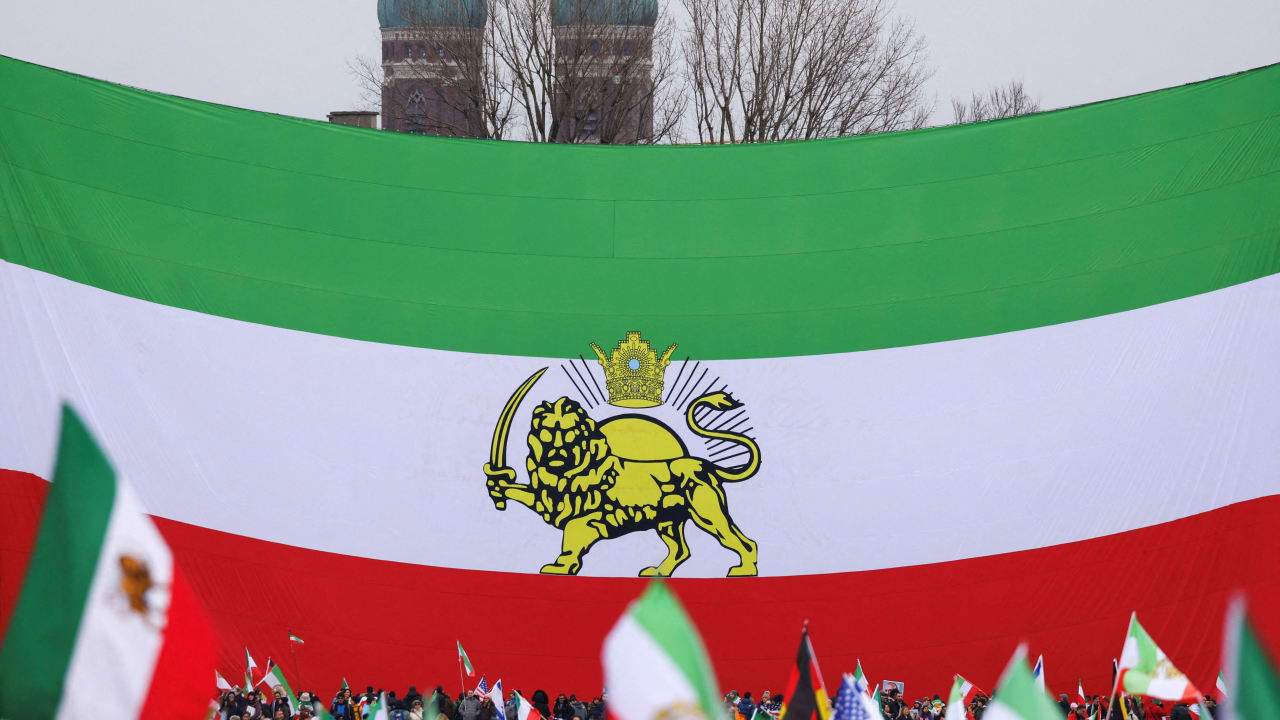
The minorities remember well that the Pahlavi dynasty oppressed them in the name of Iranian nationalism, and therefore, in the last two months, when many demonstrators of Persian origin shout “Long live Reza Shah” as an agreed replacement for the rule of the mullahs, the ethnic minorities in Iran cry “Freedom,” as they fear the return of the Pahlavis, which may show them similar treatment to what they suffered until the removal of the previous Shah, Reza’s father, in 1978. The minorities now want to be free from the Persian-national oppression that existed until the end of 1978 and the Islamist oppression that began in February 1979.
Will they succeed? Will non-Persians be able to free themselves from the Persian yoke if and when a war breaks out that will collapse the government in Iran? I don’t know and I am not a prophet, but I have a feeling that the minorities will try and maybe even succeed. And why?
In March 2024, I published an article in this newspaper about the expected disintegration of Iran into ethnic units. Two days after the article was published, the spokesman for the Iranian Foreign Ministry published an article against me, claiming that I was writing nonsense and spreading false dreams. And I ask: If I had written nonsense, would he have bothered to publish an article against me? It seems that I touched an open and painful nerve in the Iranian political body, and therefore he felt obliged to try to refute my words.
I am more than certain that the fate of Iran will not be different from that of empires no less powerful throughout history. The disintegration of the Islamic Republic is only a matter of time and according to the number of victims who will fall dead on the barricades of freedom, because they know that freedom is not given but is taken by force from those who hold it, in order to suppress The Other.
Not far from today, the Azerbaijanis, Kurds, Turkmens, Balochis, Arabs, and dozens of other ethnic groups in Iran will celebrate their liberation and independence from Iranian Persian oppression.
Freedom will come faster and at a cheaper price in blood if US President Donald Trump helps the citizens of Iran get rid of the rule of the ayatollahs. If he does not help, the Iranian citizens will continue their struggle for freedom – I have no doubt about it. It may take years, as well as the lives of many, but it will come.
The citizens of Iran deserve to live in freedom, happiness, and joy, like the citizens of Israel, Europe, and the United States.
The writer is a Middle East scholar and commentator on the region.