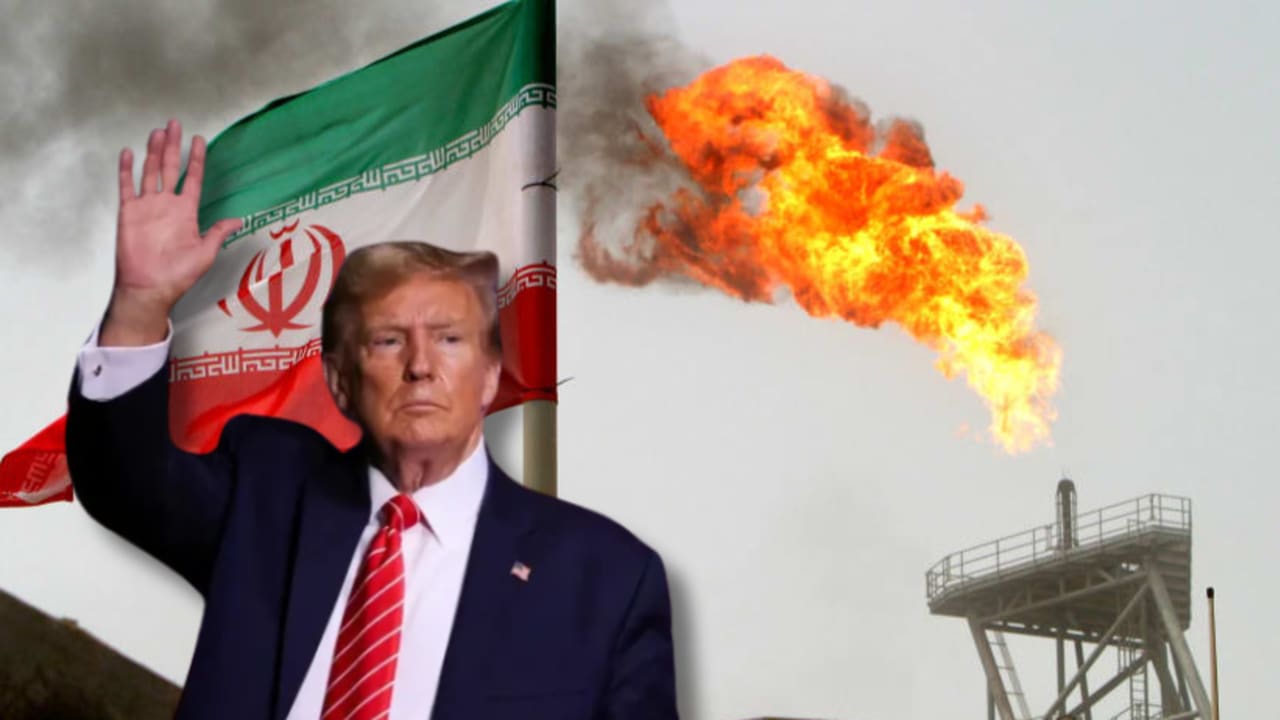
Now that the world has moved from one uncertainty to another – first whether US President Donald Trump will attack Iran, and now, when – Israel and its people are experiencing a nerve-wracking waiting period. While this “suspended time” may look like business as usual, there is nothing usual about this tense “emergency routine.”
While the world waits in anticipation of an American decision regarding Iran, Israel is experiencing a different kind of anticipation. What is at stake is not only the potential change of regime and its implications for the Iranian people, but the possible consequences on Israeli territory itself.
Indeed, unlike other countries that are concerned about the Islamic Republic, the suspense in Israel carries an existential dimension. As a highly probable target of Iran’s ballistic missiles – which claimed over thirty lives during the 12-day war in June – Israel is bracing for frightening scenarios.
How does an entire country prepare? The IDF, the IAF, and the Home Front have rehearsed readiness on both defense and offense. But how do Israelis actually prepare? With a constantly shifting timeline and endless speculation, Israelis find themselves in a peculiar moment in which time itself feels altered.
Ordinary life continues at full speed while preparing for the worst-case scenario. Schools remain open and people go to work, but all of it is done with the awareness that at any moment, one’s phone might sound an alarm, giving twelve minutes to reach shelter – the familiar countdown before impact. People move forward, but in a heightened state of attention: distances to shelters are calculated and recalculated, news is humming in the background, and plans are being endlessly readjusted.

Yet panic has not set in. Instead, tapping into the now-famous Israeli resilience, this waiting period produces a strange form of enhanced routine. Life has not stopped: it has been augmented. Routine itself is approached differently, like constantly solving an equation whose main unknown variable keeps shifting, recalibrating one’s moves to the possibility of attack.
Anticipating Iranian attack on Israel
This anticipatory period is exhausting and nerve-wracking precisely because it lacks an endpoint, and is naturally filled with anxiety: disrupted sleep, fatigue, irritability, and tension in the air. But there is no panic (as of yet), only prolonged vigilance. This eery reality, though new, feels strangely familiar. This is how Israel has always lived: on the edge, from one war to the next. Only now, the anticipation has taken a more concrete form.
The longer it lasts, the more prepared the country becomes: militarily, but also psychologically. Having already experienced major missile attacks from Iran, Yemen, Lebanon and Gaza, Israelis now know what to do, where to go, what to buy, and have a bag ready to go. The surprise element is no longer dominant, and while this familiarity is not really comforting, it does somewhat alleviate the anxiety.
In fact, as a release valve, uncertainty itself has become material for commentary: with jokes on TV panels, memes on social media, and irony aimed at time itself, Israelis find ways to work around the stress and ease the tension.
Uncertainty becomes a coping mechanism: a deeply Jewish, deeply Israeli one. Daily life continues while adjusting to what may come. Safe rooms are cleaned, canned food is stored, bags are packed, water is stacked. These small gestures, invisible to outsiders, allow Israelis to reclaim some sense of control where control is limited.
And this waiting also acts as a unifying force. Everyone is in the same boat, not knowing if missiles will come, whether they will be intercepted, and if not, where they will fall. Yet the waiting is acknowledged, discussed, and joked about, but not dramatized. A balance emerges between preparation and expectation, and this balance defines the moment. There is no victimization (a trait often put forth by our adversaries): on the contrary, there is empowerment. Israelis’ old optimistic mantra yihyeh beseder (it will be OK) appears in all its depth and meaning.
And yet, this empowerment does not rest on the illusion of full control, but on the recognition that control has its limits.
By navigating this paradox, Israelis acknowledge that life can be controlled only up to a point. Action and preparation exist alongside acceptance that something larger is at play. This duality is part of Israel’s history as well: human action intertwined with the awareness that destiny unfolds in ways no one fully commands, except God himself.
And it is precisely here that this waiting becomes more than resilience: It becomes growth. The country is not only enduring, but learning, adjusting, deepening its confidence – not despite the uncertainty, but through it. The tight-rope itself becomes a form of growth. Trust in the army, in institutions, in discipline and readiness is inseparable from another kind of trust, one rooted in something bigger than us.
Although these might seem like two separate movements – acting with full responsibility while knowing that control is never total – they are but one single thread. When action is guided by this awareness, when preparation is done with both history and faith in mind, not only does confidence grow, but our collective sense of destiny is crystallizing.
This confidence allows Israel to experience waiting not through paralysis but through action. Far from denial, this is a lucid acknowledgment of the framework in which the Jewish state exists. As the saying goes, “In Israel, the impossible is possible, it just takes longer.” It is a waiting in which life continues, a suspended time where the ordinary and the extraordinary overlap.
As the American armada is entering the Persian Gulf, and the Jewish state is on high alert, the people of Israel, embracing this deeply Jewish and Israeli tension, are creating more of an unbreakable bond and only getting stronger.
The writer holds a PhD in cultural studies from Tel Aviv University. Her work focuses on post-Holocaust and Jewish literature