Iraqi F-16 fighter jets carried out two airstrikes against suspected Islamic State (ISIS) positions in the Suhul Rawa area of western Anbar Province on Wednesday. Iraq’s Security Media Cell (SMC) said military intelligence had detected ISIS activity in the area, Kurdistan Region-based news channel Rudaw Media Network reported.
“Intelligence from the Directorate of Military Intelligence indicated movement by remnants of ISIS” in the Suhul Rawa area north of Rawa district within the Al-Jazeera Operations Command sector, the SMC stated, adding that the “Air Force carried out two precise and effective airstrikes using Iraqi F-16 aircraft targeting those elements at the same location,” the report said.
“The first airstrike was carried out at 6:30 p.m., followed by the second airstrike at 6:57 on the same site,” Rudaw reported, citing the Iraqi military. Iraqi authorities did not immediately disclose casualties.
In recent months, Iraq has escalated its airstrikes and operations against remnants of ISIS, which continues to carry out small attacks in rural areas. Although ISIS was largely defeated in Iraq in 2017, it still has small cells in some areas near Kirkuk and in Anbar Province.
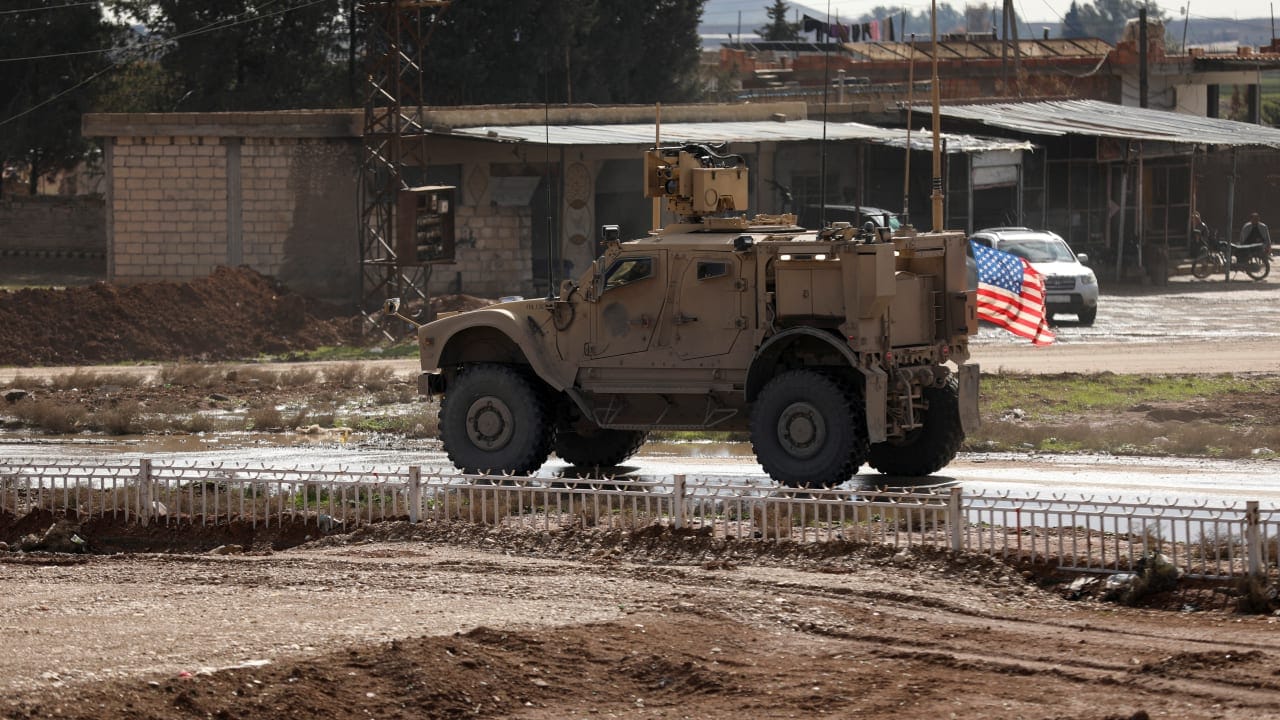
Therefore, Iraq’s operations have become increasingly important following the withdrawal of US forces from Iraq on September 30. Iraqi security forces now seek to secure remote desert areas and prevent ISIS cells from establishing new bases.
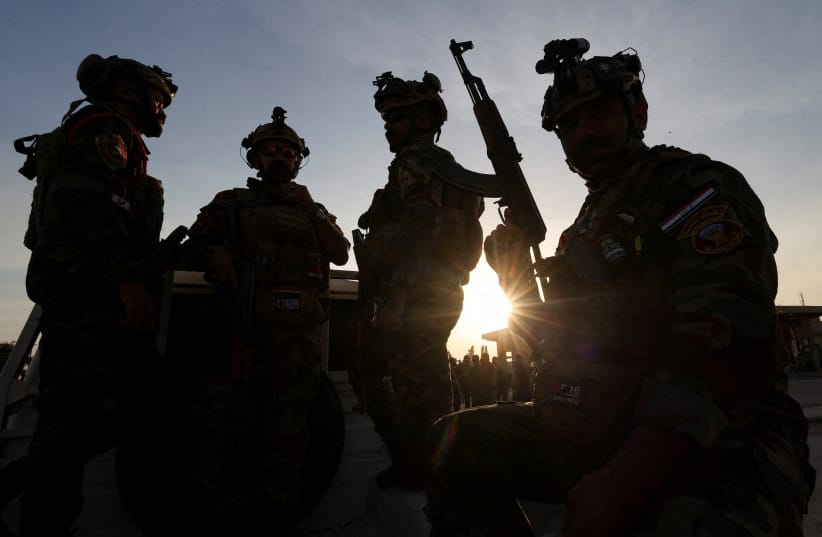
Wednesday’s operation is part of a wider effort to secure the desert north of the Euphrates River, where ISIS has historically maintained hideouts and logistical networks.
Iraqi army units were reinforcing a defensive line stretching between Rawa in Anbar Province and Hatra in Nineveh Province, Iraq’s Defense Ministry announced in early November, Rudaw reported.
“This deployment aims to hold desert areas, pursue remaining terrorist elements, and prevent them from using the desert as a safe haven,” the ministry said.
ISIS exploits Iraq's security vulnerabilities
Securing the area would also improve civilian transportation and commercial traffic, supporting investment, agriculture, and grazing activities, it added.
The Rawa-Hatra region has particular historical significance. It served as an ISIS stronghold before the terrorist group captured Mosul in June 2014.
Islamic State controlled large parts of northern and western Iraq before Iraqi forces launched a series of counteroffensives. In 2017, Iraq liberated Mosul. It then liberated areas along the Syrian border.
By November 2017, Iraqi forces recaptured Rawa, marking the liberation of the last major Iraqi town held by ISIS. Yet despite losing its territorial control, Islamic State remnants continue to operate in several Iraqi provinces.
There have also been other recent clashes.
On Sunday, the Popular Mobilization Forces (PMF) said its 44th Brigade had repelled an attack against one of its positions in the Hadar sector of Nineveh Province, about 90 km. southwest of Mosul.
THE PMF is increasingly under scrutiny in Iraq due to its ties to Iran. Many of its brigades are part of Iranian-backed militias in Iraq. Iraq wants to replace Kataib Hezbollah, one of the militias, in the area of Al Qaim on the Syrian border.
The PMF said forces “from the 44th Brigade of the Popular Mobilization Forces repelled a terrorist attack targeting one of their positions in Al-Hadar sector, Nineveh Governorate,” Iraqi News Agency reported.
The attack had targeted the brigade’s positions along the road connecting Al-Hadar and Rawa, the PMF said. This is the same general area where Iraqi forces have been reinforcing their security deployments.
The Nineveh Operations Command said the security situation was under control, and that its forces remained on “full standby to repulse any attacks from remnants of Daesh [ISIS],” Rudaw reported.
The attack illustrated the continuing threat in the desert areas connecting Anbar and Nineveh, where Iraqi forces have been attempting to establish more permanent security positions.
Iraq intensifies war on ISIS remnants as terror cells exploit remote deserts
On November 15, Iraqi forces carried out an operation near the town of Pirde, also known as Altun Kupri, in Kirkuk Province. Pirde sits on the dividing line between Iraq’s federal forces and areas controlled by the Kurdistan Regional Government (KRG) and its Kurdish Peshmerga (the official military and internal security forces of the semiautonomous Kurdistan Region of Iraq).
ISIS tries to exploit these areas because it senses that Iraq and the KRG do not coordinate well along the line. An airstrike had killed three suspected ISIS members, and an individual accused of transporting them was arrested, the SMC reported.
On November 10, Iraqi F-16s targeted suspected Islamic State positions in Kirkuk’s Zaghaitoun Valley.
In October, Iraqi aircraft carried out three strikes against ISIS hideouts in the same area, demonstrating the risks faced by Iraqi security forces.
On October 14, Brig.-Gen. Ahat Yasser Khudair Hussein and two other soldiers were killed following an explosion attributed to an ISIS device while inspecting a previously targeted location.
Iraq also reported destroying eight ISIS hideouts in Kirkuk in August.
Islamic State activity remains concentrated in remote areas of Kirkuk, Diyala, Salahaddin, Nineveh, and Anbar.
ISIS has exploited gaps in security coordination between Baghdad and the KRG, particularly in disputed territories, Rudaw reported.
The latest Iraqi operations demonstrate that ISIS remains a security concern nearly nine years after its territorial defeat. The Iraqi government is utilizing airstrikes, intelligence operations, and expanded deployments in remote areas to prevent it from rebuilding its networks
Iraq is aware that it has to carry out all these operations on its own without the backing of the US-led coalition.
Iraq’s recent strikes and attacks illustrate how ISIS continues to exploit difficult terrain and security gaps, even as Iraqi forces seek to prevent its resurgence.