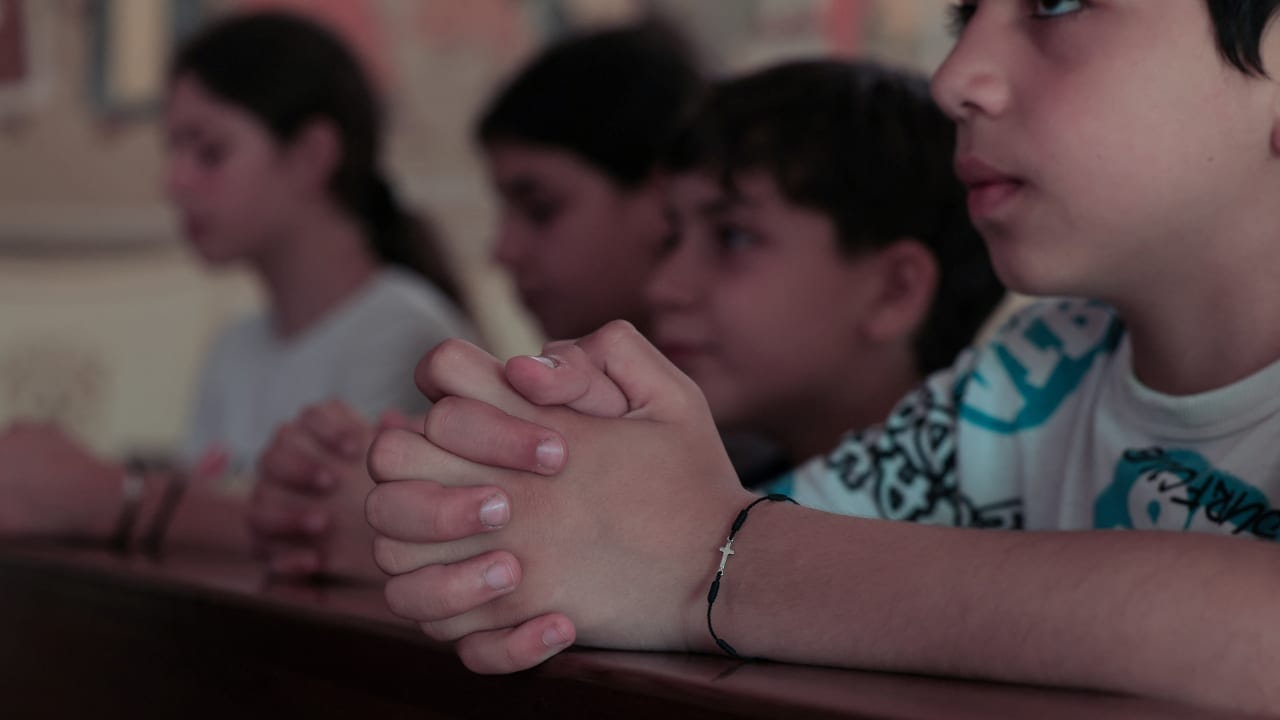
Lebanon’s sectarian tensions have resurfaced following a series of incidents and claims that have reignited divisions between the country’s religious communities.
These include unsubstantiated allegations surrounding the murder of a Catholic priest, vandalism at a Maronite cemetery, and renewed circulation of claims about a 20,000-strong Christian force that could seek to disarm Hezbollah.
On Sunday, statues were smashed by unidentified assailants at the Saints Cemetery in the Harat al-Fouar area of the Zgharta District. MTV Lebanon reported that those responsible had been identified and arrested within 24 hours of the incident.
The attack follows several other incidents involving Christian religious sites in recent months. In August, L’Orient Today reported that unidentified individuals had broken into the historic Saint John Chrysostom Monastery in Koubba and vandalized its outdoor installations. In early May, the Saint Challita Shrine, located in a valley in North Lebanon’s Akkar district, was also vandalized.
The incidents have added to concerns among Christians about the treatment of their religious sites. Those concerns have been compounded by a separate controversy surrounding the murder of Catholic priest Samir Daou.
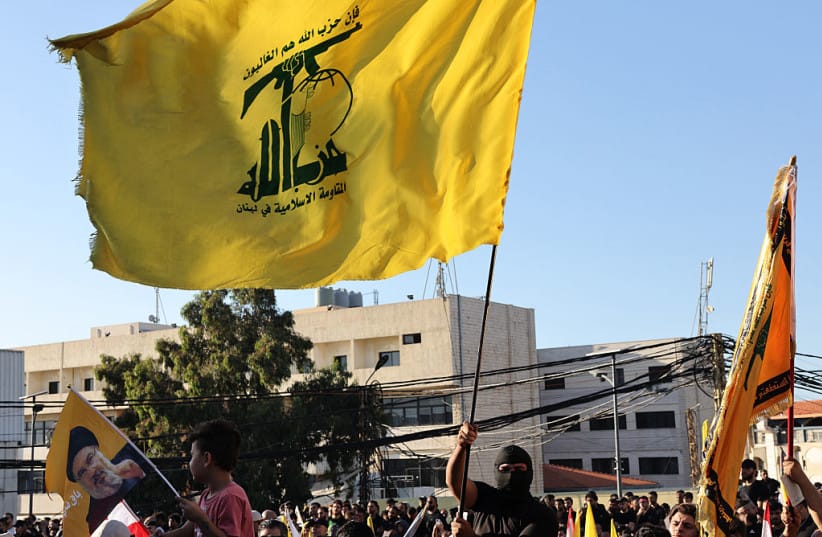
Anger has been directed at Al-Mahatta, a Hezbollah-affiliated Lebanese media outlet that presents itself as independent, following its publication of allegations about the circumstances of Daou’s death.
Site alleges Daou killed by Syrian sex worker without evidence
Described by the Washington, DC-based Center for the National Interest as “Hezbollah’s new digital mouthpiece,” the site alleged, without providing evidence, that Daou had been killed by a Syrian national with whom he had paid to have sexual relations.
According to Al-Mahatta, the Syrian national arrested in connection with Daou’s murder, identified in Lebanese media as Arkan Nadaf, claimed that the 62-year-old priest had attacked him and threatened to have him deported after he sought to end their relationship.
The outlet did not explain how it had obtained the alleged account, attributing it only to a source. No other Lebanese media outlets have reported the allegations.
The claims have been widely viewed as inflammatory given Daou’s religious background and Article 534 of the Lebanese Penal Code, which criminalizes “any sexual intercourse contrary to the order of nature” and carries a potential prison sentence of up to one year. The provision has been used to prosecute same-sex relations.
Al-Mahatta accused of promoting anti-Christian sentiment
Several voices have accused Al-Mahatta of promoting anti-Christian sentiment and have called for the outlet to be investigated by the authorities.
The debate over the place of Christians in Lebanon has also intersected with the country’s wider political divisions over Hezbollah.
A clip from a 2024 Al-Mashhad TV interview with Camille Dory Chamoun, a Lebanese member of parliament and grandson of former Lebanese president Camille Nimr Chamoun, has recently resurfaced and gone viral, with some presenting it as new information.
During the interview, Chamoun claimed that 20,000 Christians could be mobilized to disarm Hezbollah. He also asserted that 75% of the Lebanese public wanted to see the Iran-backed group disarmed.
Hezbollah’s disarmament is already a deeply divisive issue in Lebanon. The group has refused to surrender its weapons despite demands from the Lebanese government and has repeatedly drawn the country into destructive conflicts with Israel. But tensions have also emerged around the ability of Christian communities to rebuild and manage their own affairs, particularly in areas close to the Israeli border.
Nagib Amil, the parish priest of Rmeish in southern Lebanon, has been repeatedly summoned in recent weeks following his attempt to defuse a dispute over what has been described as illegal construction in the village.
In a letter to a judge concerning the dispute, Amil suggested that, given Israel’s presence in the area, it would be better to postpone legal action. The judge reportedly interpreted the comment as a threat to involve Israel in the matter.
Prominent Lebanese academic Zena Mansour criticized the summons, describing it as “a moral transgression and a stab in the side of the resilience of the people of the south and the border villages.”
The renewed attention to past commentaries and these incidents highlights the growing tensions in Lebanon centered on the question of Hezbollah’s weapons, and pressure is building against Lebanon’s Christians community, whom experts say are being labeled as Zionists and punished for siding with the state.
Christians under Hezbollah face hostility, aggression
Help The Persecuted CEO Joshua Youssef told The Jerusalem Post that many Christians live within Hezbollah-controlled areas and “historically, the group has treated Christians on a spectrum of behavior that ranges from placating Christians to outright hostility and aggression.”
“Christians have often found themselves caught between two fires: being labeled a Zionist for supporting Israel and being accused of dodging Israel’s response to Hezbollah’s aggression,” he explained, adding that “simply by identifying as neutral in the Israeli/Lebanese conflict, there is an accusation of Zionism.”
“The sentiment is ‘If you are not 100% with us, then you must be 100% with them,’” he explained. “Reality is much more nuanced. Christians desire to live in peace. They are tired of war, especially those who lived in Lebanon during the Civil War. They want to do everything in their power to avoid repeating it.”