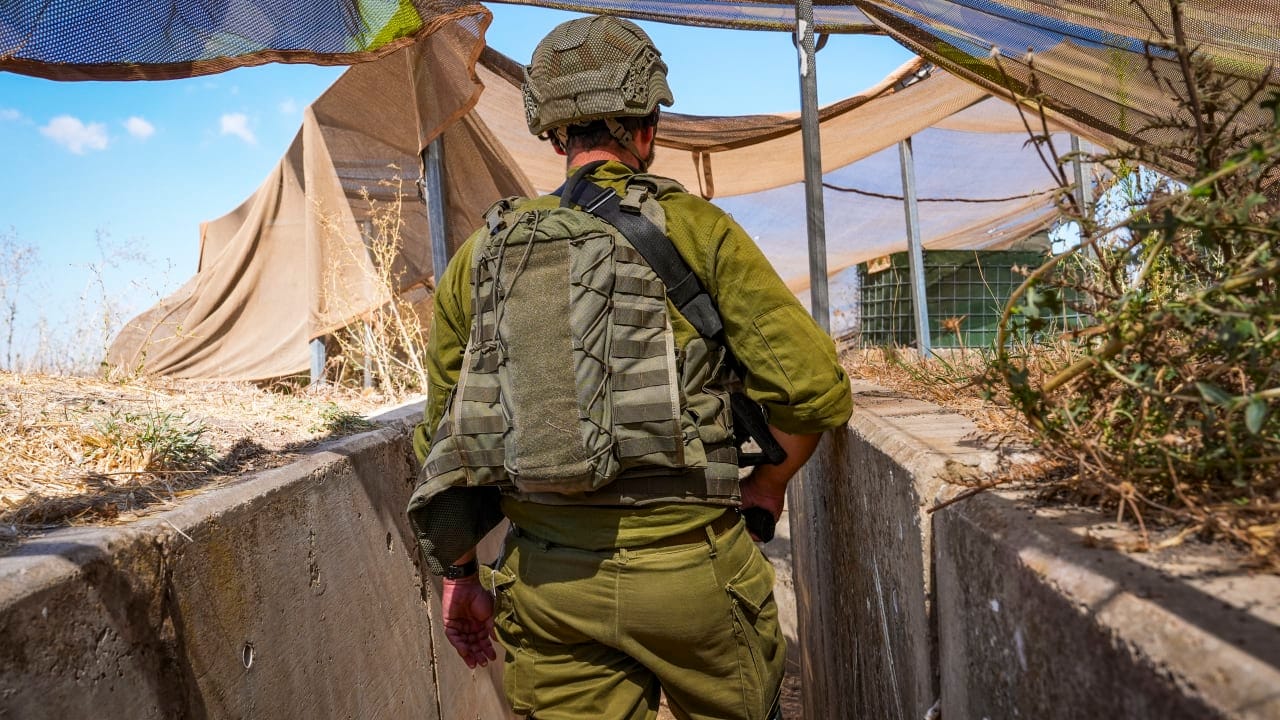
Syria has strongly condemned escalating Israeli incursions into Quneitra province and the countryside of Daraa in recent days, alongside increased helicopter, reconnaissance, and military aircraft activity over southern Syria, according to Syrian state media SANA.
Israel has operated in this buffer zone and in Syrian villages near the Golan since the fall of the Assad regime. Jerusalem and the new Syrian government have increased tensions over these IDF operations.
Israeli leaders say that Israel will not withdraw from areas it seized along the border in December 2024, including the peak of Mount Hermon. The Syrian government was initially relatively quiet on this issue.
There have been other tensions.
Israel has backed the Druze in Sweida. This has raised questions about whether the Druze may seek an autonomous region or an independent state.

Other countries in the region have recently joined Syria’s condemnation of Israel’s role in the border area.
SANA noted that “in a statement issued on Sunday, the Ministry of Foreign Affairs and Expatriates said the Israeli actions constitute a flagrant violation of Syria’s sovereignty and territorial integrity and pose a threat to the security and safety of its citizens.” The ministry went on to note that there had been continued violations and that this undermines prospects for security and stability in the region.
The power vacuum near the border has led to concerns that threats could emerge that may destabilize southern Syria and threaten the Golan. These could include Hezbollah cells or even ISIS and other extremists.
Syria has tried to crack down on these threats. It has limited resources, and because Israel wants the area near the border demilitarized, Damascus has to rely on Interior Ministry forces to carry out police operations against threats.
Syria calls on international community to put an end to Israeli incursions
Syria has “called on the international community to assume its responsibilities, put an end to the violations, and force Israel to comply with international law and relevant United Nations resolutions in a way that helps prevent further regional tensions and create conditions for lasting security and stability,” SANA noted.
Syria is now critiquing Jerusalem’s actions more often. It likely hopes that the United States or others may persuade Israel to reduce its raids along the border. Syrian villagers complain that the raids affect their daily lives.
The IDF does not comment on these operations.
Its last statement on an operation in Syria was on October 10: “The IDF struck a Syrian terrorist who advanced terrorist attacks in Syria under the direction of the Iranian regime.” It added that the suspect “advanced terrorist attacks targeting Israeli civilians and IDF soldiers operating in southern Syria.”
The military added that it will “continue to operate to eliminate immediate threats on all fronts.”
On September 23, the IDF said that “following three months of operational activity, IDF soldiers of the 228th Brigade under the command of the 210th Division completed their mission in the Security Zone in Syria to remove threats to the State of Israel.”
Turkey a regional rival for Israel
The recent Syrian condemnation followed statements by Syrian Foreign Minister Asaad Hassan al-Shaibani on Saturday calling for Israeli forces to withdraw to the positions they held before December 8, 2024, and respect the 1974 Disengagement Agreement.
In August, Israel also reportedly struck the Abu al-Duhur airbase in Idlib province, prompting condemnation from Damascus. That strike was a message to Turkey.
Despite these tensions, Israel and Syria held US-mediated talks in August, aimed at reducing military friction and exploring a security agreement. However, disagreements over Israeli deployments and Syria’s sovereignty continue to complicate diplomatic progress.
In a new article at The Moshe Dayan Center, titled “The Israel-Turkey Rivalry after Abu Al-Duhur: Business as Usual or a Drift toward Escalation?” the author, Alex Grinberg, noted that “the Israeli strike on the Abu Al-Duhur airbase in Syria prompted fears that it would escalate a military confrontation with Ankara.
“Likewise, most think tanks and media argued that the strike was counterproductive and that it would not help Israel drive Turkey out of Syria.”
Grinberg added that “Turkish reactions best explain the strike. The Turkish military intended to install radars at Abu Al-Duhur that could compromise Israel’s freedom of action. Official statements and various informal media outlets offered several explanations, placing the onus exclusively on Israel’s behavior.”
“Overall,” he said, “Turkish reactions were measured and limited. This Turkish behavior itself debunks the fears that the Israeli attack would lead to an undesired miscalculation.”
Israel’s role in Syria is part of its security doctrine today.
Prime Minister Benjamin Netanyahu laid out some key components of the policy in a speech on Sunday. He spoke about the need to maintain overwhelming military dominance over regional adversaries, including deterrence by means of preemptive strikes, strengthening borders, and establishing buffer zones. Syria is one of those buffer zones.