
Minors held at Lebanon’s Rehabilitation Center in Warwar, Beirut, have been denied adequate food, medical care, hygiene supplies, and sanitary facilities, according to an investigation by the National Human Rights Commission of Lebanon published on Monday.
After speaking with social workers, center staff, and some of the 148 boys held there, as well as inspecting the facilities, the commission, including its Committee for the Prevention of Torture, found that conditions at the center violated Lebanese law and international standards.
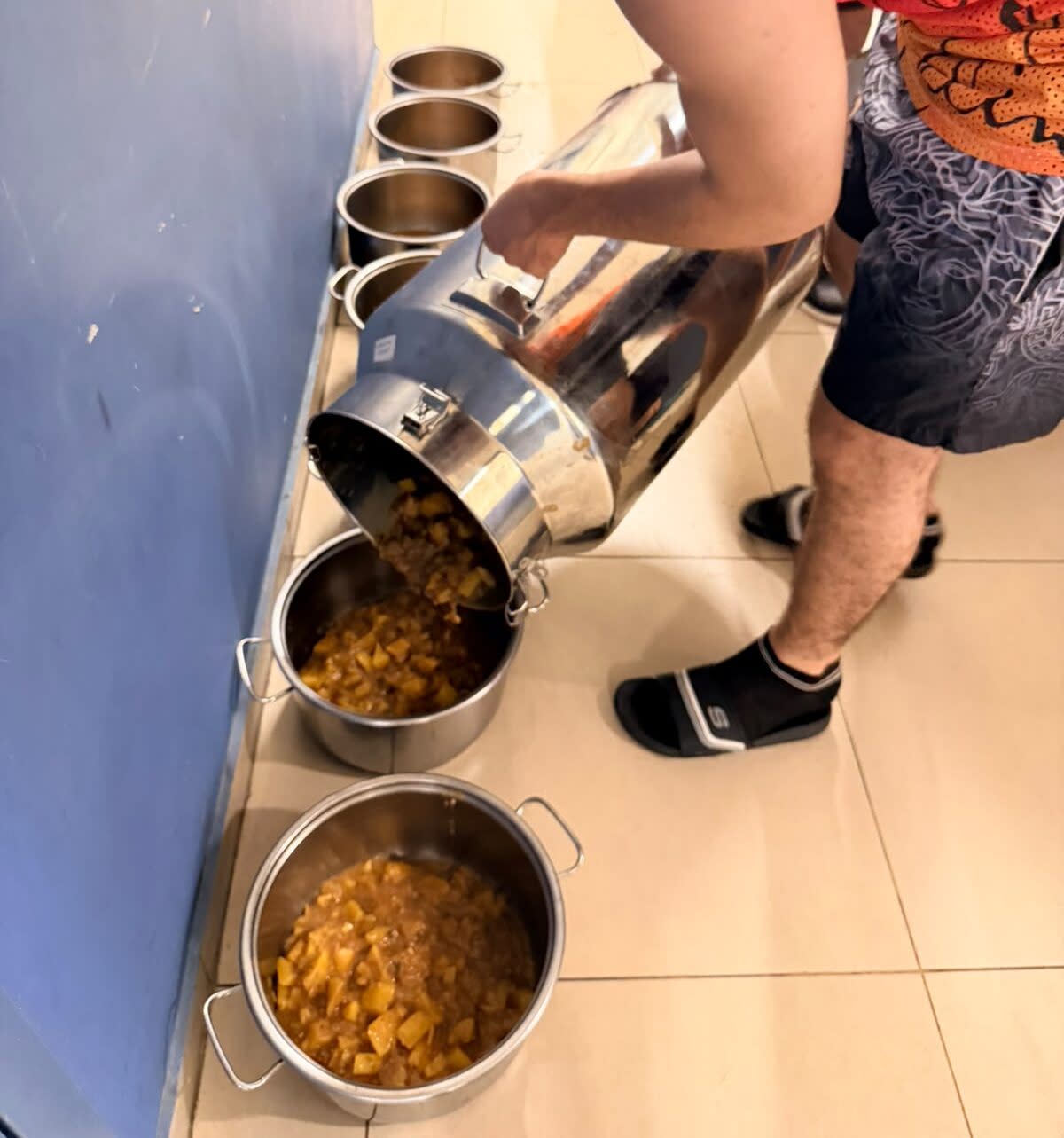
A ward of 10 boys was seen being served an amount of food that would not have been nutritionally sufficient for even two people. The commission also found that meals, including those containing meat, were served undercooked, raising concerns about food safety.
A social worker informed the visiting delegation that though the center has a large kitchen capable of providing adequate meals and hospitality training, as originally intended, it had been closed due to funding and personnel shortages.
The report also expressed grave concerns about cleanliness and hygiene facilities at the site. Several bathrooms across the wards equipped with non-functioning faucets lacked running water, preventing the minors from maintaining basic personal hygiene.
Multiple juveniles said that waste was removed from the rooms and bathrooms only once a week. The visiting team reported directly observing large accumulations of waste and “strong odors,” raising concerns about health and safety.
Imprisoned minors lack healthcare despite needed medical intervention
Additionally, among the minors who were provided with mattresses rather than being forced to sleep on the floor, the commission found that the bedding was worn out and torn. The report suggested that the inadequate bedding and facilities may be contributing to the scabies, fungal infections, and other skin problems reported among the center’s juvenile population.
Despite the apparent need for medical intervention, the center also failed to provide adequate healthcare to the minors in its care.
Some of the young men told the delegation that their prescribed medication had not been delivered continuously or at regular intervals, while the team also identified cases in which surgical intervention was needed and not provided.
Among the youth, some required stitches, wires, or plates from previous injuries to be removed, and there were indications of infection in the wounds.
The center does not have a resident or a doctor who is present on a regular basis. According to the administration, any necessary medical examinations are conducted by a doctor affiliated with the Internal Security Forces at the Araya medical center, with juveniles needing to be transported outside the facility. Yet the center also lacks a dedicated vehicle to transport the youths for medical treatment, which the report noted could be particularly dangerous in cases requiring rapid medical intervention.
The commission recorded incidents of self-harm, attempted suicide, and attempts to escape the facility, some of which had resulted in juveniles being physically harmed and requiring medical attention.
Though not witnessed by the visiting experts, several juveniles across different wings alleged that some security personnel had assaulted them. Given the pattern across multiple allegations, the commission called for an official, independent investigation to establish what happened, determine responsibility, and take appropriate action based on the findings.
In addition to the alleged assaults, the inspection team found isolation rooms on the center’s top floor that had been used to discipline some juveniles, as well as for health-related quarantine. The rooms’ sanitary conditions were described as poor.
Several juveniles told investigators that the isolation rooms were sometimes used as punishment following fights or violations inside the center; some claimed to have been beaten before being placed in the rooms.
Multiple minors also said there was no security officer permanently stationed on the upper floor. Officers generally passed through to deliver food or when they had a specific reason to go there, raising concerns about adequate supervision.
Lebanon passes General Amnesty Law to ease prison overcrowding
The report’s findings are significant given that they come just a month after Lebanon passed its General Amnesty Law - legislation aimed at easing severe overcrowding in the country’s prisons by reducing or commuting the sentences of thousands of prisoners and detainees.
As of 2023, detention centers across Lebanon had a capacity of 4,760 people but held 8,502 prisoners, including just 1,094 who had been sentenced, according to Lebanon’s Internal Security Forces. Some 80% of those detained in Lebanese prisons were awaiting trial, according to the Lebanese Interior Ministry.
Though the new law was expected to ease the burden on Lebanon’s overcrowded detention system, it was unclear whether it would apply to minors held in juvenile rehabilitation facilities.
Despite the United Nations Committee on the Rights of the Child explicitly recommending that the minimum age of criminal responsibility be set at 14, children as young as seven can be sent to rehabilitation facilities or held in confinement in Lebanon.