
Syria has busted a new smuggling operation that was attempting to move weapons to Hezbollah. Its action comes at a key time.
Hezbollah is under some pressure from Israel, the US, and Lebanon as the US hopes for progress on trilateral talks. The goal of the talks is for Lebanese government forces to extend their control to “pilot zones” in southern Lebanon where Hezbollah will be removed.
Israel has said it won’t withdraw or redeploy in Lebanon until there is progress. The Trump administration has hinted that Syria might help support operations against Hezbollah. US President Donald Trump reiterated this possibility in a recent interview with Trey Yingst of Fox News.
As Trump maneuvers to bring about peace in Lebanon, the role of Syria is key. Damascus is helping cut off the flow of arms to Hezbollah.
“Syria’s Interior Ministry seizes advanced weapons shipment bound for Hezbollah,” Syrian Arab News Agency (SANA), Syria’s official news agency, reported Thursday.
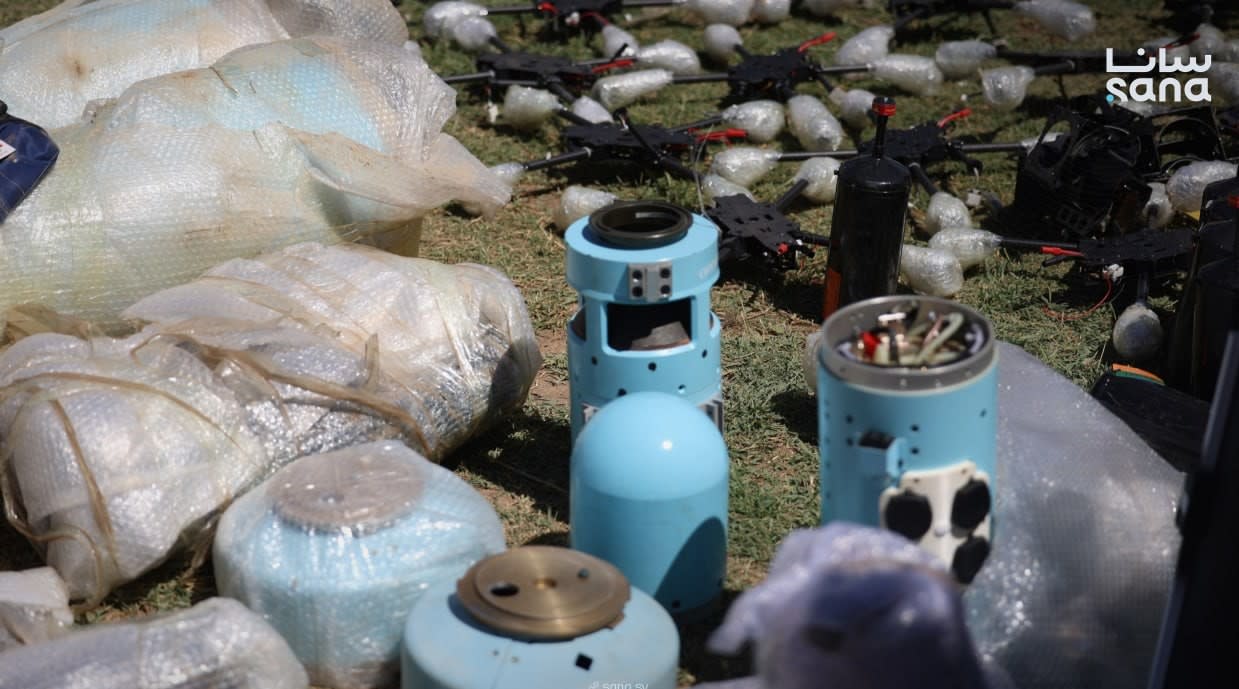
“Weapons [were] seized by [the] Interior Ministry after foiling an arms shipment bound for the Hezbollah terrorist militia near the Syrian-Iraqi border,” the report said.
This is one of many successes that Syria has had against smuggling to Hezbollah.
The new Syrian government came to power after the fall of the Assad regime. Hezbollah had intervened in Syria to back the Assad regime.
Hezbollah and the Assad regime were allies for decades due to Iranian support for both. Hezbollah sent thousands of fighters to Syria from 2012-2024.
The Syrian rebels hated Hezbollah for its role in the war. When Assad fled, it was natural that Damascus would act against the Iranian-backed smuggling networks.
Weapons reaching Hezbollah from Iran
Weapons flowing to Hezbollah usually come from Iran via Iraq. They would be smuggled through Al-Qa’im, an Iraqi border town, via Al-Bukamal in Syria and then up the Euphrates River Valley.
They would sometimes pass through several points, including the T-4 base at Palmyra. They sometimes also moved through Deir Ezzor. American forces at the Tanf Garrison in southern Syria made it hard for the arms to flow near the Jordanian border.
When the Assad regime collapsed, the smuggling routes may have changed. It is hard to keep track of everything in the Syrian desert. In addition, the instability in southern Syria around Sweida has led to smuggling routes remaining in that area.
Specialized units may have included US-trained Syrian rebels
“Syria’s Interior Ministry said on Thursday it had intercepted a large shipment of advanced weapons destined for the Hezbollah terrorist militia, preventing it from entering the country through the Syrian-Iraqi border,” SANA reported.
This indicates that the smuggling was likely through the area that was once under the watchful eyes of the American garrison at Tanf. This desert area is hard to secure.
The Interior Ministry’s “specialized security units carried out the operation after detecting a suspicious vehicle parked near the border,” the report said. “A search uncovered a cache of weapons that included long-range missiles, guided anti-tank missiles, and drones.”
Some of the Syrian rebels who were trained by the Americans at Tanf were integrated first into Syria’s 70th Division and then into Interior Ministry units. It’s possible that some of them may have played a helpful role here.
“Preliminary investigations based on evidence collected at the scene indicated that the shipment was intended to transit Syrian territory before being delivered to the Hezbollah terrorist militia in Lebanon,” SANA reported. “Authorities said investigations were continuing to identify everyone involved in the smuggling operation and dismantle the networks linked to it.”
“The Interior Ministry said protecting Syria’s borders and safeguarding national sovereignty remained a top priority, adding that it would not allow Syrian territory to be used as a transit route or launch point for arms smuggling or other activities that threaten the security of Syria or neighboring countries,” the report said.